

Archive · 4 Sep 2025
Giant Antarctic Iceberg A23a Nears Demise, Scientists Warn
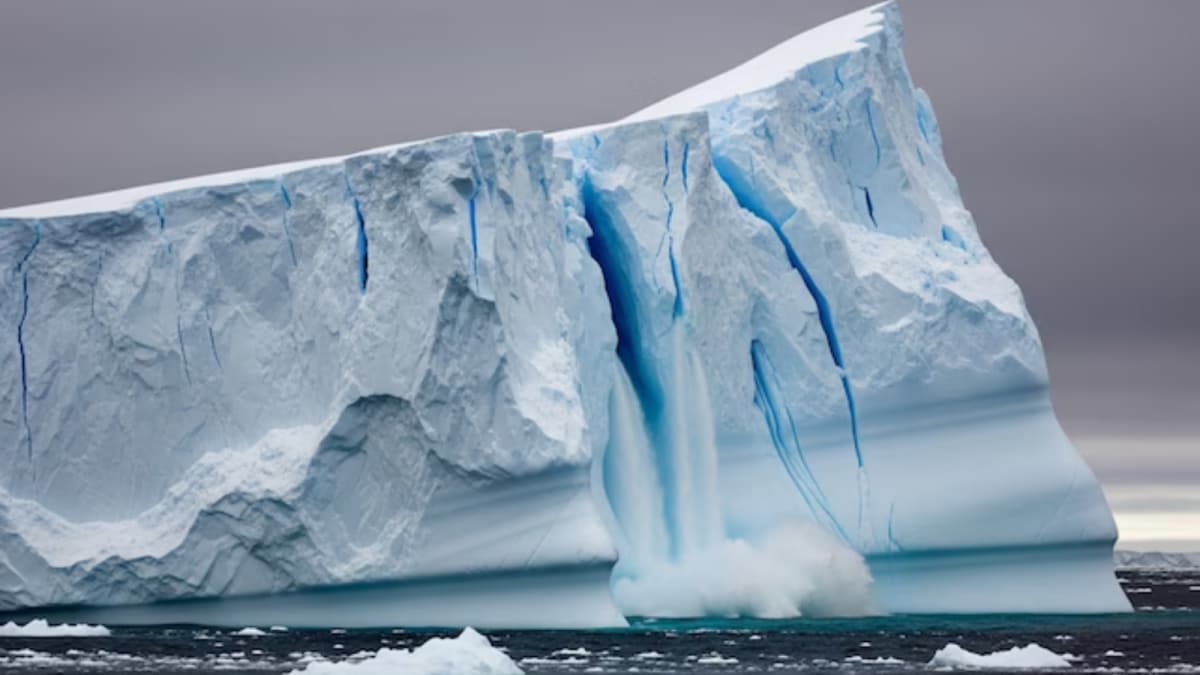
Imagine a giant piece of ice, bigger than a city, that broke off Antarctica a long time ago.
This iceberg, called A23a, is now breaking into smaller pieces.
Scientists are watching it because it's getting smaller very quickly.
It used to be almost as big as a country, but now it's much smaller.
This is happening because the ocean is getting warmer, and currents are changing.
Icebergs breaking apart is normal, but this is happening faster than usual.
Scientists are concerned because it shows that climate change is affecting the ice in Antarctica.
The giant iceberg will likely disappear soon.

Iceberg A23a, which broke off in 1986, is in its final stages and may disappear soon.
The iceberg initially covered around 3,672 square kilometers, almost the size of Goa.
A23a is rapidly breaking into multiple pieces, reducing its size to 1,700 square kilometers.
The iceberg is drifting northeast, following a path where icebergs disintegrate.
Scientists attribute the accelerated melting to warming waters and shifting currents.
- Who
- Scientists from the British Antarctic Survey (BAS)
- What
- The rapid disintegration of iceberg A23a
- When
- In the coming weeks
- Where
- Antarctica, specifically the Weddell Sea
- Why
- Due to warming ocean waters and shifting currents, accelerating ice melt.
- Iceberg Name
- A23a
- Original Size
- 3,672 square kilometers (almost the size of Goa)
- Current Size
- 1,700 square kilometers (roughly the size of London)
- Separation Date
- 1986
- Weight at Separation
- Approximately one trillion tonnes
- Location
- Weddell Sea, drifting northeast