

Archive · 15 Dec 2025
African Crested Rat Uses Plant Poison for Defense
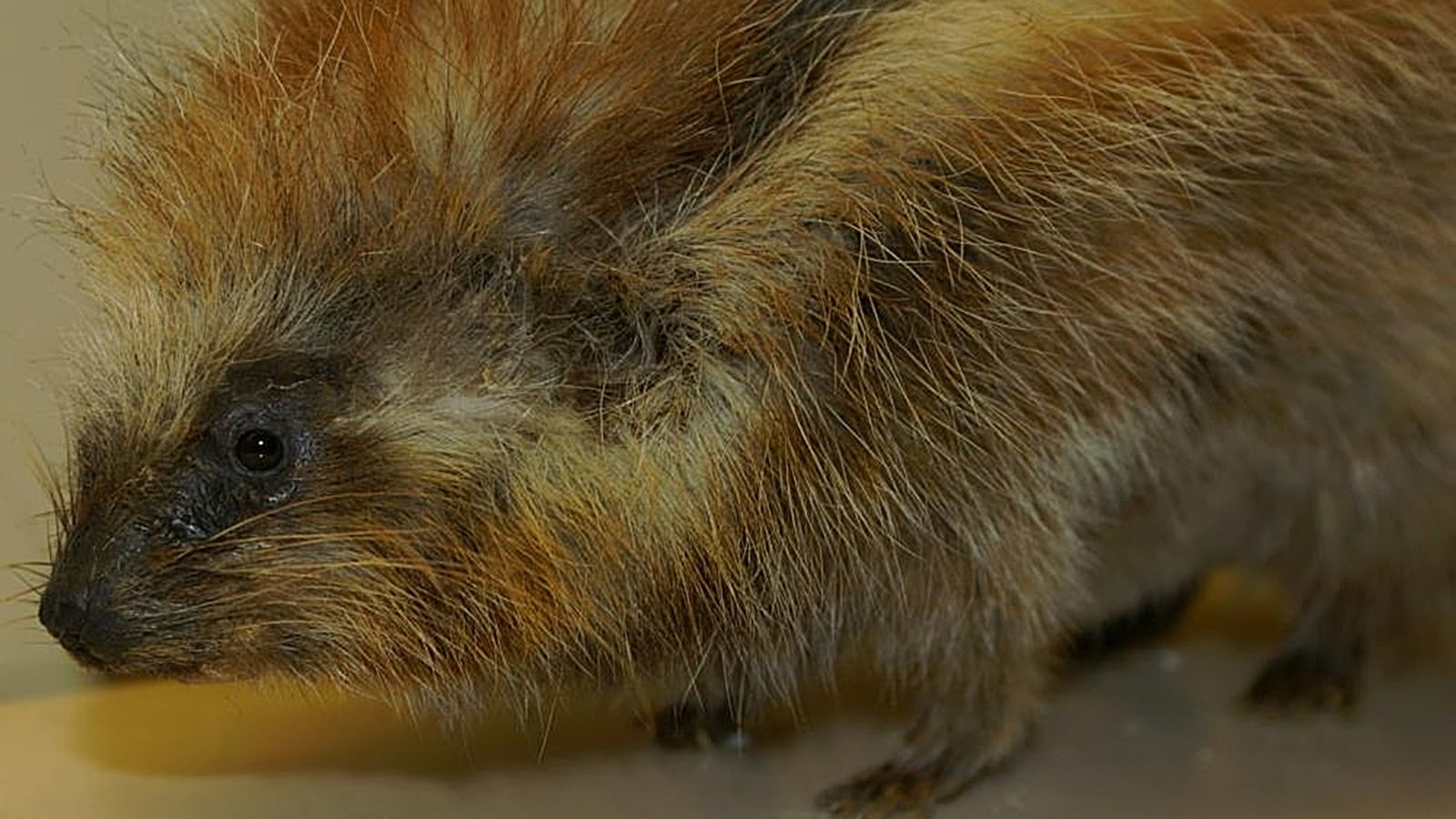
The African crested rat is a unique rodent that uses poison from a special tree to protect itself.
It chews the bark of the Acokanthera tree and mixes the poison with its saliva.
Then, it puts this mixture on special hairs on its sides.
These hairs are like sponges that hold the poison.
When a predator tries to attack, the rat stands up its black-and-white mane to show the poisoned stripe.
This warns the predator to stay away.
The poison is so strong that it can even kill an elephant.
The rat itself doesn't get poisoned because it has strong bones and thick skin.
It lives in rocky forests and savannahs in East Africa and is not currently endangered.

The African crested rat uses poison from the Acokanthera tree for defense.
It applies the toxin to special, sponge-like hairs on its flanks.
The poison is the same type used in arrows to hunt elephants.
The rat displays its poisoned stripe as a warning to predators.
It has strong bones and thick skin to protect itself from the poison.
- Who
- African crested rat (Lophiomys imhausi)
- What
- Uses plant poison for defense
- When
- Research published in 2011
- Where
- East Africa (Kenya, Uganda, Somalia, Tanzania, Ethiopia, Sudan)
- Why
- To deter predators
- Species
- African crested rat (Lophiomys imhausi)
- Size
- 360-530 mm long, 1 kg weight
- Poison Source
- Acokanthera poison-arrow tree
- Toxin Type
- Cardenolide toxins (e.g., ouabain)
- Habitat
- East Africa (Kenya, Uganda, Somalia, Tanzania, Ethiopia, Sudan)
- Conservation Status
- Least Concern (IUCN)
- Defense Mechanism
- Poisoned hairs on flanks
- Researchers
- Jonathan Kingdon, Wildlife Conservation Society, University of Oxford