19 hrs ago
Cornell Case Renews Debate Over University Sexual Assault Responses
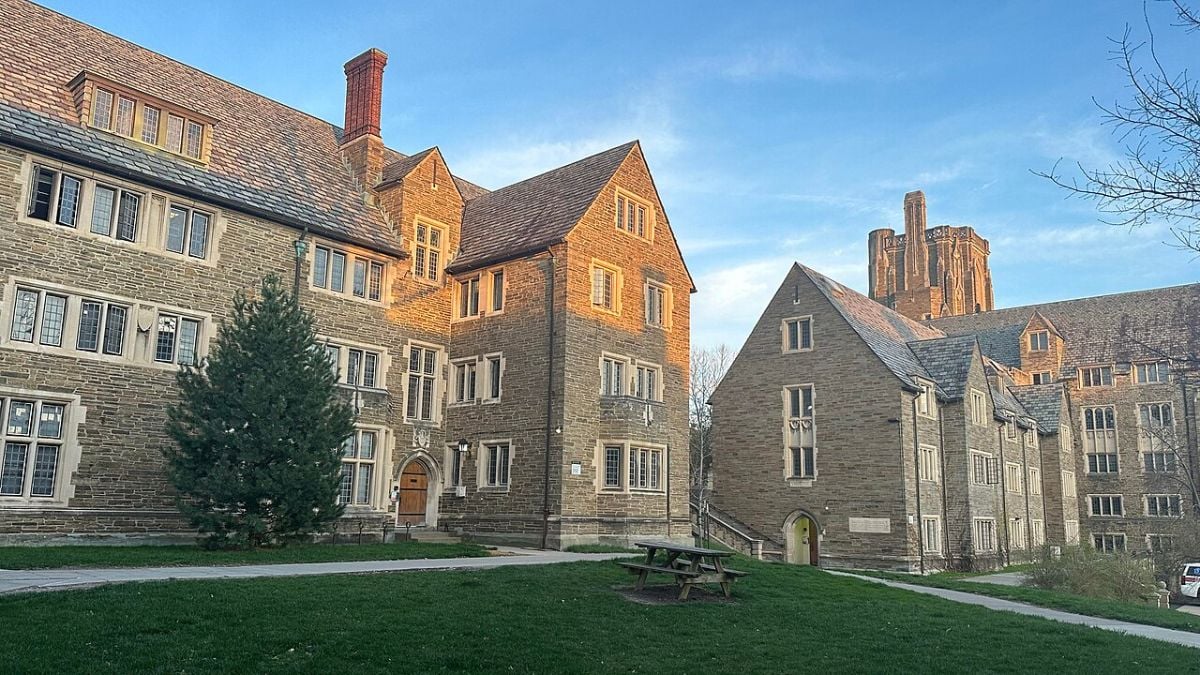
A former Cornell student says she was drugged and sexually assaulted at a fraternity house in October 2024.
She has sued several fraternity members and organizations, as well as Cornell University.
The people accused have not been found responsible in court.
Prosecutors are looking again at the case because the lawsuit contains new information, although they say it differs from the student’s first account.
Other universities have faced similar allegations.
In some cases, such as those involving Stanford and Vanderbilt athletes, people were convicted and sent to prison.
In other cases, criminal charges were dropped or did not move forward, while universities still imposed punishments.
These cases have led to arguments about safety, fairness, athlete privilege and how universities should respond.

A former Cornell student has sued seven Chi Phi members, Cornell University and fraternity organizations over an alleged 2024 sexual assault.
Prosecutors in New York have reopened the investigation, while the district attorney says the lawsuit describes events differently from the student’s original police account.
Past cases at Stanford, Vanderbilt and University College London produced convictions and prison sentences, though outcomes varied widely.
Cases at Oxford Brookes and McGill show how university disciplinary action and criminal prosecution can produce different results.
A recent University of Melbourne case raised questions about screening and monitoring students with prior sex-offense histories.
- Who
- A former Cornell student, seven Chi Phi members, Cornell University and fraternity organizations are involved in the current lawsuit; the comparison cases involve students, athletes and university officials at several institutions.
- What
- The Cornell student alleges that she was drugged and sexually assaulted, while prosecutors have reopened their investigation and universities continue to face questions about handling sexual-assault allegations.
- Where
- The current case concerns a Chi Phi fraternity house at Cornell University in New York, while the other cases involve universities in the United States, United Kingdom, Canada and Australia.
- When
- The Cornell allegations concern October 2024; the article also describes cases from 2012 through 2026, including convictions and proceedings in 2025.
- Why
- The cases have prompted debate over university safety, fraternity and athlete culture, criminal prosecution, disciplinary procedures and the screening of students with prior sex-offense histories.
University accountability
Criminal due process
Action after allegations
University accountability
Universities should protect students and can impose disciplinary measures even when prosecutors do not bring or sustain criminal charges, as illustrated by the Oxford Brookes case.
Criminal due process
Criminal accusations should be evaluated through evidence and due process; the Cornell district attorney noted that the lawsuit’s account differs from the original police report, and the McGill charges were withdrawn after new evidence.
Athlete and fraternity culture
University accountability
Cases involving Stanford, Vanderbilt, McGill and Cornell have fueled concerns about athlete privilege, fraternity culture and institutions failing to prevent sexual violence.
Criminal due process
Universities and courts must distinguish allegations from proven conduct; the Cornell allegations remain unproven, while other cases produced different outcomes, including acquittal-equivalent nonconvictions, withdrawn charges and convictions.
Student screening and safety
University accountability
The University of Melbourne case raised demands for stronger screening and monitoring of students with prior sex-offense histories.
Criminal due process
The article does not establish a specific screening policy or standard that would have prevented the Melbourne allegations, so broader policy conclusions remain contested.
Key facts
- Cornell allegations
- A former 20-year-old student alleges that she was pressured to consume ketamine and sexually assaulted at a Chi Phi fraternity house in October 2024.
- Cornell legal action
- The student filed a civil lawsuit against seven fraternity members, Cornell University and fraternity organizations.
- Cornell investigation
- The Tompkins County district attorney said prosecutors are examining whether new evidence supports criminal charges.
- Stanford outcome
- Brock Turner was convicted in 2016 of three felony counts and served three months of a six-month county-jail sentence.
- University College London outcome
- Zhenhao Zou was convicted in 2025 of drugging and raping 10 women in the United Kingdom and China and received a life sentence with a minimum term of 24 years.
- Vanderbilt outcome
- Three football players received prison sentences of 15 to 17 years, while a fourth accepted a plea deal involving 10 years of probation.
- Oxford Brookes outcome
- Two students were expelled, another had his expulsion reduced on appeal and a fourth received a written warning after a criminal investigation did not proceed.
- McGill outcome
- Prosecutors withdrew charges against three football players in 2014 after receiving new evidence, and none was convicted.
Sources
Related news

Former Cornell Student Sues University Over Alleged Fraternity Assault

New York Reopens Cornell Fraternity Gang-Rape Investigation Into Allegations

New York Reopens Investigation Into Cornell Fraternity Assault Allegations

Josh Gad Condemns Cornell Handling of Sexual Assault Case

LPU Protests Turn Violent Over Assault Claim, University Denies

Charges Against Five Stanford Protesters Set for Dismissal

AMD Bets $8.2 Billion on Fei-Fei Li’s AI Startup

Sabeer Bhatia Calls for 55% Inheritance Tax in India

Google Celebrates 28th Birthday With Nostalgic 1998 Logo Doodle

Stanford Mathematician Sarah Peluse Wins 2026 SASTRA-Ramanujan Award