1 hr ago
Questions Grow Over Supreme Court Roster and Hearing Transparency

The Supreme Court has rules about which judges usually hear important cases involving personal freedom.
One detention case was instead sent to a different group of judges.
The audio of that hearing was also turned off, so the public could not listen.
Some lawyers and legal scholars say the court should explain why this happened.
They are not necessarily accusing the individual judges of wrongdoing.
They are questioning how cases are assigned by the Chief Justice of India.
They worry that secret or unexplained assignments could reduce public trust.
Similar concerns were raised by senior judges at a 2018 press conference.
The article says the court should make its process clearer so people can trust its decisions.

The Supreme Court listed a preventive-detention appeal before a bench outside the senior benches designated for such matters.
The case concerns the Allahabad High Court’s decision to quash a student activist’s detention under the National Security Act.
The hearing was held on September 13 by Justices Satish Chandra Sharma and N. K. Singh, and its audio was muted.
Critics, including legal scholar Prashant Bhushan, have sought an explanation for the roster deviation and the lack of public audio.
The controversy has revived concerns about the Chief Justice of India’s administrative control over case assignments and judicial transparency.
- Who
- The Supreme Court, Justices Satish Chandra Sharma and N. K. Singh, the Uttar Pradesh government, Noida District Magistrate Medha Roopam, and critics including Prashant Bhushan.
- What
- A preventive-detention appeal was listed before a bench outside the Supreme Court’s designated roster for such cases, while the hearing audio was muted.
- Where
- The Supreme Court of India; the underlying detention matter arose from Uttar Pradesh and involved an Allahabad High Court judgment.
- When
- The hearing took place on September 13; the relevant roster was issued on July 13, and comparable concerns were raised publicly on January 12, 2018.
- Why
- Critics want an explanation for the roster deviation, the muted audio, and the exercise of the Chief Justice of India’s case-allocation authority.
Key facts
- Case subject
- A challenge to the Allahabad High Court’s quashing of a student activist’s preventive detention under the National Security Act.
- Appellant
- Noida District Magistrate Medha Roopam and the Uttar Pradesh government.
- Hearing bench
- Justices Satish Chandra Sharma and N. K. Singh.
- Roster concern
- The article says the July 13 roster assigned preventive-detention and habeas corpus matters primarily to the CJI and the next three senior judges.
- Public access
- The hearing’s audio was muted.
- Main criticism
- Legal observers argue that the assignment and muted hearing lacked a publicly stated explanation.
- Earlier controversy
- Four senior Supreme Court judges raised concerns about case allocation and the Master of the Roster at a January 12, 2018 press conference.
Sources
Related news

Questions Over Noida DM Case Listing Before Junior Bench

Lawyers Association Challenges Special Listing Of Noida DM Petition

PUCL Urges CJI Action Over Rajasthan High Court Allegations

Supreme Court Collegium Recommends New Rajasthan High Court Chief Justice
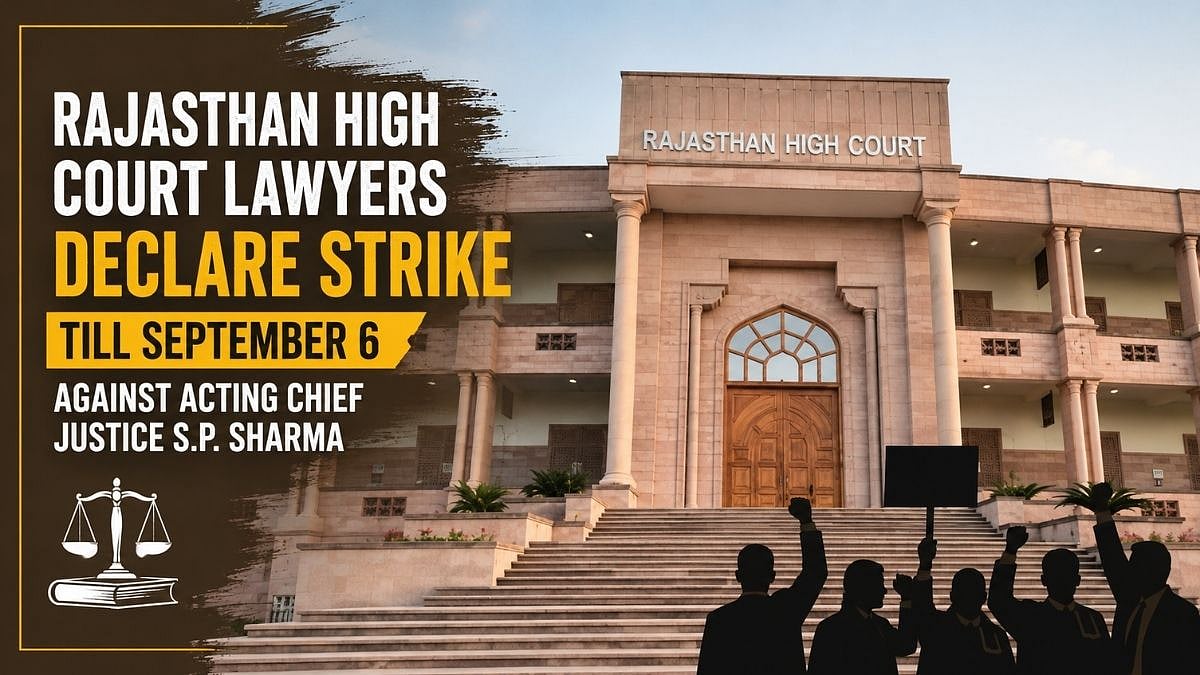
Rajasthan Lawyers Strike Over Allegations Against Acting Chief Justice

Supreme Court Seeks Allahabad HC Report on Lakhimpur Trial Judge

Wangchuk backs electoral accountability, may skip October 2 protest

Supreme Court stays penalties against Noida officials in NSA case

Supreme Court Revises Stay on Activist’s NSA Detention Ruling