Archive · 9 Oct 2026
Pakistan to Deploy Forces to Saudi Arabia Without Parliamentary Vote
Pakistan has agreed to send more forces to Saudi Arabia.
The decision uses a defence pact involving Pakistan, Saudi Arabia, and Turkey.
The pact was used for the first time on Monday, as Saudi Arabia faces attacks linked to Yemen’s Houthi group.
Pakistan has not said how many troops will go or what they will do.
It is also unclear whether they will fight the Houthis.
The government said required procedures were followed but did not say whether parliament or the cabinet was involved.
In 2015, Pakistan’s parliament chose to stay out of the Saudi-led war in Yemen while promising to defend Saudi territory and holy sites.
Analysts say the new deployment shows the military has growing influence over foreign policy.
A representative of Imran Khan’s party said the issue should be debated and decided carefully.

Pakistan agreed to rapidly deploy forces to Saudi Arabia under a defence pact signed with Saudi Arabia and Turkey in August.
The pact was invoked for the first time on Monday amid escalating Houthi attacks on Saudi targets.
Pakistan’s information ministry said required government procedures were followed but did not specify whether parliament or the cabinet approved the move.
The countries disclosed no troop numbers, missions, command arrangements, costs, or deployment duration; it remains unclear whether Pakistani troops will fight the Houthis.
Analysts say the move reflects the military’s growing influence; in 2015, Pakistan’s parliament voted to remain neutral in the Yemen conflict while pledging to defend Saudi territory and holy sites.
- Who
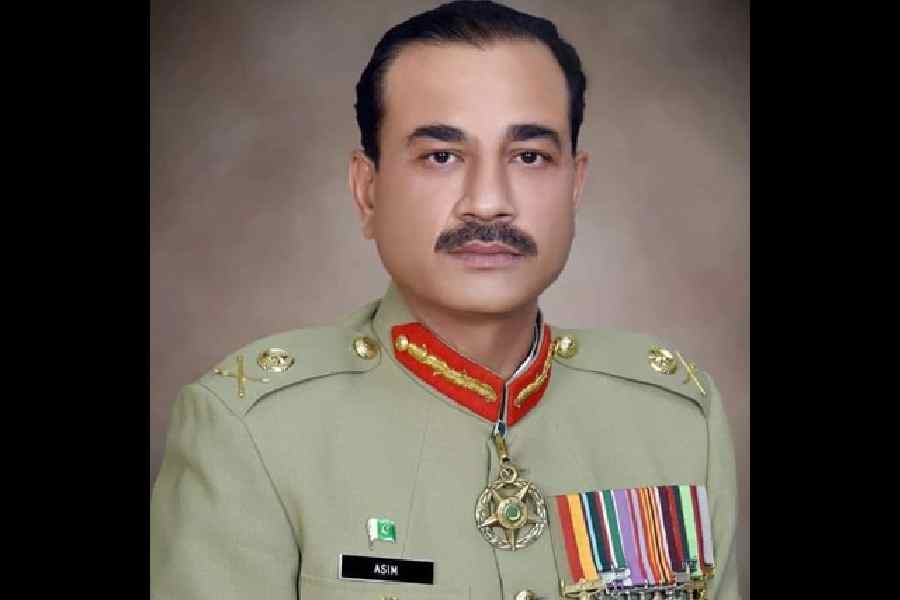
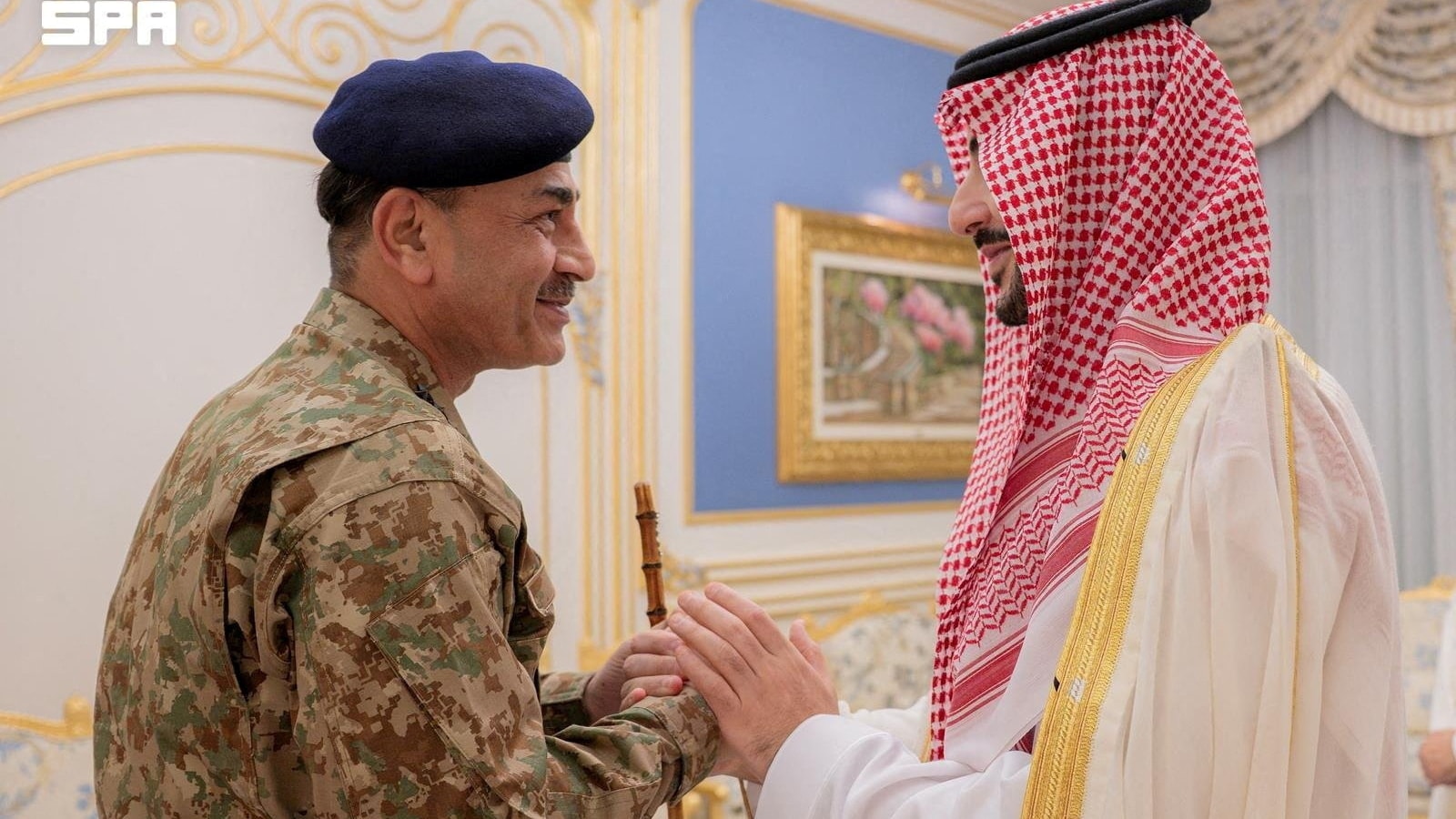
- Pakistan, Saudi Arabia, and Turkey; Field Marshal Asim Munir attended a meeting with Saudi and Turkish counterparts.
- What
- Pakistan agreed to rapidly deploy additional forces to Saudi Arabia under a defence pact.
- When
- The pact was invoked on Monday; the articles do not provide a calendar date.
- Where
- Saudi Arabia, following an emergency meeting in Riyadh.
- Why
- The countries cited attempted attacks on Mecca and Medina and agreed to provide military forces and capabilities; the specific mission for Pakistani troops was not announced.
Government procedures and security cooperation
Calls for debate and concern over military influence
Authorization and public accountability
Government procedures and security cooperation
Pakistan’s information ministry said the alliance had gone through all necessary government procedures and described deployment details as operationally confidential.
Calls for debate and concern over military influence
The ministry did not clarify whether the cabinet or parliament was involved; a spokesperson for Imran Khan’s party said the deployment should be debated and decided with political acumen.
Military role in foreign policy
Government procedures and security cooperation
The government’s spokesperson credited trust and cooperation between Prime Minister Shehbaz Sharif and Field Marshal Asim Munir for diplomatic gains.
Calls for debate and concern over military influence
Analysts say the deployment reflects the military’s growing domestic influence and warn that foreign partners may reinforce Pakistan’s civil-military imbalance.
- Defence pact
- The pact signed by Pakistan, Saudi Arabia, and Turkey in August was invoked for the first time.
- Deployment details
- Troop numbers, missions, command arrangements, costs, and duration were not disclosed.
- Government statement
- Pakistan’s information ministry said necessary procedures had been followed but did not identify whether the cabinet or parliament was involved.
- Houthi operations
- It is unclear whether Pakistani forces will take part in operations against the Houthis.
- 2015 parliamentary decision
- Pakistan’s parliament unanimously chose neutrality in the Yemen conflict while pledging to defend Saudi territory and holy sites.
- Earlier troop deployment
- Reuters reported that Pakistan had sent about 8,000 troops to Saudi Arabia by May under a 2025 Saudi-Pakistani pact.
- Munir’s tenure
- The articles say constitutional changes put Asim Munir in command of all three services until 2030, with lifetime field marshal rank and immunity from criminal prosecution.