

Archive · 27 Dec 2025
British Raj Blacklisted Revolutionaries and Dancer in 1920s
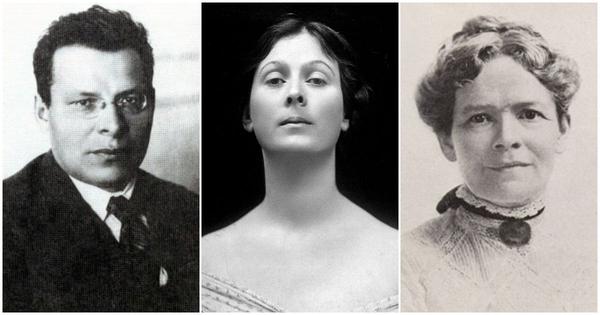
A long time ago, the British government in India made a list of people they didn't want to come into the country.
These people were mostly from Russia and other places, and the British thought they might spread communist ideas.
Some of these people were activists, dancers, and even a famous opera singer.
The British were scared that these people would make India more communist and support India's fight for independence.
A few people on the list managed to sneak in, but most were stopped.
The list included people like Isadora Duncan, a famous dancer who loved Russia, and Robert Whitaker, an American pastor who supported Indian independence.
The British kept watching these people until 1941, when they became allies with Russia during World War II.

The British Raj compiled a blacklist in 1920 of foreigners, primarily Russians and suspected communists, banned from entering India.
The list included attendees of the 3rd World Congress of the Communist International (Comintern), such as Italians, Germans, French, a Mexican, and an American.
Notable individuals on the list included American dancer Isadora Duncan, who praised Soviet Russia, and American pastor Robert Whitaker, who supported Indian independence.
Some individuals, like Baron Edgard de Cramm, managed to obtain transit visas despite being on the blacklist due to bureaucratic oversights.
The blacklist was driven by the British Raj's fear of communist influence and support for Indian independence, with surveillance continuing until 1941.
- Who
- Foreigners, including Russians, Americans, Italians, Finns, Swedes, and a Mexican, who were suspected or confirmed communists or sympathizers.
- What
- The British Raj compiled a blacklist of individuals banned from entering India due to fear of communist influence.
- When
- The blacklist was compiled in 1920, with additions in 1922.
- Where
- The ban was enforced in India, with coordination from British missions and authorities in places like Marseilles, France.
- Why
- The British Raj feared that these individuals would facilitate communist movements in India and support Indian independence.
- Year
- 1920
- Primary Targets
- Russians, Communists, Sympathizers
- Key Individuals
- Isadora Duncan, Feodor Chaliapin, Robert Whitaker, Emma Bloor, Frederick Kuh
- Event
- 3rd World Congress of the Communist International (Comintern)
- Location
- India, Britain, France, Russia
- Reason for Ban
- Fear of Communism, Support for Soviet Russia, Sympathy for Indian Independence
- Duration of Surveillance
- Until 1941