

1 month ago
NASA Plans AI-Powered Mission to Study Saturn's Rings
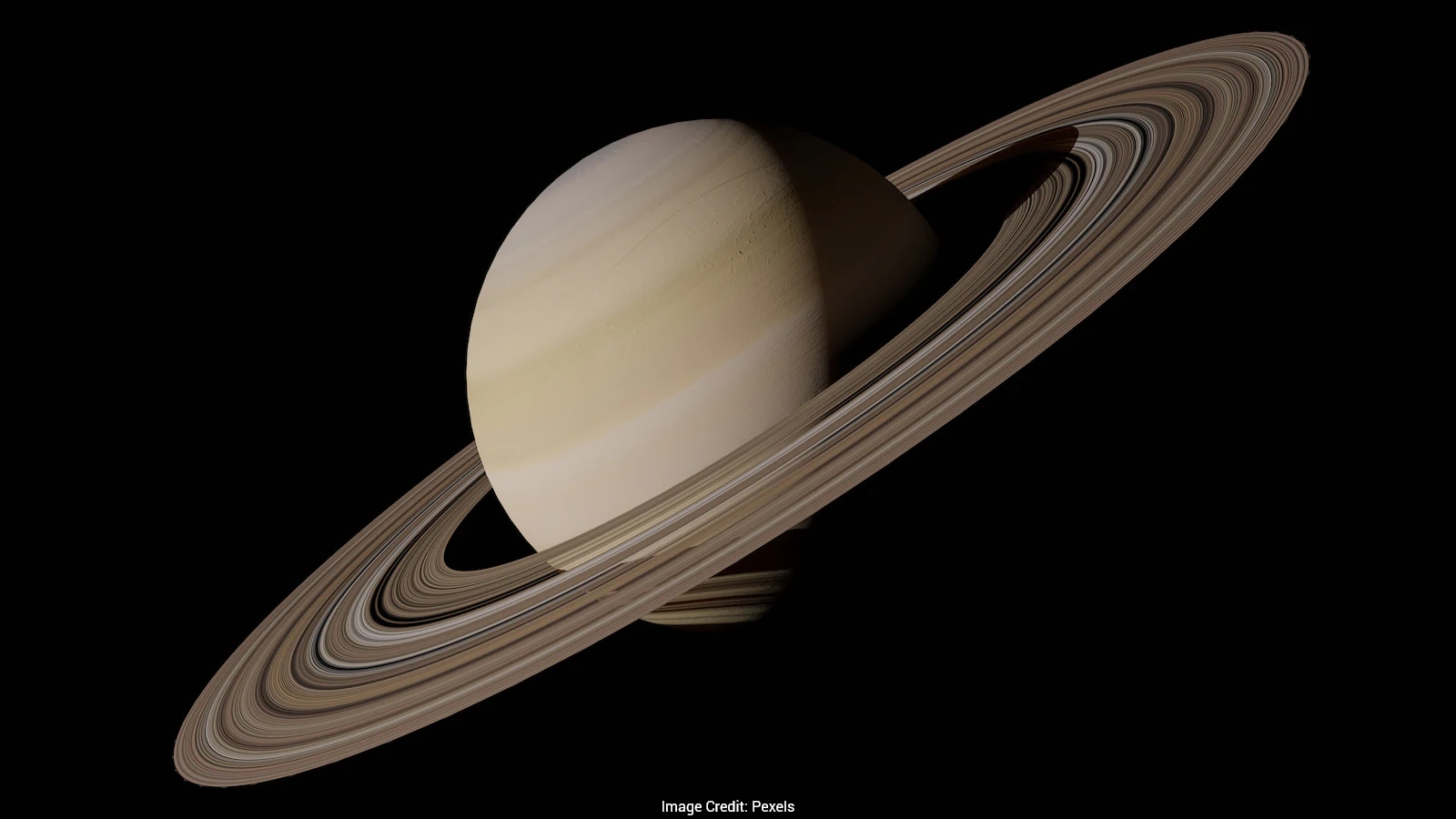
NASA is planning a new mission called PRAXIS to study Saturn's rings.
This mission will use a special robot powered by AI to collect tiny pieces of the rings.
The robot will be able to avoid collisions and study the pieces right there in space.
This will help scientists understand how the rings formed and how they change over time.
The technology used in this mission could also be used to study other planets like Uranus in the future.

NASA's PRAXIS mission aims to directly collect and study Saturn's ring particles.
The mission uses an AI-powered, bio-inspired robotic explorer for autonomous sampling and analysis.
Saturn's rings are made of water ice particles ranging from tiny grains to house-sized boulders.
The robot will use a deployable boom to collect samples while avoiding collisions.
The technology could be applied to future missions, including the Uranus Probe mission.
- Who
- NASA scientists and researchers
- What
- AI-powered mission to collect and study Saturn's ring particles
- Where
- Saturn's rings
- When
- Phase I feasibility study and simulations
- Why
- To answer long-standing questions about the formation, movement, and evolution of planetary rings
Traditional Space Exploration
AI-Powered Exploration
Methodology
Traditional Space Exploration
Traditional methods rely on remote sensing and orbital observations.
AI-Powered Exploration
AI-powered missions enable direct sampling and autonomous exploration.
Data Collection
Traditional Space Exploration
Data is collected over longer periods and may lack detailed particle analysis.
AI-Powered Exploration
Direct sampling provides immediate, detailed analysis of particle size, porosity, and composition.
Risk Management
Traditional Space Exploration
Traditional methods minimize risk by maintaining a safe distance from the target.
AI-Powered Exploration
AI-powered missions use autonomous systems to avoid collisions while collecting samples.
Key facts
- Mission Name
- PRAXIS
- Objective
- Directly collect and study Saturn's ring particles
- Technology Used
- AI-powered, bio-inspired robotic explorer
- Particle Size
- Millimetre- to centimetre-sized
- Composition
- Water ice, ranging from tiny grains to house-sized boulders
- Sampling Method
- Touch-and-go sampling using a deployable boom
- Future Applications
- Potential use in Uranus Probe mission and other planetary explorations
Sources
Related news

Trump-Pardoned Bank Robber Jon Ponder Charged With Inmate Assault

Apple iPhone 18 Pro Max Expected September 2026 Launch

Three Arrested After Palghar Jeweller Loses Rs 90 Lakh

Manslaughter Killers Barred From Early Release After Intervention

OpenAI Releases GPT-6 Astra After Critical Cybersecurity Finding
