

Archive · 7 Nov 2025
Amazon Lake Reached 41C, Killing Dolphins Amid Heatwave
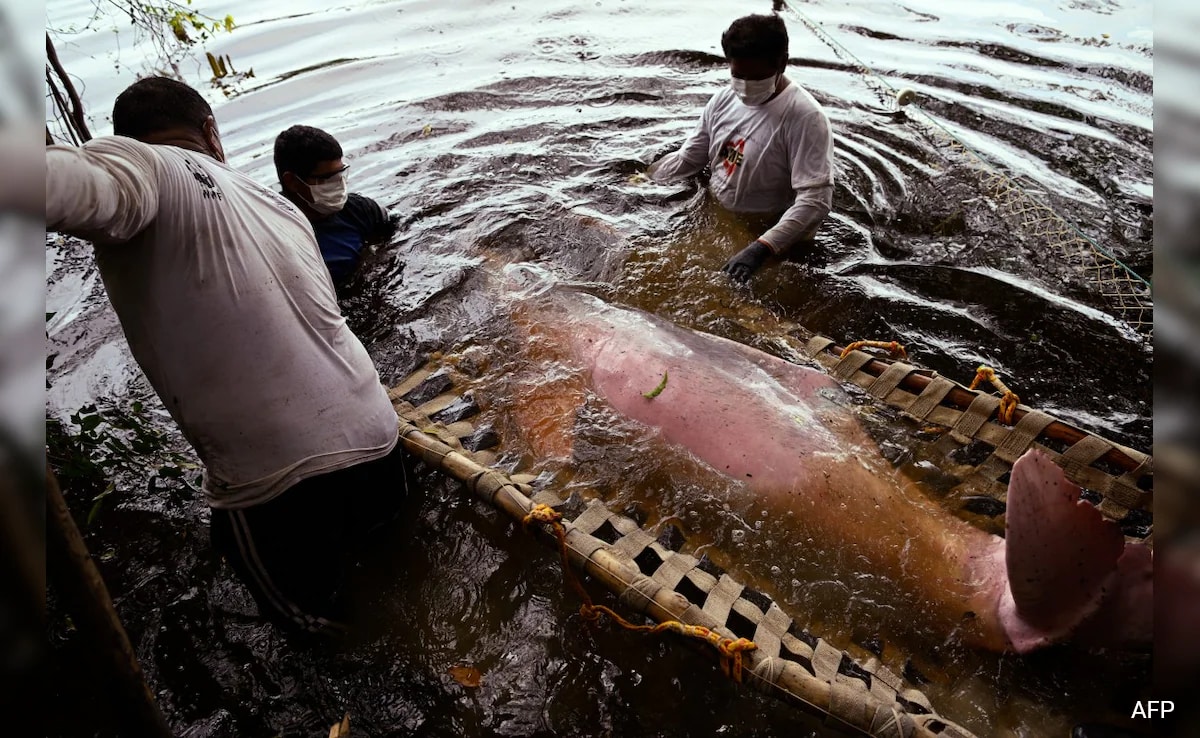
Imagine a big lake in the Amazon rainforest that got super hot, like a hot bath, reaching 41 degrees Celsius.
This happened because of a bad heatwave and drought, made worse by climate change.
The super hot water killed many dolphins and fish that lived in the lake.
Scientists studied the lake and found that it was not just hot at the top, but all the way down.
They also discovered that lakes in the Amazon have been getting hotter over many years, even faster than the rest of the world.
This shows how climate change is hurting nature, especially in places like the Amazon.
Scientists want to study these lakes more and help local people find solutions to protect them.

Lake Tefe in Brazil reached a staggering 41 degrees Celsius during a 2023 heatwave.
The extreme heat led to the deaths of dozens of Amazon River dolphins and tucuxis, along with fish.
Researchers identified four factors contributing to the high temperatures: strong solar heating, shallow waters, low wind, and high turbidity.
Studies indicate that Amazonian lakes have been warming at a rate of approximately 0.6 degrees Celsius per decade since 1990.
The findings highlight the severe impact of climate change on tropical aquatic ecosystems and underscore the need for monitoring and local solutions.
- Who
- Hydrologist Ayan Fleischmann and colleagues
- What
- Discovered a heatwave caused Lake Tefe to reach 41C, killing dozens of dolphins and fish, and found Amazonian lakes are warming faster than the global average.
- When
- September 2023, with data analysis extending back to 1990.
- Where
- Lake Tefe in Brazil's Amazonas state and other central Amazonian lakes.
- Why
- Extreme heatwave and drought conditions, exacerbated by climate change, leading to high water temperatures due to solar heating, shallow waters, low wind, and high turbidity.
- Location
- Lake Tefe, Amazonas state, Brazil
- Temperature Peak
- 41 degrees Celsius (105.8 Fahrenheit)
- Water Temperature Norm
- 29-30 degrees Celsius (84.2-86 Fahrenheit)
- Timeframe
- September 2023 onwards
- Lake Surface Area Reduction
- Approximately 75 percent
- Observed Wildlife Deaths
- Dozens of Amazon River dolphins and tucuxis, plus fish
- Lake Warming Trend
- 0.6 degrees Celsius per decade since 1990