

Archive · 10 Oct 2026
Isaias Leaves More Than 800,000 Without Power Across Three States
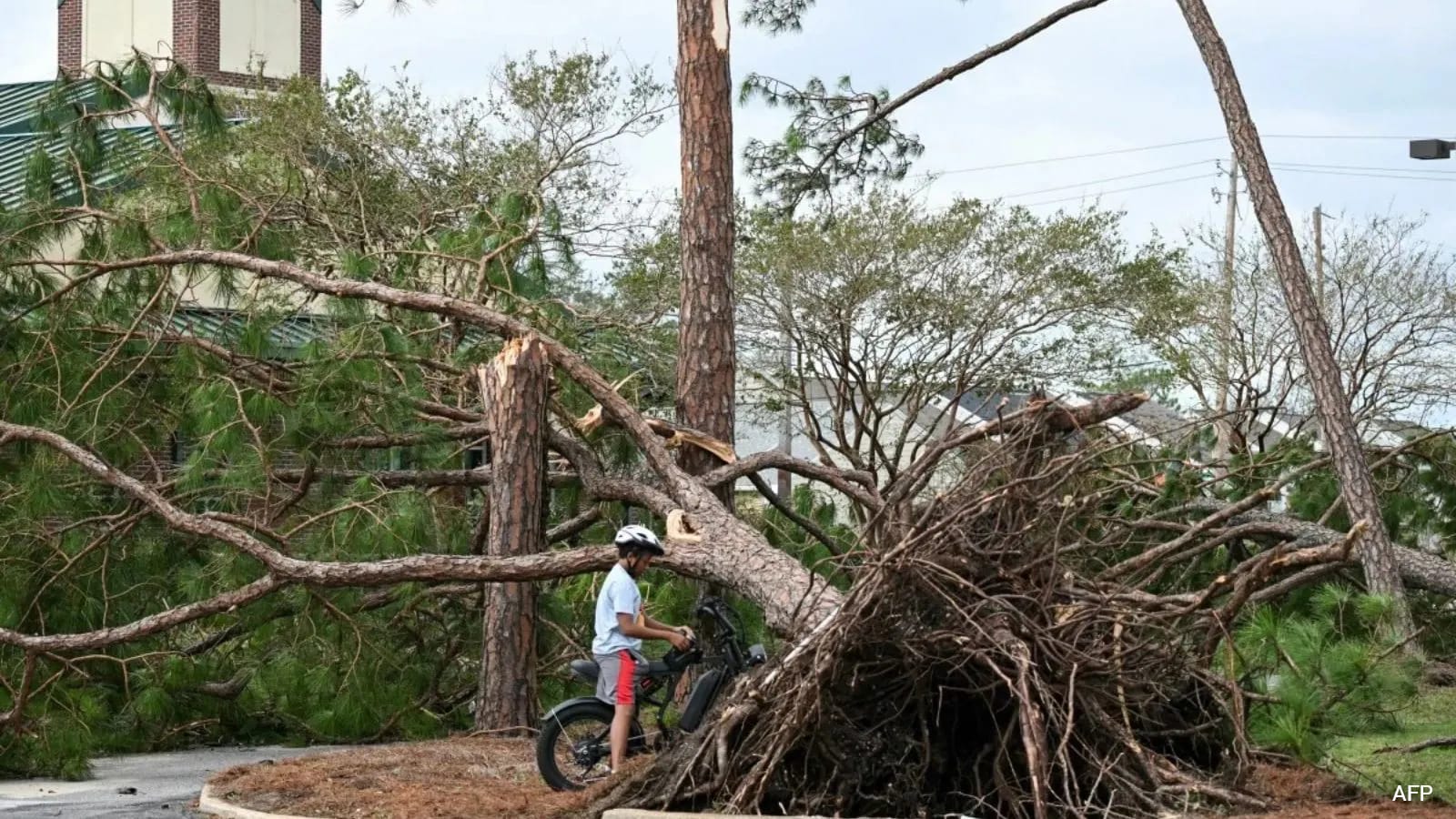
Isaias was a powerful storm that reached Florida late Friday.
It arrived near Destin with very strong winds, then weakened as it moved north.
Even after weakening, it left many people in Florida, Alabama and Georgia without electricity.
Officials said two people died when trees fell on homes.
Forecasters warned that heavy rain could cause floods in parts of the Southeast.
They also said flash floods and landslides were possible in the Southern Appalachian mountains.
Florida's governor said crews had prepared for the possibility that the storm would grow stronger.

More than 800,000 customers in Florida, Alabama and Georgia were without electricity Saturday morning.
Isaias came ashore near Destin, Florida, late Friday as a Category 2 hurricane with sustained winds of 105 mph.
The storm weakened overnight and was described as a post-tropical cyclone as it moved northward.
Officials reported two storm-related deaths, both caused by trees falling on homes.
Forecasters warned of flooding, with some southeastern areas potentially receiving more than 10 inches of rain.
- Who
- Residents and utility customers in Florida, Alabama and Georgia were affected; officials reported two deaths.
- What
- Isaias made landfall as a Category 2 hurricane, weakened, and caused widespread power outages and a continuing flood threat.
- When
- It came ashore late Friday; outages and flood warnings were reported Saturday.
- Where
- Near Destin on Florida's Gulf Coast, then northward through the southeastern United States.
- Why
- The storm brought damaging winds and heavy rain, causing power outages and creating a risk of flooding.
- Customers without power
- More than 800,000 across Florida, Alabama and Georgia Saturday morning
- Landfall
- Near Destin, Florida, late Friday
- Strength at landfall
- Category 2 hurricane
- Sustained winds
- 105 mph (165 km/h)
- Reported deaths
- Two, both attributed to trees falling on homes
- Potential rainfall
- Some southeastern areas could receive more than 10 inches (25 cm)
- Additional hazards
- Flash flooding and landslides were possible across the Southern Appalachians