

Archive · 2 Aug 2026
Bonalu Festival Traces Roots Back to 16th Century
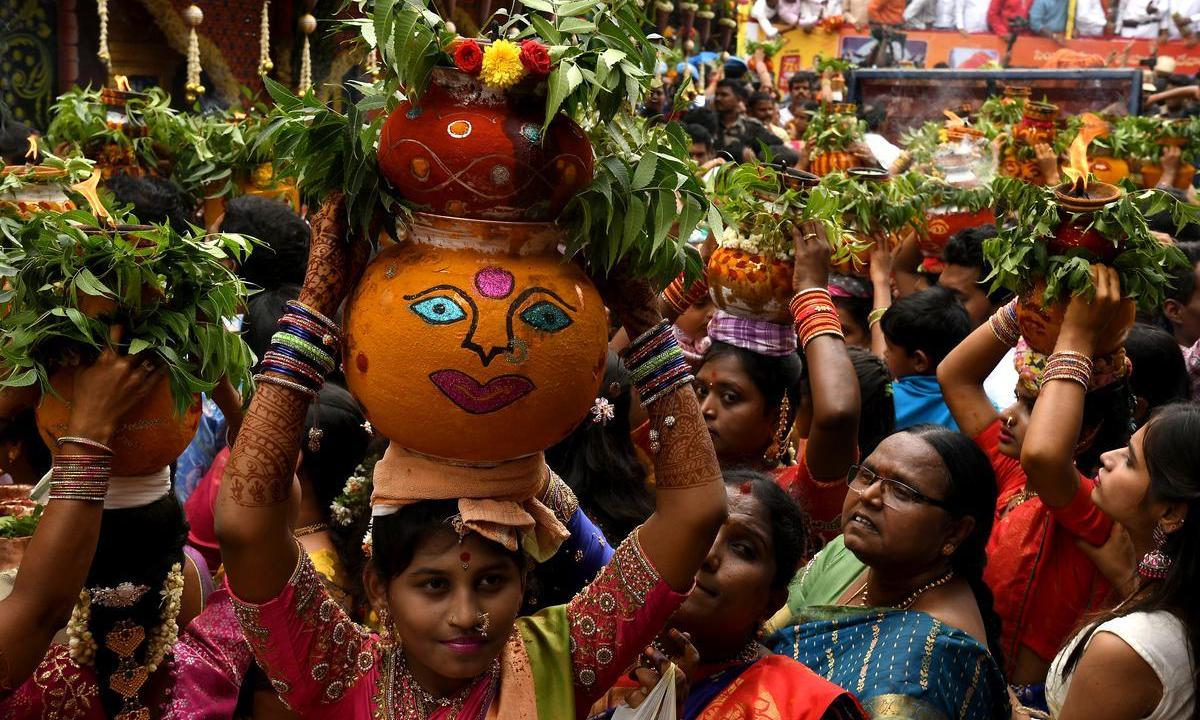
In Secunderabad, India, people celebrate a festival called Bonalu.
It started a long time ago, even before the 1800s, when people offered food to a goddess named Mahakali.
In 1813, soldiers were sick with cholera and promised to build a shrine if they survived.
They kept their promise and made the shrine a big festival.
Today, many people come to the shrine to pray and give food, and the festival is called Lashkar Bonalu because it grew from a military camp.
The festival shows how old traditions can keep living in new ways.

Bonalu celebrations in Secunderabad date back to at least the 16th century, predating the 1813 cholera outbreak.
Historical inscriptions from the reign of Emperor Sri Krishnadevaraya and literary works mention Bonalu‑like rituals.
The modern Lashkar Bonalu began when soldiers vowed to install a Mahakali idol in Secunderabad after a 1813 cholera epidemic.
The shrine at Regimental Bazaar became the focal point of the festival, drawing devotees from across Telangana.
The festival’s name “Lashkar” reflects Secunderabad’s military history as a British cantonment during the Nizam era.
- Who
- Soldiers of Secunderabad Cantonment and devotees
- What
- Bonalu festival honoring Mahakali
- When
- Origins in the 16th century; modern form since 1813
- Where
- Secunderabad, Hyderabad, India
- Why
- Vow to protect families during a cholera epidemic and longstanding religious tradition
- Festival
- Bonalu
- Origin
- 16th century
- Modern origin
- 1813 cholera outbreak
- Location
- Secunderabad, Hyderabad, India
- Associated deity
- Mahakali
- Military connection
- Lashkar Bonalu