Archive · 12 Jan 2026
Japan Explores Seabed Rare Earths Amid China Ban

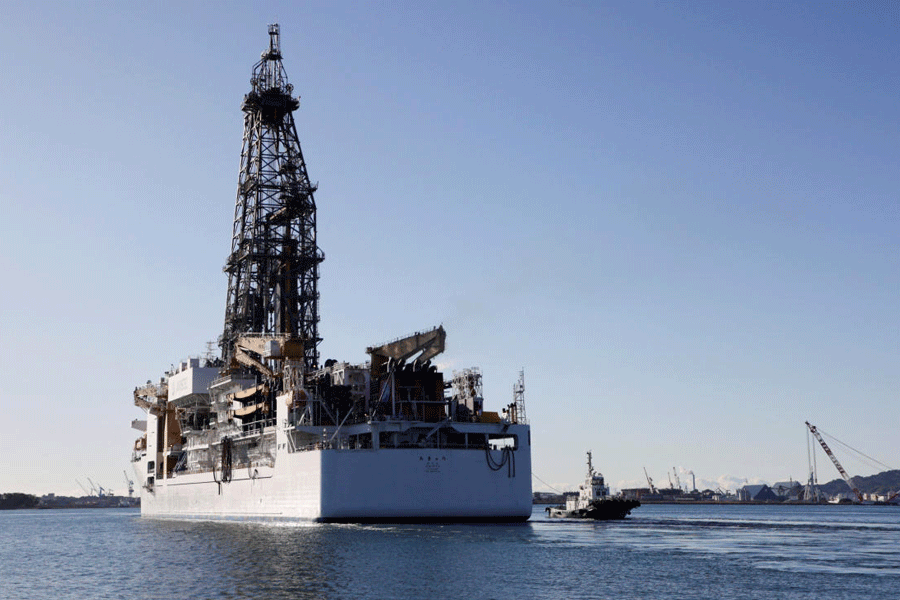
Japan has sent a ship to look for rare earths in the deep sea near an island far from Tokyo.
These rare earths are important for making things like cars and smartphones.
China, which makes most of these rare earths, has stopped sending them to Japan.
This is a big problem because Japan needs these materials.
Japan has been preparing for this for a long time and is trying to find other ways to get these materials.
The ship will be out for a month, and if it finds enough rare earths, it could help Japan not rely so much on China.
China is watching Japan's efforts closely and has even sent ships nearby, which Japan finds worrying.
Japan's finance ministers will also talk about this issue with other countries.

Japan has sent a mining ship to probe rare-earth-rich seabed mud near Minamitori Island to reduce reliance on China.
China has banned exports of items with potential military applications to Japan, including rare-earth magnets.
Japan has reduced its reliance on China for rare earths from 90% to 60% since 2010 through diversification and stockpiling.
The Minamitori Island project is a long-term effort with significant investment, aiming to diversify Japan's resource procurement.
China is closely monitoring Japan's efforts and has conducted naval activities near the survey site, which Japan finds intimidating.
- Who
- Japan and China
- What
- Japan is exploring seabed mining for rare earths amid China's export ban.
- When
- The mining ship departed on Monday, with a return scheduled for February 14.
- Where
- The mission is near Minamitori Island, about 1,900 km southeast of Tokyo.
- Why
- To reduce reliance on China for rare earths and diversify supply chains.
China
Japan
Rare Earth Exports
China
China has banned exports of items with potential military applications to Japan, including rare-earth magnets, as a geopolitical leverage.
Japan
Japan is exploring domestic sources and diversifying supply chains to reduce reliance on China for rare earths.
Technological Achievement
China
China views Japan's seabed mining as a threat and has conducted naval activities near the survey site.
Japan
Japan sees the seabed mining project as a significant technological achievement and a means to diversify its resource procurement.
- Japan's Mining Ship
- Chikyu, a test vessel, departed for Minamitori Island to probe rare-earth-rich seabed mud.
- Project Duration
- The mission is scheduled to last one month, with the vessel returning on February 14.
- China's Rare-Earth Export Ban
- Affects all items with potential military applications to Japan, including rare-earth magnets.
- Japan's Reliance on China
- Reduced from 90% to 60% since 2010, but still significant for heavy rare earths.
- Global Rare-Earth Production
- China produces about 80% of the world's neodymium magnets.
- Japan's Rare-Earth Production
- Manufactures about half of the remaining neodymium magnets.
- Minamitori Island Project
- A long-term project with an estimated investment of 40 billion yen since 2018.
- G7 Discussion
- Finance ministers from the Group of Seven will discuss rare-earth supplies.
Sources
Rare earth choke: After staring back the US, China may have overestimated the leverage it has over Japan

China This Week | Chinese export controls on Japan, and military drills with Iran, Russia and South Africa
Japan sends mining ship to probe rare earths as it seeks to cut reliance on China - Telegraph India

China uses mineral dominance to squeezeJapan after Taiwan remarks – Firstpost