2 hrs ago
Study Claiming Underground City Beneath Giza Pyramid Retracted Over Flaws
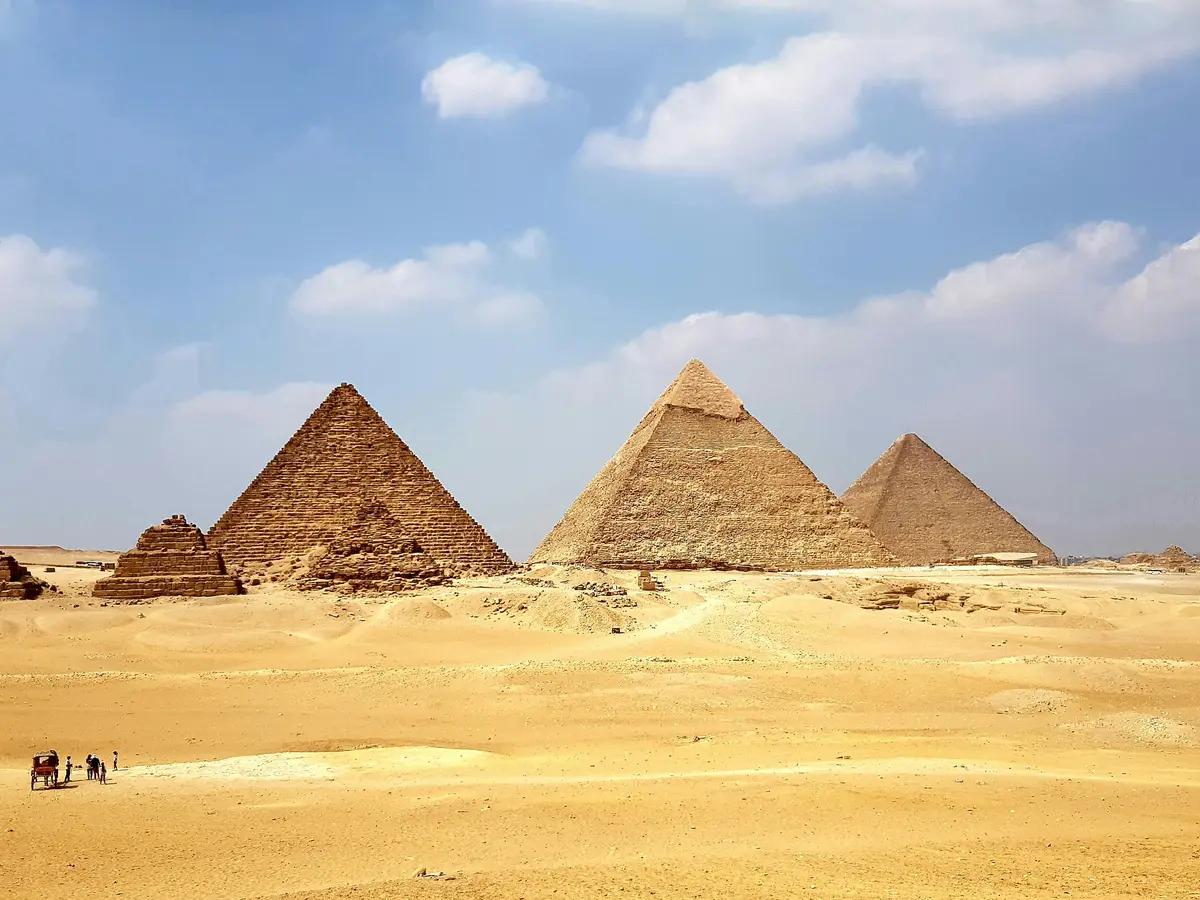
Two researchers said special radar images showed a huge city beneath Egypt’s pyramids.
They claimed the images showed tunnels, rooms, cylinders, water systems and other structures.
They first studied the Pyramid of Khufu and later made claims about the Pyramid of Khafre.
The researchers said the underground area was larger than the pyramids above it.
Other scientists disagreed and said satellite radar cannot show underground structures in that way.
A scientific journal investigated the study after a reader questioned its methods.
The journal said the research had serious mistakes in its methods and statistics.
It then removed, or retracted, the study.
The researchers disagreed with that decision.

Remote Sensing retracted a study claiming radar revealed hidden structures beneath Giza’s pyramids.
Researchers Filippo Biondi and Corrado Malanga said satellite radar detected an underground city.
The journal cited serious methodological flaws and statistical errors after a reader raised concerns.
The researchers later claimed structures beneath the Pyramid of Khafre extended more than 2,100 feet underground.
Other scientists said the technique cannot reliably image underground cities and called for targeted excavations.
- Who
- Researchers Filippo Biondi and Corrado Malanga, Remote Sensing, and scientists who challenged the claims.
- What
- A study claiming satellite radar revealed an underground city beneath Giza’s pyramids was retracted.
- Where
- At the Giza pyramid complex in Egypt, beneath the Pyramids of Khufu and Khafre.
- When
- The original paper was published in 2022; Khafre-related claims were announced in 2025, and the retraction was published on August 10.
- Why
- Remote Sensing cited serious methodological flaws and statistical errors after a reader raised concerns about the study’s methodology.
Researchers’ Claims
Scientific Critics’ Concerns
What the radar showed
Researchers’ Claims
Biondi and Malanga said satellite radar data and synthetic aperture radar Doppler tomography produced high-resolution images of chambers, tunnels, cylinders, pipes and other underground structures.
Scientific Critics’ Concerns
Other scientists said the technology cannot be used to reliably see deep underground structures, particularly an entire city.
Interpretation of the findings
Researchers’ Claims
The researchers interpreted the structures as evidence of a large underground city beneath the Pyramid of Khafre.
Scientific Critics’ Concerns
Critics said smaller features such as caves or chambers might exist, but confirming a city would require targeted excavation.
Journal decision
Researchers’ Claims
The researchers expressed dissatisfaction with Remote Sensing’s decision to retract the study.
Scientific Critics’ Concerns
Remote Sensing said its investigation found serious methodological flaws and statistical errors and therefore removed the paper.
Key facts
- Researchers
- Filippo Biondi and Corrado Malanga
- Journal
- Remote Sensing
- Imaging method
- Synthetic aperture radar Doppler tomography
- Original publication
- 2022
- Retraction reason
- Serious methodological flaws and statistical errors
- Reported depth
- More than 2,100 feet beneath the Pyramid of Khafre
- Researchers’ claim
- An underground city more than 6,500 feet across and 10 times larger than the pyramids
Quotes

Remote Sensing
The peer-reviewed scientific journal that published and later retracted the study
“The journal retracts the article titled “Synthetic Aperture Radar Doppler Tomography Reveals Details of Undiscovered High-Resolution Internal Structure of the Great Pyramid of Giza,”
 wionews.com
Sources
Related news
Bengaluru Developer Demolishes 49 Homes After Soil Testing Error

Tunnel Discovery Near Qutb Shahi Tombs Revives Golconda-Charminar Mystery

Delhi PG Collapse Puts Basement Repairs and Oversight Under Scrutiny
ASI To Examine Well Found After Saharanpur Mosque Demolition

Well Found Beneath Demolished Mosque Debris in Saharanpur, ASI Informed