

Archive · 31 Jan 2026
Deep-sea mining sparks tensions in sustainable development
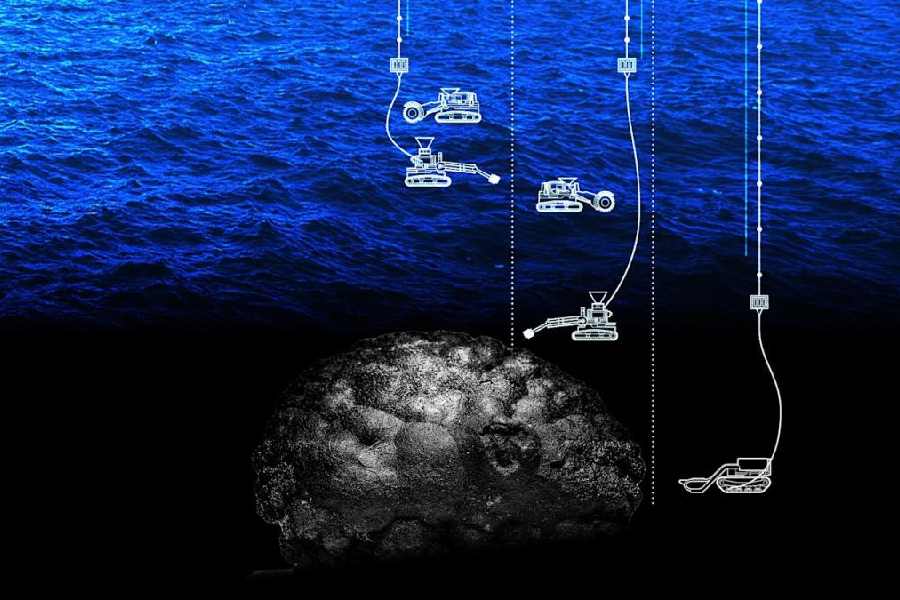
Deep-sea mining is a new way to get important metals like cobalt and nickel from the ocean floor.
These metals are needed for things like electric cars and wind turbines.
Some people think mining the ocean is a good idea because it could help reduce our dependence on land mining, which can be harmful to people and the environment.
However, others are worried about the impact on ocean life and ecosystems, which we don't fully understand yet.
There's also a debate about whether we really need to mine the ocean or if we can find other ways to get these metals, like recycling or improving how we use them.
The international community is still deciding how to govern deep-sea mining and whether it's the right path to take.

Deep-sea mining is being considered as a source of critical minerals for low-carbon technologies and digital infrastructure.
The deep ocean contains significant quantities of metals like cobalt, nickel, and rare earth elements in polymetallic nodules and crusts.
Deep-sea mining poses ecological risks, including long-term damage to marine ecosystems and disruption of carbon storage.
Governance of deep-sea mining is contentious, with divisions between countries and stakeholders over environmental standards and benefit-sharing.
Alternatives to deep-sea mining, such as terrestrial mining, recycling, and material substitution, are being debated as potential solutions to meet mineral demand.
- Who
- Governments, private consortia, scientific and civil-society networks, Small Island Developing States
- What
- Deep-sea mining for critical minerals and its impact on sustainable development
- When
- Present and future, with immediate policy debates and potential long-term ecological impacts
- Where
- Deep ocean, particularly in regions like the Clarion-Clipperton Zone, seamounts, and hydrothermal vents
- Why
- To secure supply of critical minerals for low-carbon technologies, digital infrastructure, and advanced defence systems, while balancing ecological and normative challenges
- Critical Minerals
- Cobalt, nickel, manganese, copper, rare earth elements (REEs)
- Primary Mineral Systems
- Polymetallic nodules, cobalt-rich ferromanganese crusts, polymetallic sulphides
- Key Regions
- Clarion-Clipperton Zone, seamounts, hydrothermal vents
- Governance Body
- International Seabed Authority (ISA)
- Potential Impacts
- Ecological scars, sediment plumes, disruption of carbon storage and biogeochemical cycles
- Stakeholder Divisions
- Coastal/industrialized countries vs. moratorium advocates, Small Island Developing States
- Alternative Strategies
- Terrestrial mining, process improvements, material substitution, recycling