

Archive · 6 Oct 2026
Why Lucknow Is Flooded Despite Days Without Rain
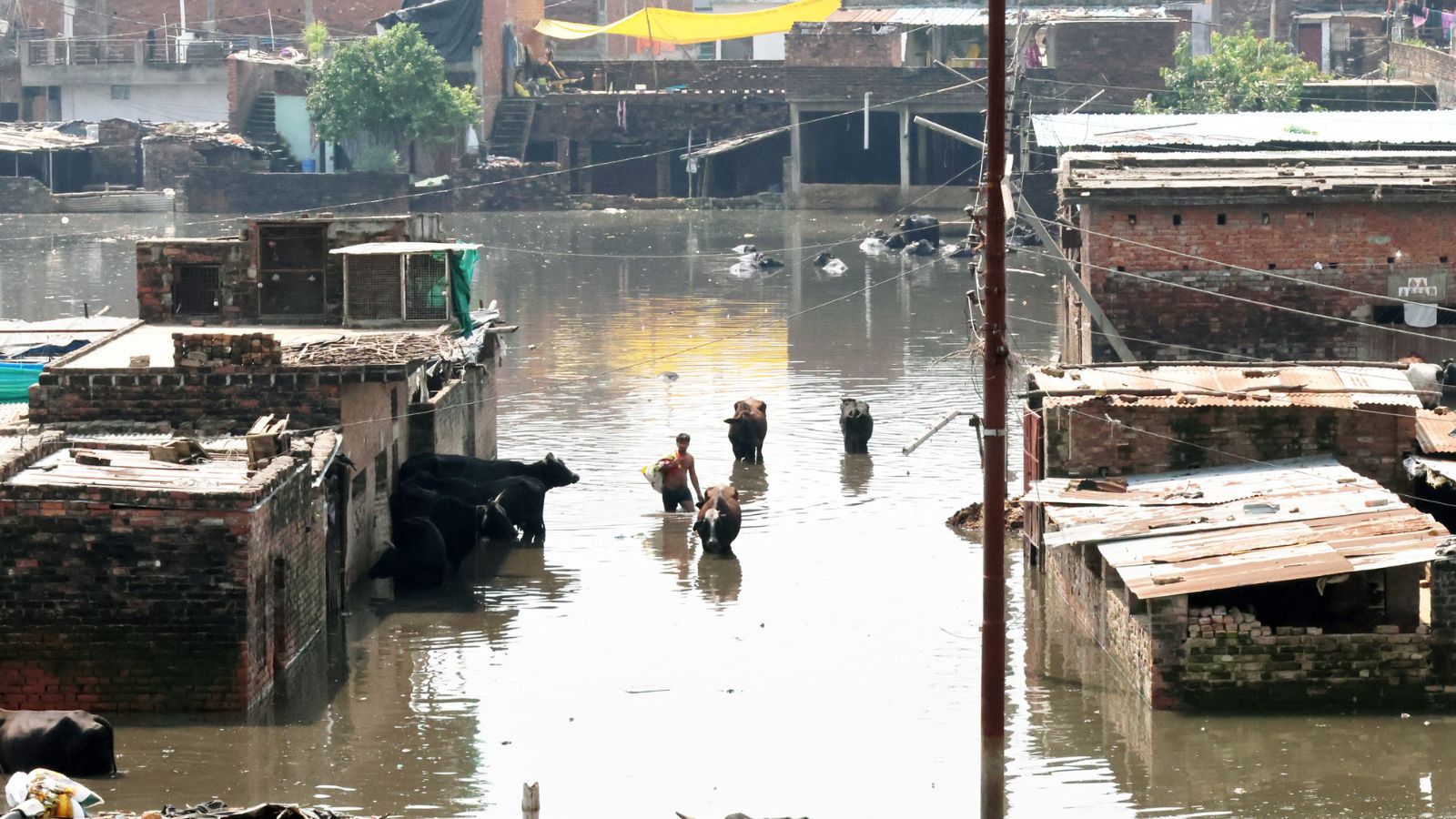
Lucknow has flooding even though it has not had much rain for several days.
The water came from heavy rain that fell earlier in places upstream of the city.
Those places are part of the Gomti River’s catchment.
The river is now carrying that water toward Lucknow.
Rain from September 22 to 27 was much heavier than usual.
The usual five-day rainfall is about 15 mm, but it was around 150 mm this time.
Some places got nearly 257 mm.
Faizullaganj is one of the areas hit hardest.

Parts of Lucknow are flooded in October despite several days without significant rain.
Faizullaganj, on the city’s northern fringes, is among the worst-hit areas.
Officials attribute much of the flooding to heavy rain in the Gomti’s upper catchment in late September.
The Gomti is carrying that upstream water downstream toward Lucknow.
Rainfall from September 22 to 27 was about 150 mm across the catchment, compared with a usual five-day total of around 15 mm; some places received nearly 257 mm.
- Who
- Residents of flooded parts of Lucknow, including Faizullaganj; Principal Secretary (Irrigation) Anil Garg described the rainfall.
- What
- Low-lying parts of Lucknow are experiencing flooding, largely due to water flowing downstream in the Gomti after heavy upstream rainfall.
- When
- The flooding is occurring in October; the heavy upstream rainfall fell from September 22 to 27.
- Where
- Lucknow, especially Faizullaganj, along with the Gomti catchment areas in Pilibhit, Shahjahanpur, Lakhimpur Kheri and Sitapur districts.
- Why
- The Gomti is carrying water downstream after exceptionally heavy rainfall in its upper catchment.
- Worst-hit area named
- Faizullaganj, on Lucknow’s northern fringes
- Rainfall period
- September 22–27
- Typical five-day rainfall
- Around 15 mm
- Rainfall during the spell
- Around 150 mm
- Highest local rainfall cited
- Nearly 257 mm in some places
- Catchment districts named
- Pilibhit, Shahjahanpur, Lakhimpur Kheri and Sitapur
- Official quoted
- Anil Garg, Principal Secretary (Irrigation)