

Archive · 30 Sep 2025
Asteroid Belt Losing Material Over Time, New Study Finds
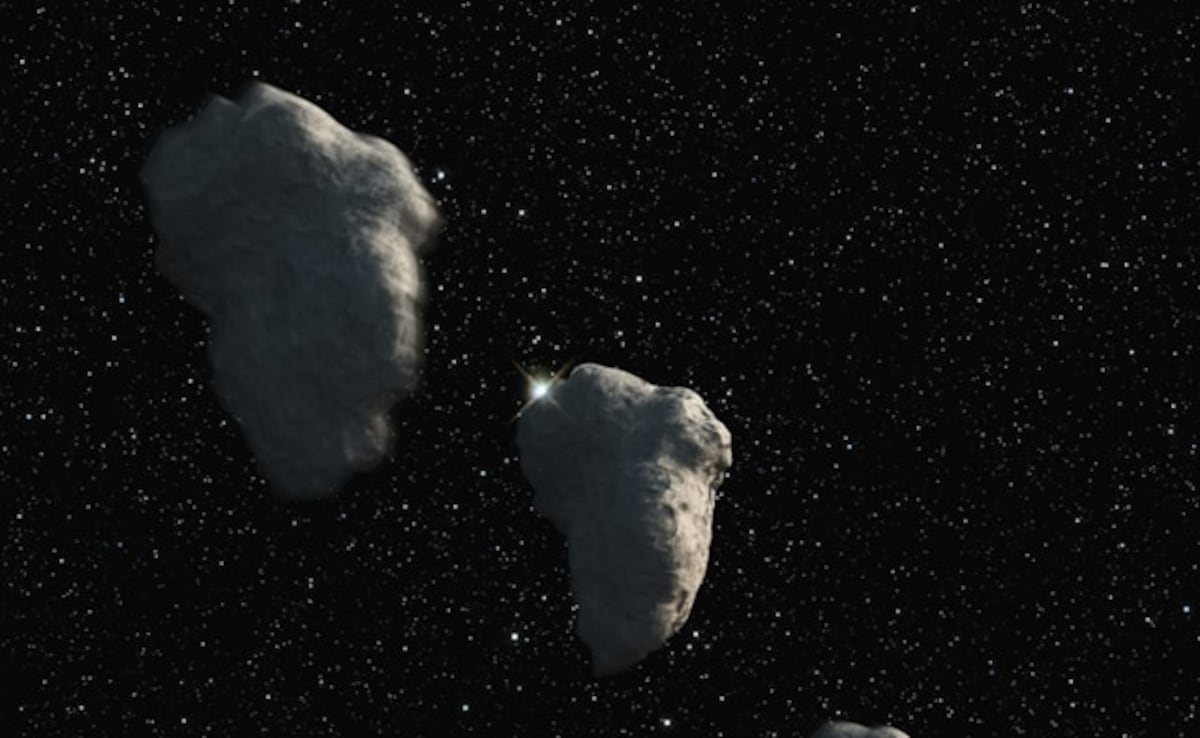
Imagine a belt of rocks between Mars and Jupiter.
Scientists found that this belt is slowly disappearing.
Jupiter's gravity breaks up the rocks.
The belt is losing about 0.0088% of its material each year.
About 20% of the lost material becomes bigger space rocks, some of which become meteors on Earth.
The rest turns into dust.
This loss helps scientists understand how the asteroid belt used to be and how it affected Earth in the past.
The asteroid belt was much bigger, meaning more impacts.

The asteroid belt is losing material over time.
Jupiter's gravity and collisions are key factors.
The belt shrinks by 0.0088% annually in the collision zone.
Material loss produces both larger fragments and dust.
Study helps understand the history of Earth's asteroid impacts.
- Who
- Scientists led by Julio Fernandez
- What
- The asteroid belt is losing material.
- When
- Ongoing process; study focused on current depletion rate.
- Where
- Asteroid belt between Mars and Jupiter
- Why
- To understand the evolution of the Solar System, impact rates, and Earth's history.
- Main Focus
- Asteroid belt depletion rate
- Study Leader
- Julio Fernandez
- Yearly Shrinkage
- 0.0088% (collision zone)
- Material Loss
- 20% large fragments, 80% dust
- Excluded Objects
- Ceres, Vesta, and Pallas