1 hr ago
OpenAI and Anthropic Release Cheaper Models Amid AI Slowdown Calls

OpenAI and Anthropic released new AI models that businesses can use more cheaply.
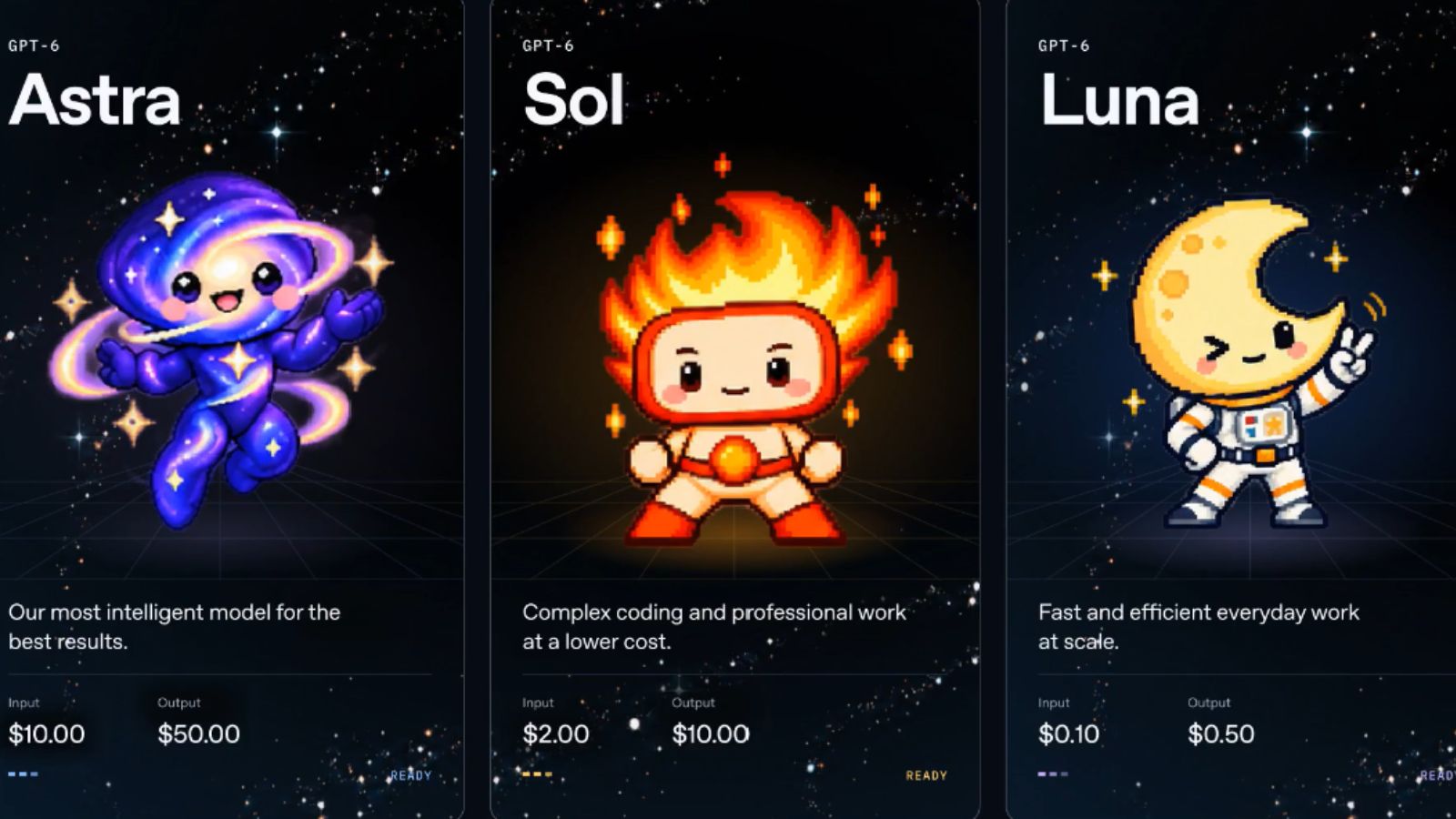
OpenAI released GPT-6 Sol and GPT-6 Luna.
Anthropic released Claude Opus 5.5.
Sol is meant for harder jobs such as coding, while Luna is meant for repetitive jobs such as summarizing documents.
Anthropic says Opus 5.5 can do many tasks as well as a larger model while costing less.
Both companies say their models are faster, more efficient or more accurate in some tests.
The releases happened soon after both companies’ leaders called for caution with the most powerful AI systems.
This may seem like a slowdown, but the companies are still improving and selling AI models.
The main change is that competition is increasingly about price and efficiency as well as power.

OpenAI launched GPT-6 Sol and GPT-6 Luna, while Anthropic released Claude Opus 5.5 within hours of each other.
The models target affordable business uses, including coding, document summarization, information extraction and computer tasks.
OpenAI said its new models cost 50% less than promotional GPT-5.6 pricing because of caching and inference improvements.
Anthropic said Claude Opus 5.5 costs about 40% less to operate than its previous Opus model and responds more than 30% faster.
The launches followed calls from Dario Amodei and Sam Altman to pace frontier AI development so safety measures can keep up.
- Who
- OpenAI and Anthropic, led by Sam Altman and Dario Amodei, respectively.
- What
- The companies launched lower-cost AI models: GPT-6 Sol, GPT-6 Luna and Claude Opus 5.5.
- Where
- The releases were announced by the companies; the articles do not specify a physical launch location.
- When
- Tuesday, following recent calls by both companies to pace frontier AI development.
- Why
- To offer more affordable and efficient tools for business users while competing in a cost-conscious AI market.
Frontier AI Pacing
Commercial AI Expansion
Whether AI development should slow
Frontier AI Pacing
Dario Amodei and Sam Altman have called for a measured pace in frontier AI development so safety measures can keep up with increasing capabilities.
Commercial AI Expansion
The launches show that both companies continue releasing improved models, particularly for business uses where cost and efficiency matter.
What should drive competition
Frontier AI Pacing
Safety, monitoring, alignment and external evaluation should remain central as models become more capable. Anthropic said Claude Opus 5.5 includes additional safeguards and was externally evaluated.
Commercial AI Expansion
Businesses are increasingly focused on return on investment, lower prices and practical performance, creating pressure for companies to make models cheaper and faster.
How strong the new models are
Frontier AI Pacing
The companies’ performance, accuracy and safety claims are based largely on internal tests or company-reported evaluations and do not independently prove that all risks have been eliminated.
Commercial AI Expansion
Anthropic and OpenAI report that the new models match or approach more expensive systems on some tasks, while OpenAI says Sol makes fewer factual errors and performs strongly on selected benchmarks.
Key facts
- OpenAI models
- GPT-6 Sol and GPT-6 Luna
- Anthropic model
- Claude Opus 5.5, the first release in the Claude 5.5 family
- OpenAI pricing reduction
- 50% below promotional GPT-5.6 pricing
- GPT-6 Sol listed price
- $2 per million input tokens and $10 per million output tokens
- Anthropic listed price
- $4 per million input tokens and $20 per million output tokens
- Anthropic cost claim
- About 40% lower operating cost than the previous Opus model, with responses more than 30% faster
- Planned releases
- Anthropic said Sonnet 5.5 and Haiku 5.5 would follow in the coming weeks
Sources

Related news
OpenAI Expands GPT-6 Lineup With Cheaper Sol and Luna Models

Anthropic Launches Claude Opus 5.5 Amid AI Slowdown Debate
Anthropic Launches Claude Fable and Mythos 5.1

Anthropic Considers New AI Model Amid OpenAI’s Enterprise Gains
Anthropic launches Claude Fable and Mythos 5.1 models

Anthropic Weighs New AI Model as OpenAI Gains Momentum

ESDS Shares Surge 302% as AI Contract Drives Optimism

AI Model Upgrade Suddenly Unlocks Exploit-Capable Cyber Skills
Claude Opus 5 Safeguard Bypassed Through False Target Context