

Archive · 10 Aug 2025
NASA Shares New Details on Interstellar Comet 3I/ATLAS
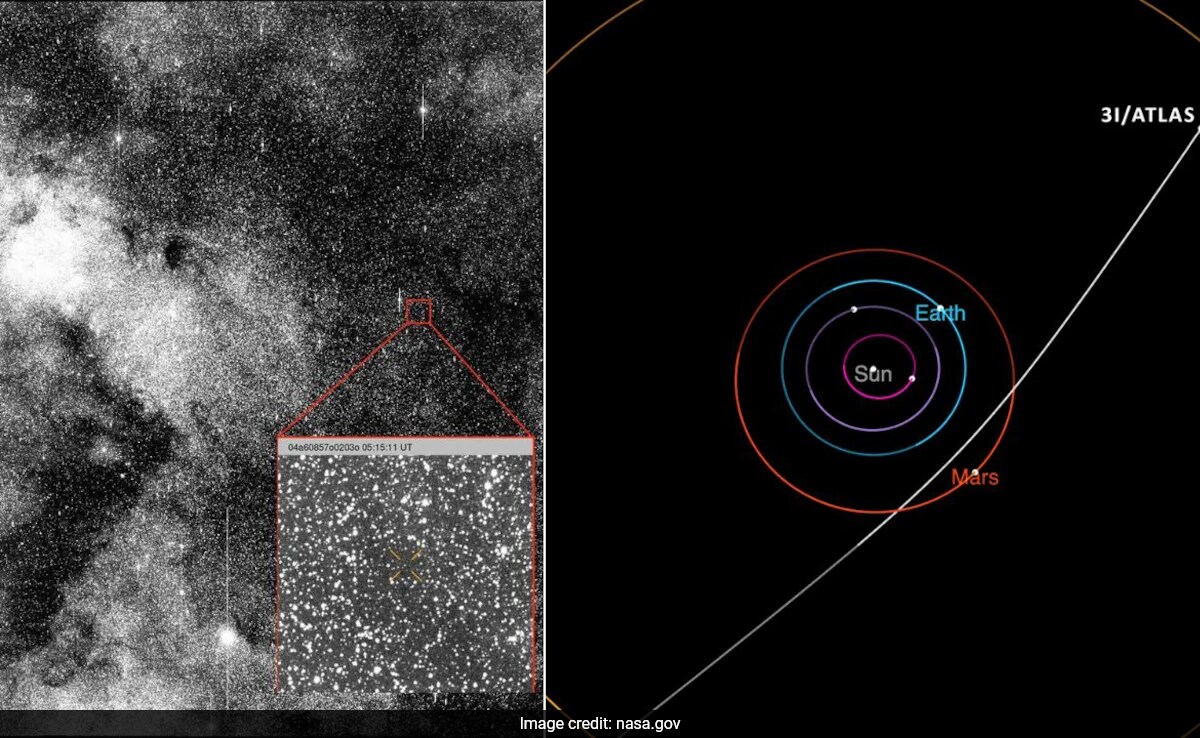
NASA has released new details about the interstellar comet 3I/ATLAS.
This comet was first spotted last month by a system that looks out for objects that could potentially hit Earth.
Scientists used the Hubble Space Telescope to take the clearest picture yet.
The main body of the comet is estimated to be between 320 meters and 5.6 kilometers across.
The comet is moving very fast, faster than anything else from outside our solar system that we've seen before.
Scientists don't know exactly where the comet originated.
This new information is thanks to more powerful tools that are helping us find these types of objects.

NASA revealed new information about interstellar comet 3I/ATLAS.
The comet was discovered on July 1 by the Asteroid Terrestrial-impact Last Alert System (ATLAS).
Hubble captured the sharpest image of the comet.
The comet's nucleus is between 320 meters and 5.6 kilometers in diameter.
3I/ATLAS is traveling at 130,000 miles (209,000 kilometers) per hour.
- Who
- NASA, astronomers, and the Hubble Space Telescope are involved.
- What
- NASA shared new details about interstellar comet 3I/ATLAS.
- When
- The comet was discovered on July 1.
- Where
- The comet is traveling through our solar system.
- Why
- The new images provide new insights into the comet.
- Comet Name
- 3I/ATLAS
- Discovery Date
- July 1
- Discovery System
- Asteroid Terrestrial-impact Last Alert System (ATLAS)
- Distance at Discovery
- 675 million kilometers from the Sun
- Nucleus Size
- 320 meters to 5.6 kilometers in diameter
- Speed
- 130,000 miles (209,000 kilometers) per hour