

Archive · 31 Oct 2025
Durga Puja Footprint: VECC Study Highlights Environmental, Social Impacts
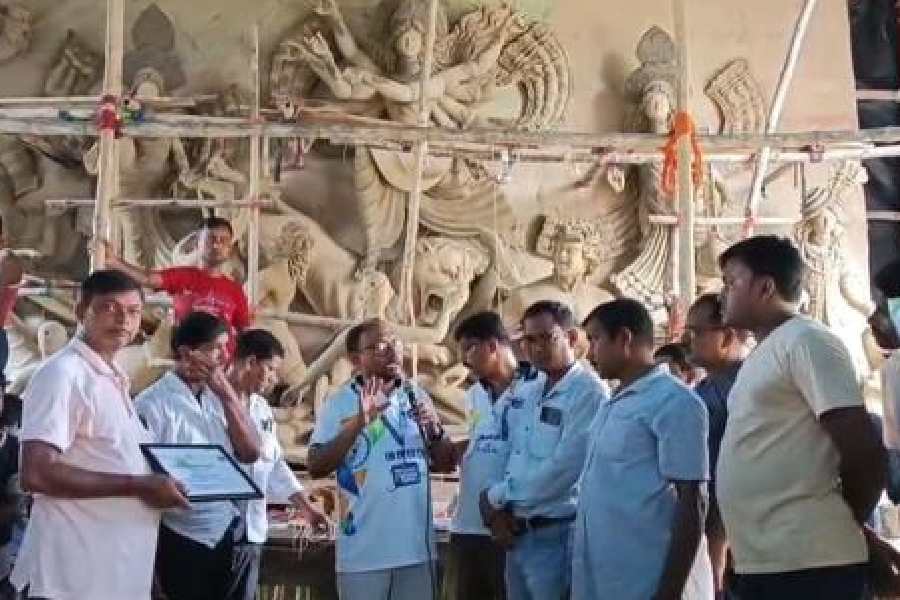
Imagine you're celebrating a big festival like Durga Puja with lots of decorations, food, and fun.
A group of scientists and volunteers wanted to see how all this celebration affects our planet and people.
They talked to people who make the idols, the priests who lead the prayers, and the organizers.
They found out that using materials like thermocol instead of traditional ones creates problems because the natural materials are hard to find.
They also learned that the colors and materials used to decorate the idols can be harmful if not handled carefully.
Even the people who clean up afterwards face risks.
The study suggests ways to make the festival more eco-friendly, like reducing plastic waste and finding better ways to reuse decorations.
They also looked at how the puja helps people earn money and how it can be made even better for those who work hard during the festival.
The goal is to make celebrations fun for everyone while being kind to the Earth.

A study by VECC and Rotary International District 3291 examined the environmental, economic, and social impact of Durga Puja.
Artisans are preferring thermocol over traditional shola due to supply issues and increased costs of shola, impacting its traditional use.
Concerns were raised about the health risks to artisans working with harmful chemicals and the lack of eco-friendly paint alternatives.
Waste collectors and those retrieving puja materials from rivers face health hazards from chemical exposure and decomposing organic matter.
The study highlighted the need for greater awareness among organizers regarding waste management, the use of eco-friendly materials, and the reuse of advertising banners.
- Who
- Variable Energy Cyclotron Centre (VECC) and Rotary International District 3291
- What
- Studied the environmental, economic, and social footprint of Durga Puja festivities
- When
- During and after Durga Puja festivities
- Where
- Across Bengal, including Salt Lake and New Town, with some international participation
- Why
- To promote sustainable festivities in line with the government’s Swachh Bharat Mission and scientific social responsibility
Priests' Perspective
VECC Scientist's Perspective
Addressing Plastic Pollution
Priests' Perspective
Some priests felt it would be more effective for the government to ban plastic production rather than asking them to influence devotees.
VECC Scientist's Perspective
VECC scientists argued that people's will is more powerful than government mandates, citing the example of helmet usage, and suggested priests use religious reasoning to discourage plastic use.
- Study Partner
- Variable Energy Cyclotron Centre (VECC), Department of Atomic Energy
- Initiator
- Rotary International District 3291
- Scope
- Over 160 pujas in Bengal, Salt Lake, New Town, and a few overseas
- Focus Areas
- Environmental, economic, and social impact of Durga Puja
- Previous Economic Impact (2019)
- Rs 32,000 crore turnover, over 2% of West Bengal's GDP