Archive · 4 Sep 2026
Kenya Orders Tata Chemicals Out of Lake Magadi Operation

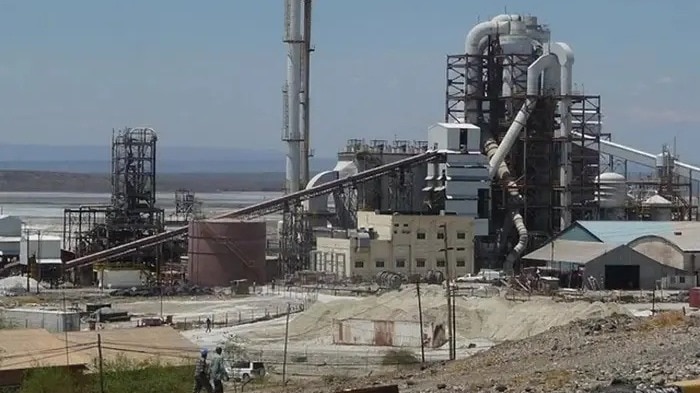
Kenya has told Tata Chemicals to leave its mining operation at Lake Magadi.
The company has collected minerals there for about 20 years.
These minerals are used to make soda ash, which is important for making glass, cleaning products, and chemicals.
President William Ruto said the company did not create enough factories or businesses in Kajiado County.
He also said too much of the resource was being exported to India and other countries.
Kenya wants a new company to process the minerals inside Kenya.
The government had already stopped Tata’s mining activities over alleged unpaid royalties and other regulatory problems.
Tata Chemicals says it gave the government information showing that it followed the rules.
The shutdown has created uncertainty for workers, contractors, and nearby communities.

President William Ruto ordered Tata Chemicals to wrap up its Lake Magadi operations and said Kenya would seek new investors.
Ruto criticized the company for exporting soda ash instead of developing glass and chemical-processing facilities in Kajiado County.
Tata Chemicals Magadi’s mining activities were suspended five weeks earlier over alleged unpaid royalties and other regulatory issues.
Tata Chemicals said it had submitted documents addressing the ministry’s concerns and would continue engaging through legal and regulatory channels.
The proposed transition has affected about 500 employees, contractors, and surrounding communities, while Kenya considers new operators.
- Who
- The Kenyan government, President William Ruto, Tata Chemicals Magadi, and potential future investors.
- What
- Kenya ordered Tata Chemicals to wrap up its Lake Magadi operations and is seeking new investors to take over the mining rights.
- When
- The mining suspension occurred five weeks before Ruto’s ousting order; the operation has existed since 1911 and Tata acquired it in 2005.
- Where
- Lake Magadi in Kajiado County, approximately 120 kilometers southwest of Nairobi, Kenya.
- Why
- The government cited alleged unpaid royalties and other regulatory issues, as well as insufficient local processing and economic development.
Kenyan Government
Tata Chemicals
Regulatory compliance
Kenyan Government
Kenyan officials said Tata Chemicals failed to make royalty payments and meet other regulatory requirements, leading to the suspension and eventual order to leave.
Tata Chemicals
Tata Chemicals said it submitted a comprehensive response and information regarding compliance, and is awaiting the ministry’s review.
Local economic benefit
Kenyan Government
President William Ruto and Kajiado Governor Joseph Ole Lenku said the operation had not produced sufficient local development or processing infrastructure.
Tata Chemicals
Tata Chemicals said it remained committed to constructive engagement through appropriate legal and regulatory channels, but the articles do not provide a detailed response to the local-development criticism.
Mining rights
Kenyan Government
Ruto referred to the company’s historic century-long mining rights, while Governor Lenku said the mining rights expired in 2023.
Tata Chemicals
Tata Chemicals said it was awaiting the ministry’s further direction; the company’s position on the reported expiration of the rights was not stated.
- Operation
- Tata Chemicals Magadi has extracted minerals used to produce soda ash at Lake Magadi for about two decades.
- Acquisition
- Tata Chemicals acquired the operation from Brunner Mond Ltd. in 2005.
- Kenyan production
- Kenya produced 264,921 tonnes of natural soda ash in 2024, according to the U.S. Geological Survey.
- Exports
- Nearly 249,000 tonnes of Kenya’s soda ash production were exported in 2024.
- Company output
- Tata Chemicals Magadi produces more than 350,000 tonnes of soda ash annually, along with various salt grades.
- Local impact
- The shutdown left roughly 500 employees, local contractors, and surrounding communities in uncertainty.
- Proposed requirement
- Kenya wants future operators to build facilities producing glass and industrial chemicals locally.