

Archive · 4 Oct 2026
India’s Central Role and Britain’s Imperial Dismantling
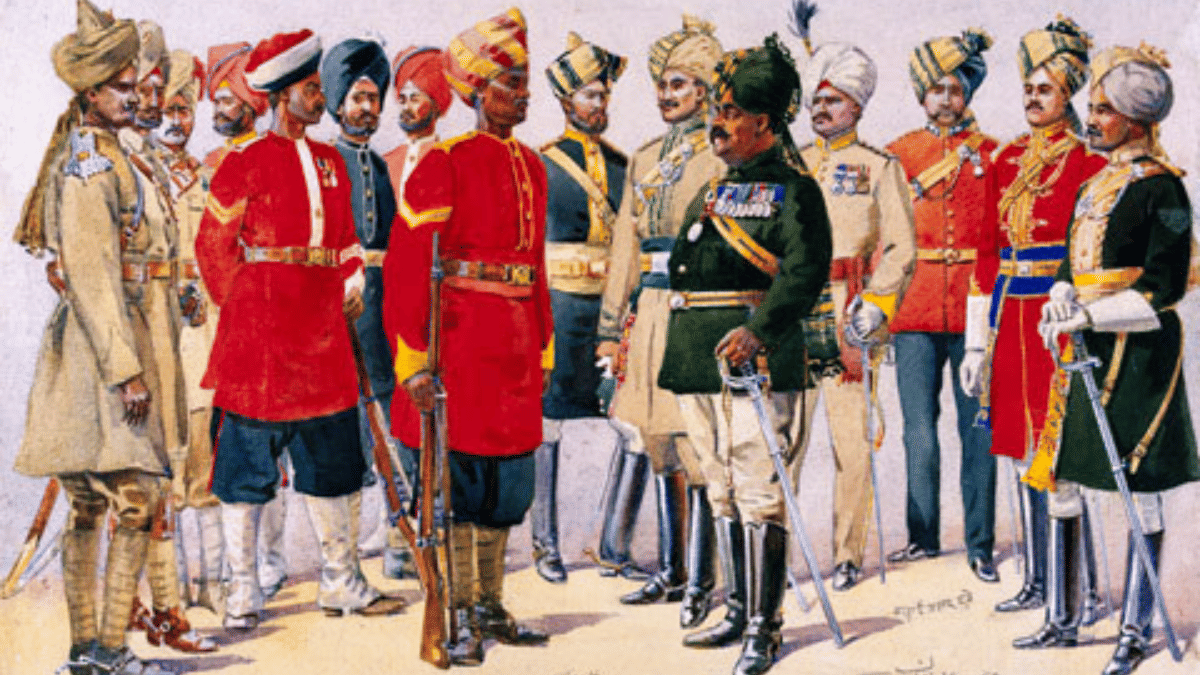
The excerpt says India was very important to the British Empire.
It argues that Britain used Indian money, soldiers and administrators to help control places far from India.
The author says the Indian Rupee was also used for trade in nearby regions.
The article describes the 1905 division of Bengal as an early example of Britain using divisions within society to maintain control.
It says Britain later separated territories such as Burma and Aden from India.
The author argues that the final division of the empire was planned, rather than a simple departure.
The excerpt also claims that independent India was left with debts for infrastructure built during British rule.
These are the author’s interpretations of Britain’s imperial strategy and withdrawal.

The excerpt argues that India was the economic, military and administrative hub of Britain’s power east of Suez.
It says Indian troops served across regions including China, Hong Kong, Malaya, Burma, Afghanistan and Europe.
The author describes the Indian Rupee as a trade currency across Aden and the Gulf, calling the area a “Rupee Zone.”
The piece presents the 1905 partition of Bengal under Lord Curzon as an early example of imperial divide-and-rule.
It argues that Britain’s withdrawal involved dividing territories and leaving independent India responsible for infrastructure-related debts.
- Who
- The British Empire and India, as discussed in an excerpt by Col DPK Pillay (Retd).
- What
- The excerpt argues that India was central to British imperial power and that Britain dismantled the system as it withdrew.
- When
- The account refers to the 1905 partition of Bengal, territorial separations beginning in the 1930s, and the end of British rule.
- Where
- India and the British imperial sphere east of Suez, including Aden, Burma and the Persian Gulf region.
- Why
- The author argues Britain sought to weaken the anti-imperialist front and prevent a unified India from inheriting leadership of the post-colonial order.
- Source
- Excerpt from India at War by Col DPK Pillay (Retd), published with the author’s permission.
- Bengal partition
- The excerpt identifies Lord Curzon’s 1905 partition of Bengal as an early example of divide-and-rule.
- Annulment
- The excerpt says the Bengal partition was annulled in 1911 after intense protest.
- Territorial changes
- It says territories including Burma and Aden were separated from administration centered in India beginning in the 1930s.
- Military role
- The excerpt says Indian troops served in conflicts and garrisons across Asia, the Middle East and Europe.
- Economic claim
- The author describes the Indian Rupee as an official trade currency from Aden to the Gulf.
- Debt claim
- The author argues that independent India had to pay debts for infrastructure built using Indian resources.