

Archive · 16 Jan 2026
Iberian Peninsula Rotating Clockwise Due to Tectonic Forces
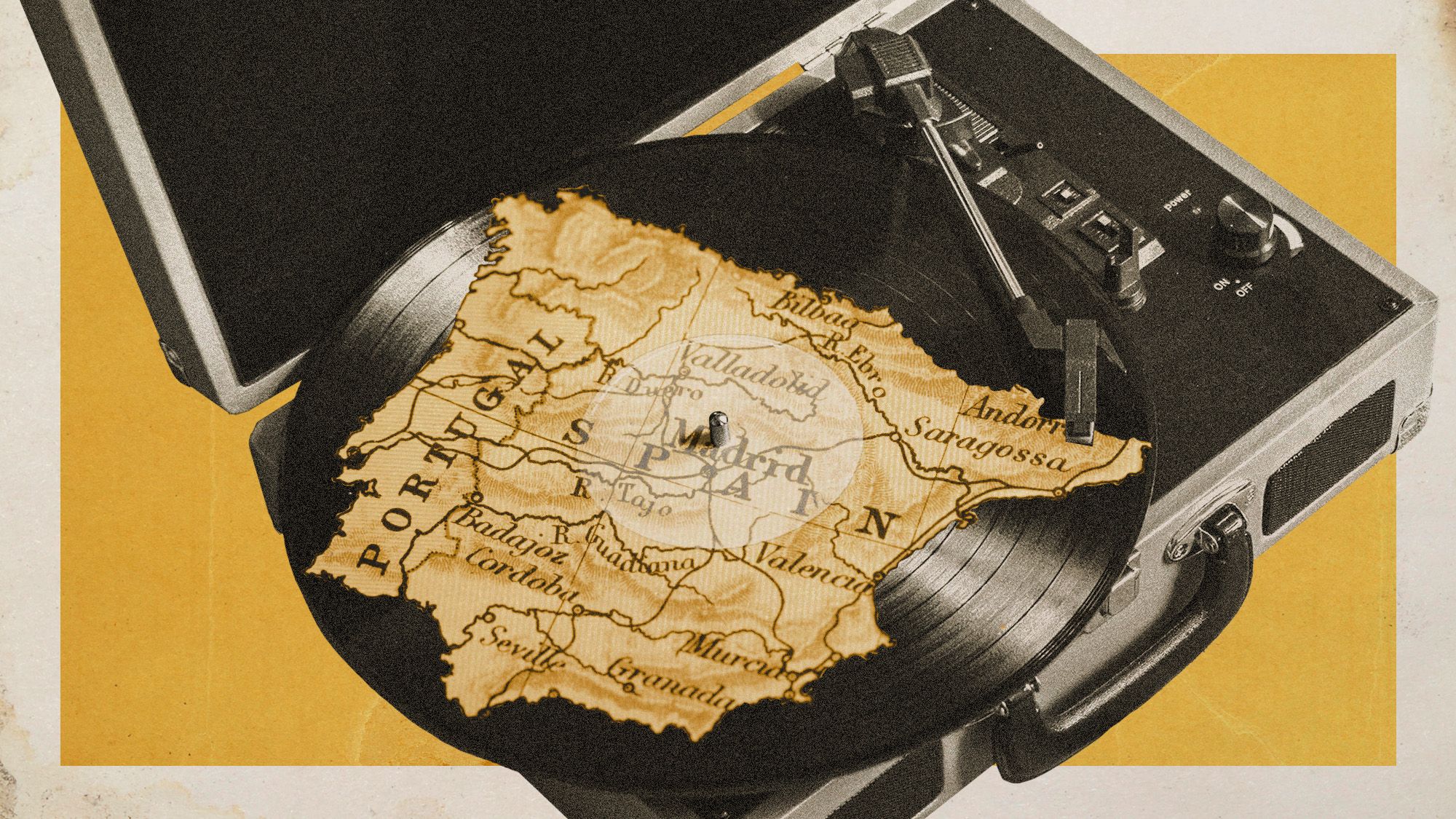
Scientists have found that the Iberian Peninsula, which includes Spain and Portugal, is slowly turning clockwise.
This happens because of the big pieces of Earth's crust called tectonic plates moving and pushing against each other.
The Eurasian and African plates are moving closer together every year, and this causes the land to change shape over a very long time.
A special area called the Alboran domain is moving westward, which helps create a curved mountain range called the Gibraltar Arc.
This movement makes the Iberian Peninsula rotate.
Even though we won't see big changes in our lifetime, understanding these movements helps scientists predict earthquakes and learn about how the Earth changes over millions of years.

The Iberian Peninsula is rotating clockwise due to tectonic forces between the Eurasian and African plates.
The Alboran domain's westward motion drives the formation of the Gibraltar Arc, influencing the peninsula's rotation.
The Eurasian and African plates are moving 4–6 mm closer each year, causing stress and deformation in the Earth's crust.
Scientists use earthquake records and satellite observations to study the peninsula's slow rotation.
The long-term effects of this rotation could include the Mediterranean becoming a closed sea and Africa and Europe joining in the west.
- Who
- Researchers led by Asier Madarieta from the University of the Basque Country
- What
- The Iberian Peninsula is rotating clockwise due to tectonic forces
- When
- The rotation is a slow, ongoing process over millions of years
- Where
- Iberian Peninsula (Spain and Portugal)
- Why
- The movement is caused by the interaction between the Eurasian and African tectonic plates, particularly the Alboran domain
- Region
- Iberian Peninsula (Spain and Portugal)
- Tectonic Plates Involved
- Eurasian and African plates
- Annual Plate Movement
- 4–6 mm closer
- Key Tectonic Region
- Alboran domain
- Geological Feature
- Gibraltar Arc
- Study Journal
- Gondwana Research
- Research Lead
- Asier Madarieta (University of the Basque Country)