

Archive · 23 Dec 2025
Caste Central to India's Sanitation Work
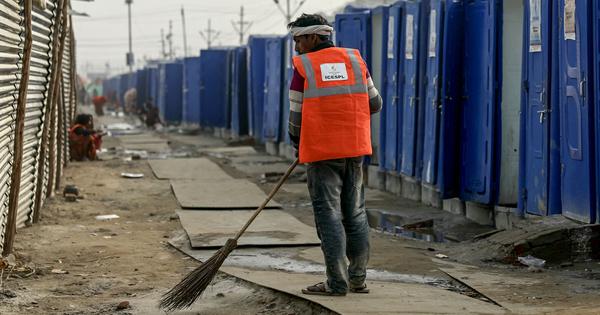
In India, most of the people who clean sewers and septic tanks belong to lower castes, like Scheduled Castes.
This is because, for a long time, these jobs have been given to these castes.
The government says these jobs are not based on caste, but the numbers show that most workers are from these castes.
These workers often live in poorer areas with bad sanitation, while the people who benefit from their work live in cleaner places.
This makes some people think that cleanliness is something that just happens, without seeing the hard work behind it.
The government has a plan to make this work safer, but many workers still do dangerous jobs without proper safety gear.
Many have even died doing this work.
Until everyone sees cleanliness as a shared responsibility, this problem will keep happening.

68% of sewer and septic tank workers in India are from Scheduled Castes.
The government's Namaste scheme aims to mechanize sanitation work.
Sanitation workers often live in poorer areas with inadequate sanitation.
Between 2019 and 2023, at least 377 people died cleaning sewers and septic tanks.
Civic sense in India is shaped by the unequal distribution of sanitation labor.
- Who
- Scheduled Castes and other lower castes
- What
- Sanitation work in India is predominantly carried out by lower castes
- When
- Data submitted in December 2024
- Where
- Across India's urban local bodies
- Why
- Historical caste system and colonial administration practices
- Scheduled Castes in Sanitation Work
- 68% of sewer and septic tank workers
- General Category in Sanitation Work
- 8.05%
- Total Sanitation Workers Profiled
- 57,758
- Deaths in Sanitation Work (2019-2023)
- 377
- National Action for Mechanized Sanitation Ecosystem Mission
- Namaste scheme