1 hr ago
Universities Turn to Campus Barriers as Suicide Prevention Debate Grows

Some universities have changed their buildings to make dangerous places harder to reach.
Cornell added nets and barriers around bridges after several student deaths.
The University of Houston put up fencing and temporary barriers after two students died.
Some universities in the United Kingdom limit how far windows can open or restrict access to roofs.
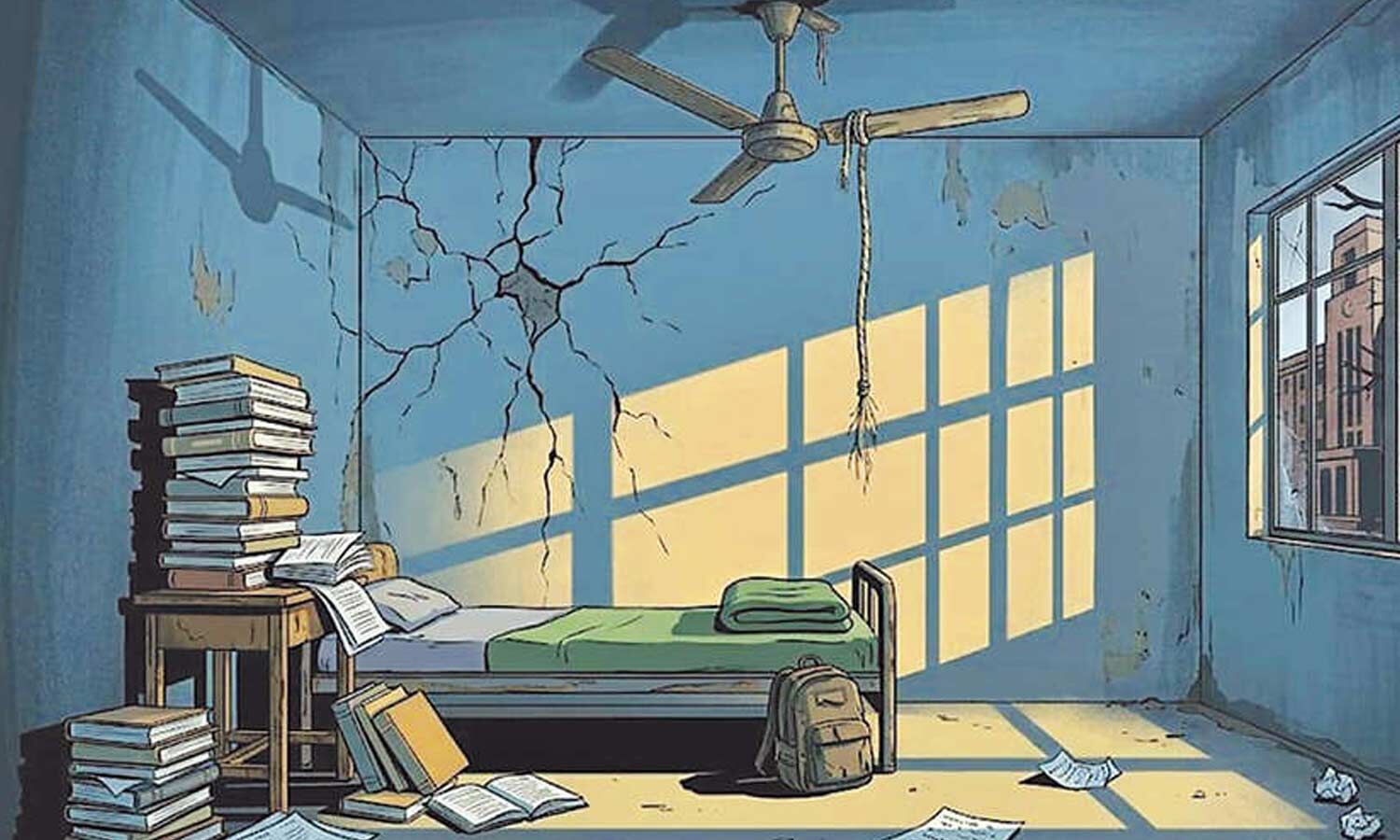
In India, student deaths have led to proposals to remove ceiling fans from hostel rooms.
Some people say these changes may help prevent deaths.
Psychiatrist Vaishali Shanmugam says they should only be one part of prevention.
She says students also need to feel heard and have access to support.
The article describes a debate about physical safety measures and broader mental-health care.

Recent student deaths at IIT Bombay and IIT Delhi have renewed debate in India over removing ceiling fans from hostel rooms.
Cornell University installed steel-mesh nets and later permanent barriers on eight bridges after a cluster of suicides in 2009–10.
The University of Houston added fencing and temporary barriers after two students died by suicide on campus.
UCL and Brunel University of London restrict how far residence windows can open; Oxford’s Wadham College also restricts access to roofs and fits balcony guard rails.
Psychiatrist Vaishali Shanmugam said restricting access to lethal means can be an added layer of protection, but must not replace meaningful mental-health support.
- Who
- Universities in India, the United States and the United Kingdom, and psychiatrist Vaishali Shanmugam.
- What
- Universities have used physical changes and access restrictions as suicide-prevention measures, prompting debate about whether such measures are sufficient.
- Where
- University campuses in India, the United States and the United Kingdom.
- When
- The report is dated October 4; it also cites Cornell’s 2009–10 suicide cluster and recent student deaths in India.
- Why
- To restrict access to locations or objects that could be used for suicide, while the article also highlights calls for broader student support.
Physical restrictions can reduce access
Restrictions cannot replace student support
Role of environmental changes
Physical restrictions can reduce access
The article cites Cornell’s account that consultants identified a lack of bridge barriers as a gap and recommended physical barriers as part of a multifaceted approach.
Restrictions cannot replace student support
Shanmugam said such restrictions should be an added layer of protection, not a solution to suicide or a substitute for meaningful support.
Removing ceiling fans
Physical restrictions can reduce access
Supporters of physical changes may see removing fans as a possible short-term way to restrict access to a means of suicide.
Restrictions cannot replace student support
Critics describe fan removal as potentially cosmetic or a bandaid measure that could distract from stressors, institutional culture and access to mental-health care.
Key facts
- Cornell response
- After a cluster of suicides during the 2009–10 academic year, the university installed steel-mesh nets and ultimately put permanent barriers on eight bridges.
- University of Houston response
- In 2023, the university added security fencing and temporary barriers after two students died by suicide on campus.
- United Kingdom measures
- UCL and Brunel University of London have policies for window opening restrictors in student residences.
- Wadham College measures
- The Oxford college prohibits interference with window restrictors and access to roofs, parapets and canopies; its balconies have guard rails.
- India debate
- Deaths at IIT Bombay and IIT Delhi renewed scrutiny of student suicides; IIT Bombay and BIT Mesra were considering removing hostel-room ceiling fans.
- Expert view
- Vaishali Shanmugam said restricting access to lethal means is an additional protection, not a substitute for student support and mental-health care.
Quotes
Harvard University Means Matter guidelines
Guidelines on suicide prevention for college campuses.
“Restricting access to lethal means is one strategy in a comprehensive approach to reducing the risk of suicide on a college campus.”
 theprint.in
Vaishali Shanmugam
Psychiatrist specialising in anxiety disorders.
“WHO does recommend restriction of access to lethal means as an evidence based suicide prevention strategy. However, its absolute effectiveness in preventing suicide is difficult to establish, and such measures should be viewed as an additional layer of protection, not a solution to the problem of suicide in premier institutions.”
theprint.in
Sources
Related news

Student Suicides: Why Ceiling Fan Changes Cannot Solve Campus Crisis
BIT Mesra Replaces Hostel Fans With Anti-Suicide Rods

IIT Bombay Plans Wall-Mounted Fans Amid Student Suicide Scrutiny

IIT Bombay Replaces Hostel Ceiling Fans Amid Student Safety Scrutiny
Higher Education Needs Reform Beyond Ceiling Fan Replacements