

2 hrs ago
Krishna Janmashtami 2026: Pooja Timings and Ritual Steps
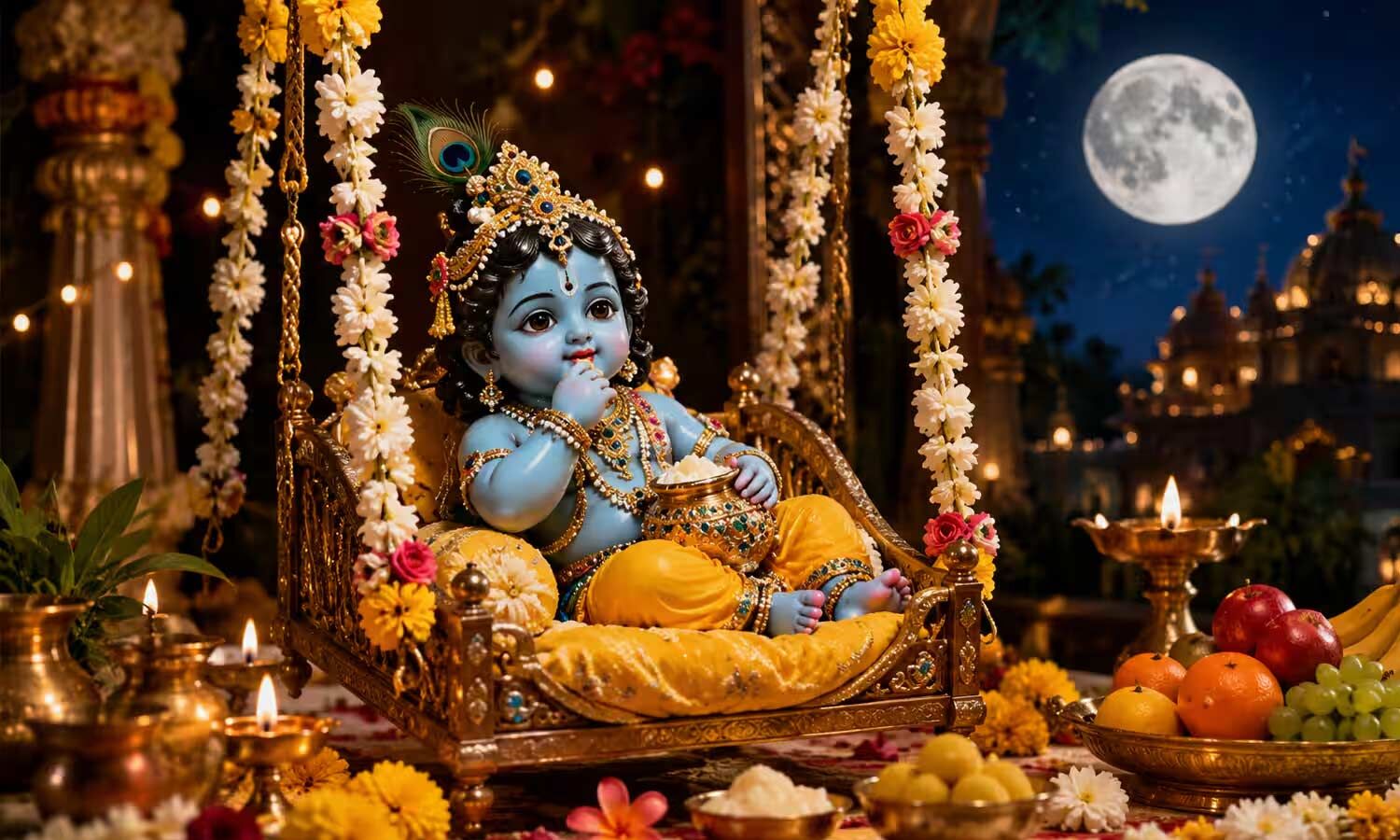
Krishna Janmashtami celebrates the birth of Lord Krishna.
In 2026, the article says it will be observed on September 4.
Many devotees fast during the day.
Some do not drink water, while others eat only fruit.
Families decorate a cradle or shrine for baby Krishna.
In the evening, people sing devotional songs and tell stories about Krishna’s birth.
Around midnight, the idol is bathed with milk, curd, ghee, honey, sugar, and water.
It is then dressed, placed in a cradle, and worshipped with bells, conch shells, aarti, and food offerings.
Devotees end their fast after the midnight worship or the next morning, depending on family and regional customs.

Krishna Janmashtami will be observed on September 4, 2026, according to the article.
Listed auspicious worship periods include 5:46 a.m.–10:26 a.m., 12:05–1:33 p.m., and 4:41–6:14 p.m.
Abhijit Muhurat is listed from 11:36 a.m. to 12:24 p.m., while Nishita Puja runs from 11:58 p.m. to 12:45 a.m. on September 5.
Devotees may fast from sunrise until midnight, with some abstaining from water and others eating only fruits.
Midnight worship includes bathing the infant Krishna idol, dressing it, rocking the cradle, performing aarti, and offering prasad.
- Who
- Krishna devotees and families observing Janmashtami.
- What
- A celebration of Lord Krishna’s birth, including fasting, prayers, abhishekam, aarti, and prasad offerings.
- Where
- Among Krishna devotees across the world.
- When
- September 4, 2026; Nishita Puja is listed for 11:58 p.m. to 12:45 a.m. on September 5.
- Why
- The occasion marks the birth of Lord Krishna, described in the article as the eighth avatar of Vishnu.
Key facts
- Festival date
- September 4, 2026
- Abhijit Muhurat
- 11:36 a.m. to 12:24 p.m.
- Nishita Puja
- 11:58 p.m. to 12:45 a.m., September 5
- Fasting period
- Generally from sunrise until the midnight birth worship
- Abhishekam offerings
- Milk, curd, ghee, honey, sugar, and water
- Special offering
- Makhan-mishri
- Fast-breaking time
- After midnight worship or the following morning, depending on family and regional customs
Sources
Related news
Happy Krishna Janmashtami 2026: Wishes, Messages and Traditions to Share

Krishna Janmashtami 2026: Date, Tithi Timings And Rohini Nakshatra
Janmashtami 2026: Date, Timings, Fasting and Dahi Handi Celebrations

Janmashtami 2026: Puja Timings and Birth Muhurat
Modi, Leaders Extend Janmashtami Greetings as Devotees Celebrate Across India

NSE, BSE To Remain Open Despite Janmashtami Holiday

Retired Air Marshal Named First CEO of Ram Temple
