

Archive · 29 Dec 2025
Earth's Radio Bubble Reaches 119 Light Years
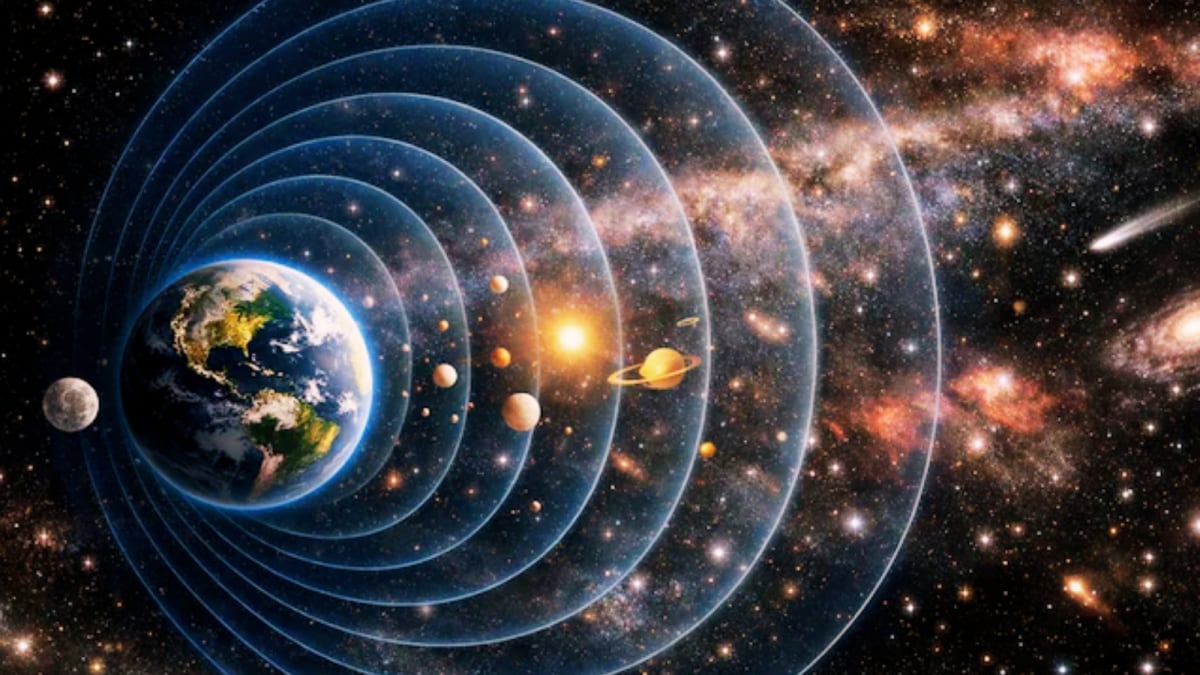
A long time ago, people on Earth started sending radio signals into space.
These signals keep moving outward, like ripples in a pond.
Now, they've spread about 119 light years away, which is like a big bubble around Earth.
Inside this bubble, there are about 75 star systems.
But the signals are very weak and hard to hear.
Even if aliens tried to listen, they'd probably just hear a faint whisper.
Also, Earth is getting quieter because we're using different ways to talk to each other that don't send as many signals into space.

Earth's radio bubble, created by human broadcasts, has reached a radius of 119 light years.
The bubble contains signals from over a century of radio transmissions, now fading into background noise.
About 75 star systems, including Proxima Centauri, lie within the bubble's reach.
Modern communication methods are reducing the amount of radio signals leaking into space.
The signals are too weak for any potential alien civilizations to distinguish from natural cosmic noise.
- Who
- Humanity, through radio broadcasts
- What
- Earth's radio bubble, a region of space containing human-made radio signals
- When
- Since 1906, with the first public radio broadcast
- Where
- Extending 119 light years into space, covering about 75 star systems
- Why
- Radio waves travel at the speed of light and continue outward into space, creating an expanding bubble of human-made signals
- First Broadcast
- December 24, 1906
- Bubble Radius
- 119 light years
- Star Systems Covered
- 75
- Closest Star Reached
- Proxima Centauri (4 light years away)
- Signal Strength
- Fading into background noise
- Current Signal Source
- Early radio and TV broadcasts
- Future Signal Trend
- Decreasing due to modern communication methods