

Archive · 20 Aug 2025
Brain-Liver Link Identified as Cachexia Driver
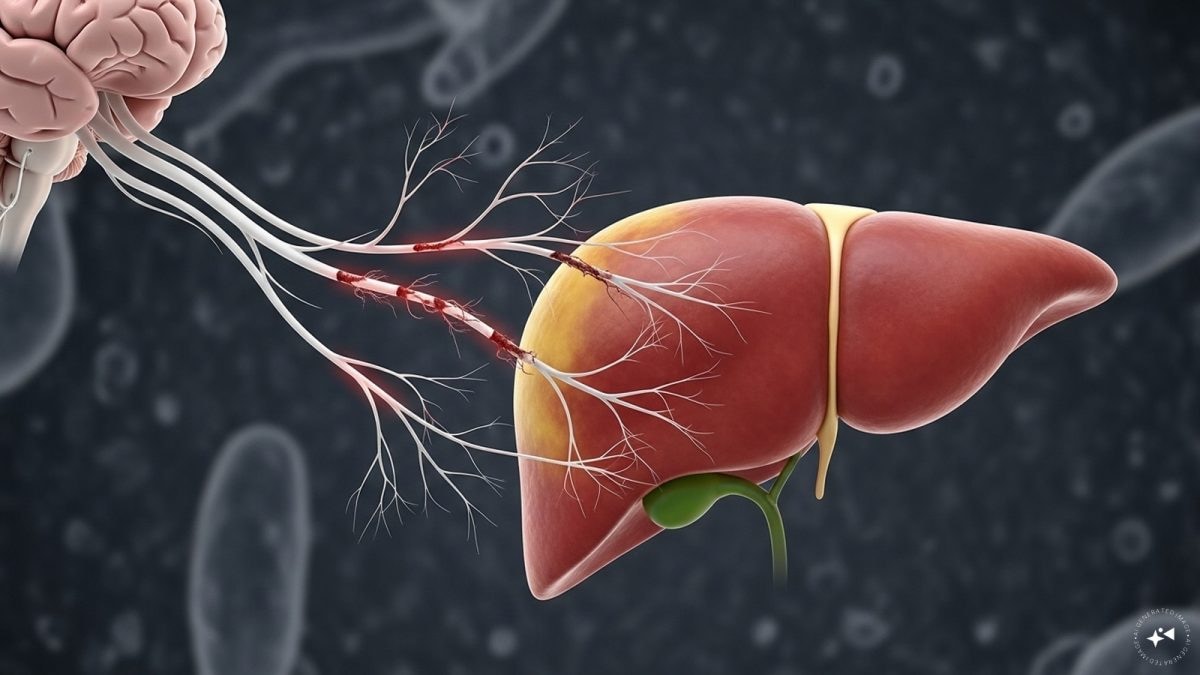
Scientists have discovered a new reason why cancer patients lose weight.
It's because the brain and liver aren't communicating properly due to the cancer.
This disrupted communication, caused by a nerve called the vagus nerve, leads to the body losing muscle and fat.
This weight loss, called cachexia, is a big problem for many cancer patients, making it harder to get better.
Doctors hope new treatments fixing this brain-liver communication can help patients live longer and feel better.

Study highlights brain-liver communication as a key driver of cancer cachexia.
Systemic inflammation from tumors disrupts the vagus nerve, accelerating muscle and fat loss.
Cachexia affects up to 85% of patients with certain cancers, often resistant to standard treatments.
Noninvasive methods targeting the neural pathway prevented cachexia in preclinical models.
Experts suggest that translating these neuromodulation techniques to cancer care could be rapid.
- Who
- Researchers, doctors, and cancer patients.
- What
- A new study reveals the role of disrupted brain-liver communication in causing cachexia in cancer patients.
- When
- Recent findings.
- Where
- Studies conducted at the Weizmann Institute of Science and MD Anderson Cancer Center.
- Why
- To understand the causes of cachexia and find effective treatments.
Conventional Treatments
Emerging Treatment
Intervention Focus
Conventional Treatments
Traditional interventions like nutritional support
Emerging Treatment
Targeting the brain-liver vagal axis
- Condition
- Cachexia (severe weight loss)
- Cause
- Disrupted brain-liver communication via the vagus nerve due to tumor-induced inflammation
- Affected population
- Up to 85% of patients with certain cancers
- Potential Treatment
- Neuromodulation techniques
- Impact
- Worsened survival outcomes