

Archive · 20 Jul 2025
Millet Demand Rises Amid Kurnool Production Shortfalls
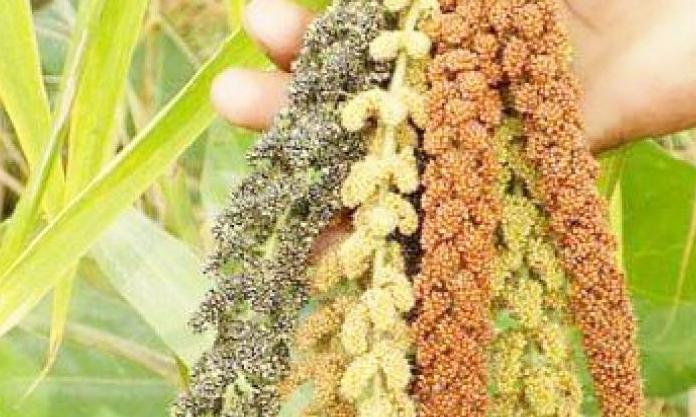
People are eating more millets because they are healthy, like a superfood!
But in Kurnool, not enough farmers are growing them because they don't get enough seeds or help from the government.
Even though the government is trying to help, it's not working well.
Farmers are selling directly to traders and not making as much money.
Experts say that if there were more places to process the millets, farmers could earn more.
The government is giving out seeds, but they are taking a long time to get to the farmers.

Millet demand is increasing due to its health benefits, but production lags in Kurnool.
Limited seed distribution and lack of institutional support hinder millet cultivation expansion.
Government schemes promoting millet have had little impact due to poor seed supply and awareness.
Of the targeted 13,360 hectares for millet this year, only 5,079 have been utilized.
Experts suggest value addition and processing units to boost farmer incomes and revive cultivation.
- Who
- Farmers and consumers of millet in Kurnool.
- What
- Millet production is struggling to meet the growing demand in Kurnool due to lack of support.
- When
- Mini seed kits were planned to be distributed by June 20.
- Where
- Kurnool district
- Why
- Lack of support and seed distribution, hindering farmers' ability to grow millets.
Farmers' Challenges
Government's Response
Government Support vs. Implementation
Farmers' Challenges
Farmers face challenges due to inadequate government support, specifically in seed distribution and awareness campaigns.
Government's Response
Government officials state that mini kits are being supplied in a phased manner.
- Cultivable Land
- 10 lakh hectares
- Land Used (Kharif/Rabi)
- 1.50 lakh hectares
- Millet Varieties Grown (Last Kharif)
- Sorghum, Bajra, Jowar
- Seed Kit Distribution (Targeted)
- Ragi, Korra, Jowar
- Milled Millet Rice Price
- Rs 2,000–2,500 per quintal