

Archive · 23 Dec 2025
Antarctica Faces Climate Change Risks
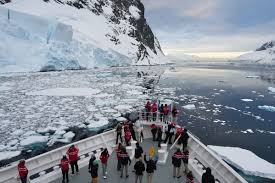
Antarctica is a very cold and remote place with lots of ice and water.
Tourists visit to see animals like penguins, orcas, and seals.
The place is changing because the Earth is getting warmer.
This is called climate change, and it happens when people burn things like oil and gas.
The warming is making the ice melt and the animals have to adapt.
Some penguins, like the Gentoo, are moving to new places and doing okay.
But others, like the Adelie, are having a hard time because they need the ice to survive.
Scientists say that by the year 2100, many Adelie penguin homes could be in danger.
The beautiful views of Antarctica might look very different in the future because of these changes.

Antarctica is one of the fastest warming places in the world due to climate change.
The Southern Ocean absorbs about 40% of human-emitted CO2, contributing to warming.
Gentoo penguins are adapting by migrating south and colonizing rock, increasing their population.
Adelie penguins are threatened as 60% of their colonies could be at risk by 2100 due to warming.
Tourists visit Antarctica to see unique wildlife and landscapes, which are changing due to climate impacts.
- Who
- Tourists, Gentoo penguins, Adelie penguins, orcas, seals, Pintado petrels
- What
- Climate change impacts on Antarctica, including ice melt and species adaptation
- When
- Ongoing, with projections for 2100
- Where
- Antarctic Peninsula, Southern Ocean, Lemaire Channel, Drake Passage
- Why
- Climate change caused by burning of oil, gas, and coal, leading to rising global temperatures
- Location
- Antarctic Peninsula, Southern Ocean
- Key Species
- Gentoo penguins, Adelie penguins, orcas, seals, Pintado petrels
- Climate Impact
- One of the fastest warming places in the world
- CO2 Absorption
- 40% of human-emitted CO2
- Ice Melt
- 149 billion metric tons per year (2002-2020)
- Gentoo Penguin Adaptation
- Migrating farther south, colonizing rock, growing population
- Adelie Penguin Threat
- 60% of colonies threatened by 2100