

Archive · 21 May 2025
Asteroid Vesta May Be a Remnant of a Shattered Planet
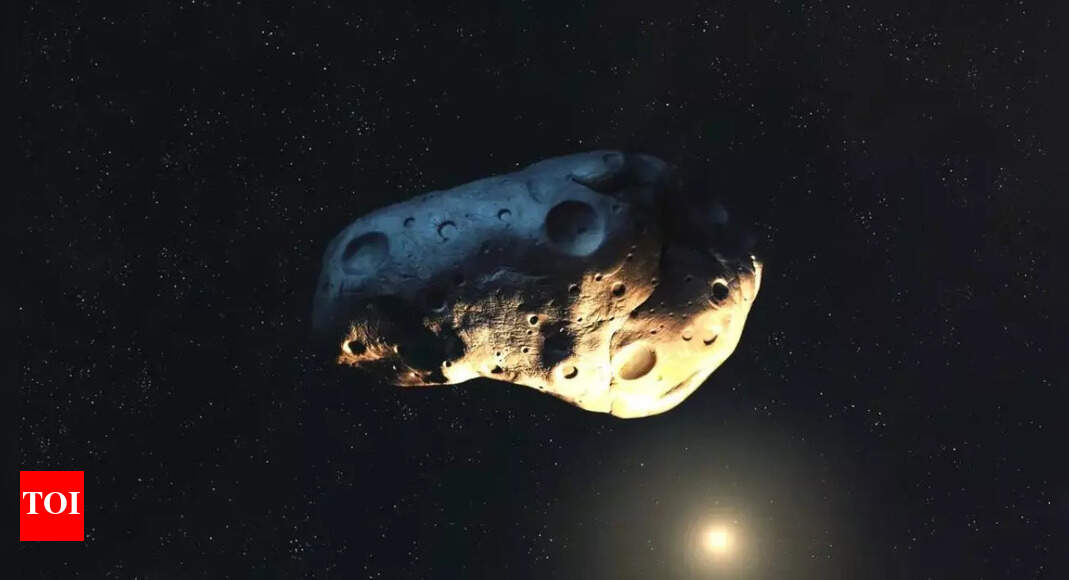
Scientists used to think that Vesta was an unfinished planet.
But new research says it might be a piece of a bigger planet that broke apart long ago!
They looked at data from a spacecraft and realized Vesta doesn't have the core of a real planet.
This suggests it was formed from a giant smash-up in space.
Scientists now think that other space rocks might also be pieces of old, destroyed planets.
It's like finding clues about what happened in our solar system billions of years ago.

New research suggests Vesta is a fragment of a shattered planet, not an embryonic planet.
The research contradicts previous assumptions based on NASA's Dawn mission.
Scientists used radio Doppler signals from the Dawn spacecraft to analyze Vesta.
Vesta's lack of a metal-rich core suggests it never fully differentiated.
The findings imply Vesta may have formed from a cataclysmic planetary impact.
- Who
- Scientists at Michigan State University, including lead author Seth Jacobson, are behind the new research.
- What
- New research suggests Asteroid Vesta is a fragment of a larger, older planet destroyed billions of years ago.
- When
- The research was published in Nature Astronomy in April 2025.
- Where
- The research was conducted at Michigan State University.
- Why
- Scientists are challenging the understanding of Vesta's origins.
- Size
- Second largest body in the asteroid belt
- Discovery
- Discovered in 1807 by Heinrich Wilhelm Olbers
- Origin of name
- Named after the Roman goddess of home and hearth
- Spacecraft Mission
- NASA's Dawn spacecraft orbited Vesta from July 2011 to September 2012
- Surface Characteristics
- Features evidence of volcanism on its surface.