Archive · 31 Dec 2025
UAE's assertive foreign policy in focus

The United Arab Emirates (UAE) has been very active in the Middle East and Africa, trying to make sure countries are stable and not controlled by groups they don't like.
They have been working with different countries and groups to achieve this.
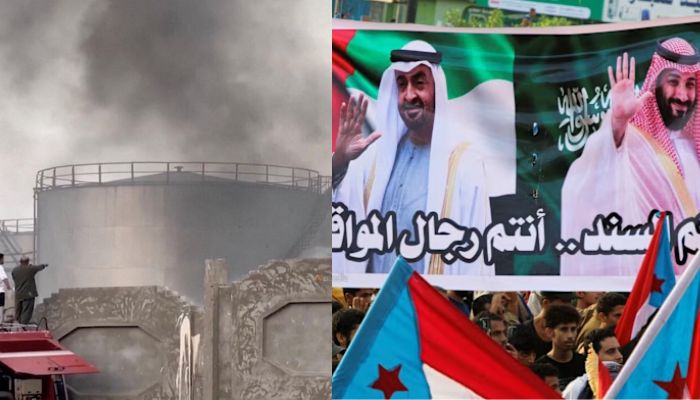
For example, in Yemen, they support a group called the Southern Transitional Council.
In Egypt, they have given a lot of money to help the government.
They have also been involved in Sudan, Chad, Libya, and even made peace with Israel.
Some people say the UAE's actions have made things worse, but the UAE says they are only trying to help.

The UAE has pursued an assertive foreign policy to counter political Islam and secure regional influence.
The UAE supports the Southern Transitional Council in Yemen to counter the Islah party.
The UAE is a key financial backer of Egypt and has signed a $35 billion deal to develop Egypt's Mediterranean coast.
The UAE has been accused of providing military support to the RSF in Sudan, which it denies.
The UAE has normalised relations with Israel under the Abraham Accords and maintains close ties with Somaliland.
- Who
- United Arab Emirates (UAE) and various Middle Eastern and African countries
- What
- UAE's assertive foreign policy and its involvement in key countries
- When
- Recent years (exact timeline not specified)
- Where
- Middle East and Africa
- Why
- To counter the destabilising threat of political Islam and secure regional influence
- Countries Involved
- UAE, Yemen, Egypt, Sudan, Chad, Libya, Israel, Somaliland
- Key Figures
- Sheikh Mohamed bin Zayed Al Nahyan, Mohammed bin Salman, Abdel Fattah al-Sisi, Mohamed Hamdan Dagalo, Mahamat Idriss Deby, Khalifa Haftar
- Geopolitical Context
- Competition for regional influence and leadership
- UAE's Strategy
- Strengthening nation-states against extremists, countering political Islam
- Controversies
- Allegations of fueling conflict, bolstering authoritarian leaders, supplying arms to RSF