

Archive · 17 Nov 2025
Sikkim Revives Traditional Lepcha Cane Bridge
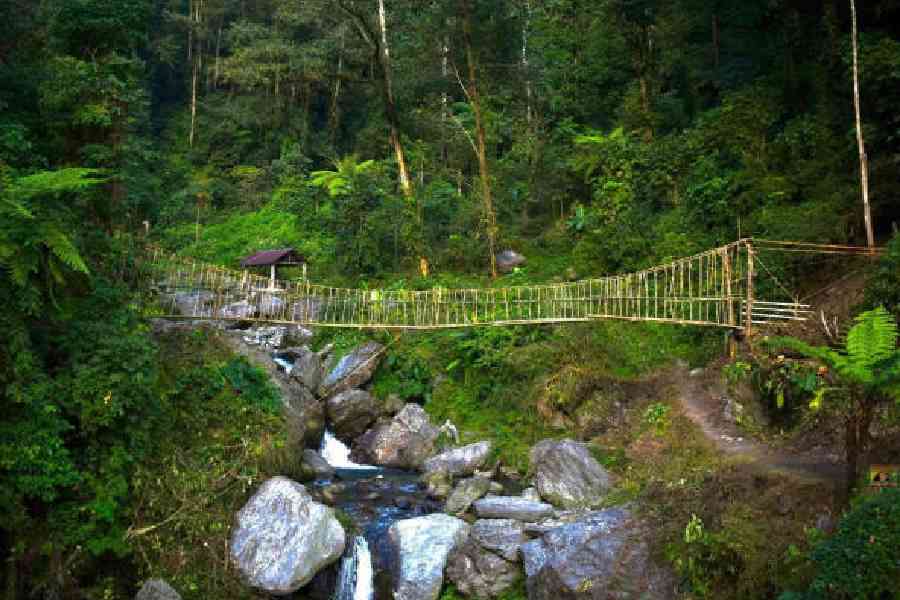
The government of Sikkim in India helped rebuild a special bridge called Ru-Soam, which the Lepcha people have been making for a long time.
They used old ways and natural materials to build it.
This project helps keep old traditions alive, teaches younger people how to build these bridges, and might even bring tourists to the area.
UNESCO is helping with this project too.

Sikkim government revives traditional Lepcha cane bridge known as Ru-Soam.
Bridge inaugurated in Hee Gyathang, north Sikkim, using indigenous techniques and natural materials.
Initiative aims to safeguard heritage, preserve traditional Lepcha engineering, and promote eco-tourism.
Project involves intergenerational learning and extensive documentation.
Supported by UNESCO for consideration under Intangible Cultural Heritage framework.
- Who
- Sikkim government's science and technology department and Lepcha community
- What
- Revival and reconstruction of the traditional Lepcha cane bridge known as Ru-Soam
- When
- Inaugurated on Saturday
- Where
- Hee Gyathang, north Sikkim, over the Mani Kyong stream
- Why
- To safeguard heritage, preserve indigenous engineering practices, promote eco-tourism, and document traditional knowledge for future generations.
- Bridge Name
- Ru-Soam
- Location
- Hee Gyathang, North Sikkim (Lower Dzongu region)
- Inauguration Date
- Saturday
- Inaugurated By
- Pintso Namgyal Lepcha, State Minister for Science and Technology
- Materials Used
- Locally sourced natural materials, traditional methods
- Supporting Organizations
- UNESCO