

Archive · 31 Jul 2026
Amazon Rainforest Reveals Lost Civilization of 400 Earthworks
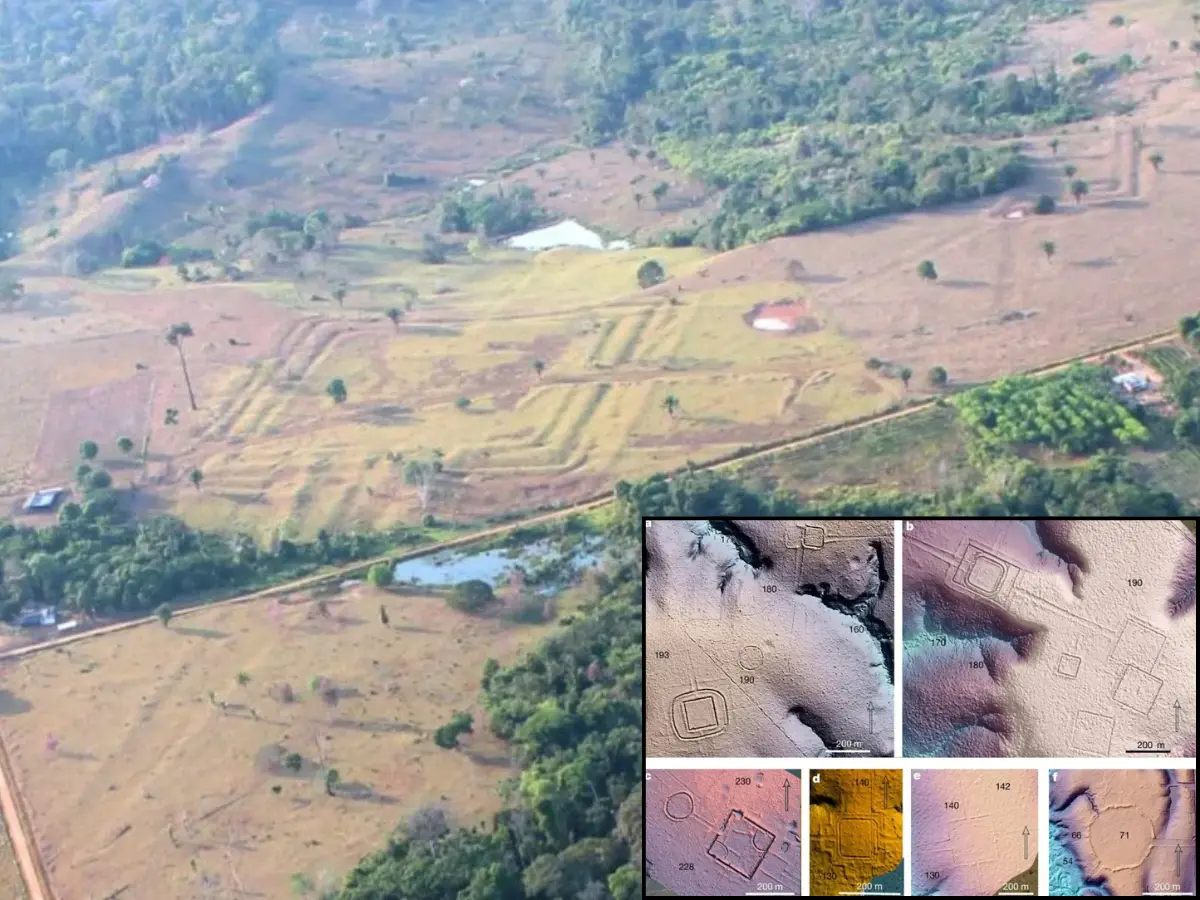
Scientists used a special laser technique called lidar to look under the thick trees of the Amazon rainforest.
They found more than 400 huge earthwork structures, like roads and big geometric shapes, that were built about 2,500 years ago.
These structures show that a big group of people, called the Aquiry, lived there and may have numbered up to 3 million people.
The discovery changes how we think about the Amazon, showing it was not just wild forest but a place with many people and cultures.
The study was published in the science journal Nature.

Researchers uncovered over 400 earthwork monuments, roads, and ceremonial sites beneath the Amazon rainforest using lidar.
The structures date to 600 BCE–850 CE, indicating a multicultural civilization called Aquiry that may have housed 1.5–3 million people.
Lidar surveys covered 4,497 km², revealing geometric shapes such as pentagrams, octagons, and circles inscribed in squares.
Radiocarbon dating places the earthworks at roughly 2,500 years old, challenging the view that the Amazon was uninhabited.
The discovery suggests human impact on the Amazon’s environment was far greater than previously believed.
- Who
- Researchers led by Martti Pärssinen, Juha Hyyppä, and Alceu Ranzi
- What
- Discovery of over 400 earthwork monuments, roads, and ceremonial sites in the Amazon rainforest
- When
- Between 600 BCE and 850 CE
- Where
- Amazon rainforest, Brazil
- Why
- To understand the extent of human impact and biocultural history of the Amazon
- Number of earthworks
- 432
- Survey area
- 4,497 km²
- Estimated population
- 1.5–3 million
- Time period
- 600 BCE–850 CE
- Discovery method
- Lidar
- Journal
- Nature