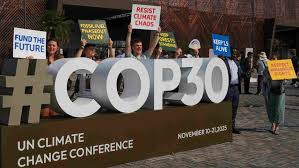
Archive · 19 Nov 2025
Brazil Aims for Early COP30 Deal Amidst Indigenous Land Demarcations and Divisive Climate Talks
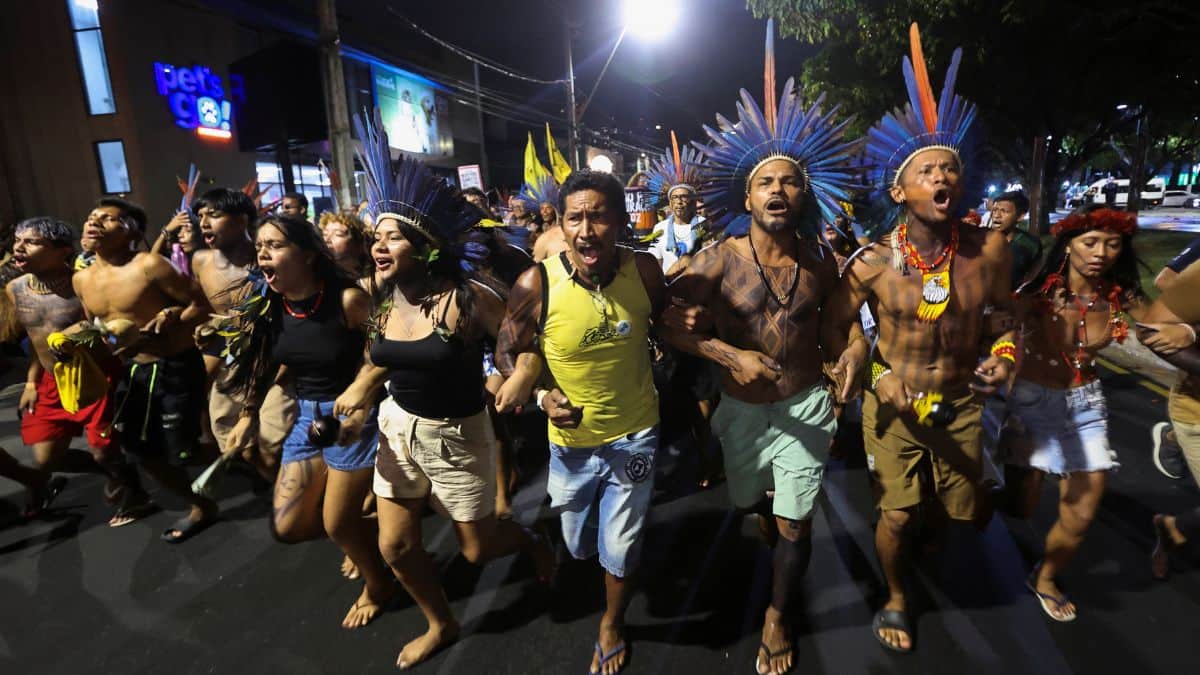
Brazil is trying to quickly solve some big problems at a climate meeting called COP30.
They want to finish talking about money for clean energy, stopping the use of fossil fuels, and cutting emissions.
While this is happening, Brazil's president has given the okay for 10 more Indigenous territories.
This is to help Indigenous people live on their traditional lands and protect the environment.
Some Indigenous groups are still upset and want more action at the climate meeting.
However, there are still disagreements among countries about how to handle these issues.

Brazil seeks to reach an early agreement on contentious COP30 climate issues in two stages by Wednesday and Friday
U.N. Secretary-General Antonio Guterres to meet Brazilian President Luiz Inácio Lula da Silva on Wednesday to discuss key topics including climate finance, fossil fuel phase-out, and emissions cuts
Brazil has demarcated 10 new Indigenous territories, benefiting several communities and recognizing their lands, while Indigenous groups demand greater representation and environmental protection at COP30
Brazil aims to conclude COP30 by Friday, despite divisions among countries on issues like fossil fuel use and climate finance
The COP30 presidency released a draft deal titled 'Global Mutirão: uniting humanity in a global mobilization against climate change'
- Who
- Brazil's government, Indigenous communities, global nations, and U.N. Secretary-General Antonio Guterres
- What
- Negotiating climate agreements and demarcating Indigenous territories
- When
- COP30 summit (November 11, 2025) and Indigenous territory demarcations (Monday, November 11, 2025)
- Where
- Belem, Brazil (COP30) and across seven Brazilian states (Indigenous territories)
- Why
- To strengthen global climate action, recognize Indigenous lands, and address Indigenous groups' demands at COP30
Indigenous Groups
Brazilian Government
Representation at COP30
Indigenous Groups
Demand greater representation and decision-making power at COP30
Brazilian Government
Acknowledges Indigenous groups' concerns and takes steps to address them
Environmental Protection
Indigenous Groups
Want stronger action to protect their lands and the environment
Brazilian Government
Sees demarcation of Indigenous territories as a means to preserve the environment
Fossil Fuel Phase-out
Indigenous Groups
Push for stronger commitments to reduce fossil fuel use
Brazilian Government
Seeks a roadmap for transitioning away from fossil fuels but faces resistance from other countries
- Total Indigenous territories approved by Lula
- 26
- Percentage of Brazilian territory occupied by Indigenous lands
- 13.8%
- Number of states benefited by the new territories
- 7
- Indigenous communities benefited
- Munduruku, Tupinamba, Guarani-Kaiowa, Pataxo, among others
- Expected COP30 deal stages
- Wednesday (first package) and Friday (remaining issues)
- COP30 summit duration
- November 11-22, 2025
Sources
Brazil announces demarcation of 10 new Indigenous territories

Belém climate summit must shift from promises to purposeful action

Brazil’s COP30 slow shuffle climate negotiation turns into a sprint
Brazil pushes for early COP30 climate deal on fossil fuels and finance

COP30: Small and Big Nations Turn Up the Heat on Fossil Fuels As the Clock Ticks
Brazil pushes for early COP30 climate deal, though divisions persist
WWF, Greenpeace Demand Roadmap on Deforestation at UN COP30