

Archive · 19 May 2025
From Brushstrokes to Photoshop: The Evolution of Indian Film Posters
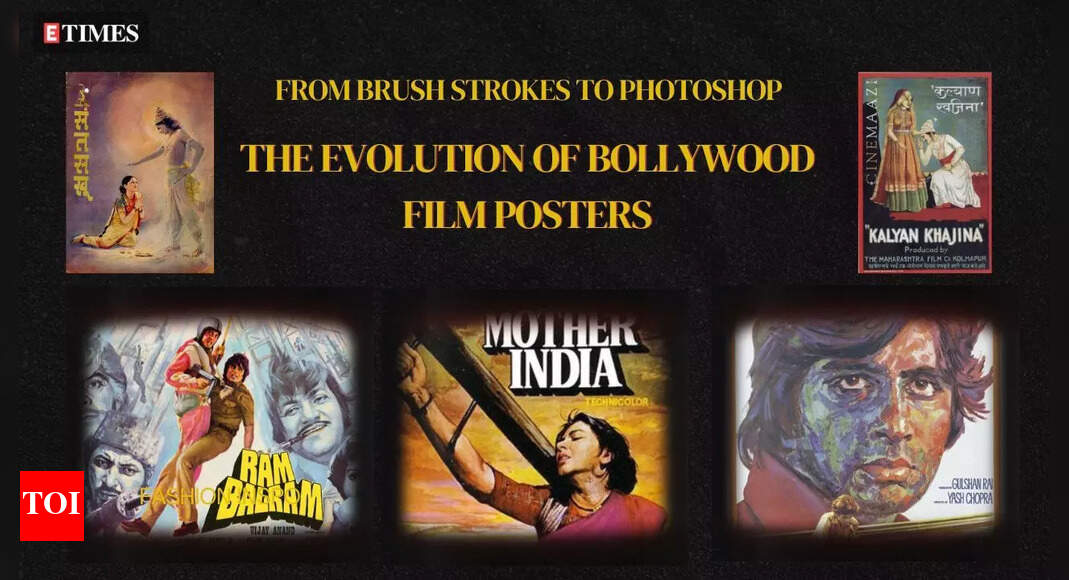
Long ago, before computers, movie posters in India were painted by hand!
These posters were like art, put up on walls to get people excited about films.
They used bright colors and showed exciting scenes from the movies.
Artists would paint these posters, and they became really famous.
Over time, the way posters were made changed, from hand-painting to using computers.
Even though things changed, the old hand-painted posters are still remembered as special pieces of art.

Indian film posters evolved from hand-painted art to computer-generated designs.
Hand-painted posters were a visual signature from the 1940s to the 1980s.
Artists often used imagination and stills to create compelling visuals.
The transition included Art Deco influences and later, photography and digital design.
Hand-painted posters shaped expectations and were a crucial part of film promotion.
- Who
- Artists, studios, and designers created them for film production companies.
- What
- Hand-painted film posters, evolving into digital designs.
- When
- From the early 1900s to the present day, with a peak in the mid-1900s.
- Where
- India, particularly in Mumbai
- Why
- To promote films, attract viewers, and reflect the film's themes and era.
- Origin
- India
- Key Figures
- Raja Ravi Varma, B.M. Gupta, C. Mohan, Sachin Suresh Gurav, Milind Mathkar
- Golden Age
- 1940s-1980s
- Notable Studios
- Studio Mohan, Pamart Studio, R.K. Studios
- Influences
- Art Deco, Soviet style