

Archive · 4 Nov 2025
Ex-bureaucrats propose 'green bonus' for Himalayan states
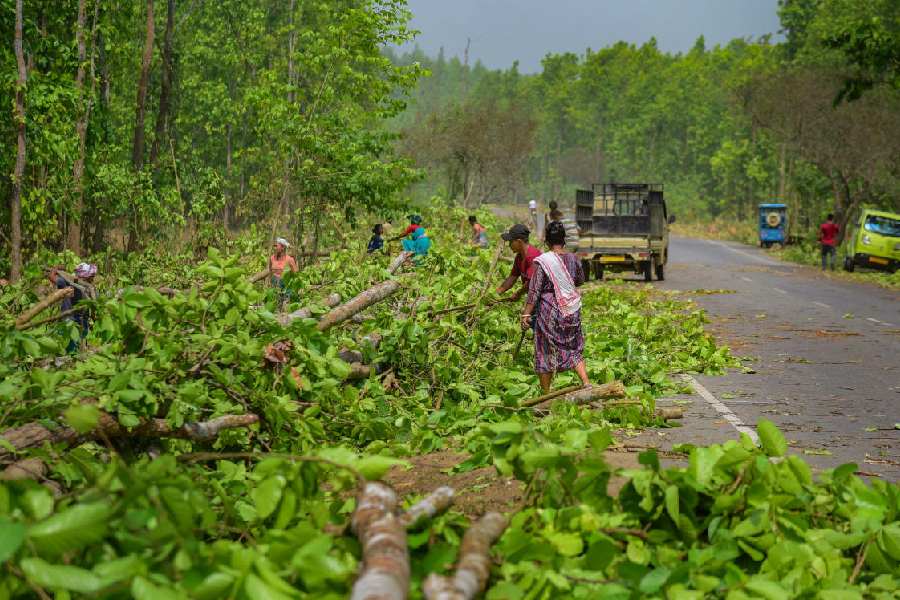
Imagine India's tall mountains, like the Himalayas, are super important for everyone.
They give us clean water, help control the weather, and store carbon to keep the air clean.
But these mountains are facing many problems, like floods and landslides, which are getting worse.
A group of retired government officials wrote a letter to a special government committee that decides how money is shared across India.
They said that these mountain areas need more money because they are protecting us all.
They also think that when deciding how to share money, the committee should give more importance to how much forest and nature a place has.
Right now, they feel it's not enough, and the way they measure the 'forest area' leaves out important parts like snowy mountains and pastures above the trees.
By changing these rules, they hope the mountain states will get the support they need to protect themselves and continue to help everyone else.

Former bureaucrats have urged the 16th Finance Commission to allocate a 'green bonus' for Himalayan states.
They highlighted increasing extreme weather events and natural disasters impacting states like Himachal Pradesh and Uttarakhand.
The proposal includes increasing the weightage for Forests and Ecological Services in fund allocation from 10% to at least 20%.
The current methodology for calculating forest area excludes crucial regions above the tree line, disadvantaging mountainous states.
Ex-bureaucrats argue for compensation for the vital non-monetary contributions of Himalayan states to climate control, water resources, and national well-being.
- Who
- 103 former bureaucrats under the banner of the Constitutional Conduct Group (CCG)
- What
- Wrote to the 16th Finance Commission Chairman proposing a 'green bonus' and changes in the evaluation of ecological value for Himalayan states.
- When
- Monday, November 3
- Where
- India (specifically advocating for Himachal Pradesh, Uttarakhand, Jammu and Kashmir, and Sikkim)
- Why
- To highlight the frequent extreme weather events and natural disasters in these states, and to ensure they are compensated for their vital contributions to the nation's ecology, climate control, water resources, and economy.
Constitutional Conduct Group (Retired Bureaucrats)
Current Finance Commission Formula
Weightage for Forests and Ecological Services
Constitutional Conduct Group (Retired Bureaucrats)
Proposes increasing the weightage from the current 10% to at least 20% to adequately recognize the ecological contributions of states.
Current Finance Commission Formula
Currently allocates only 10% weightage to Forests and Ecological Services in its recommendations.
Definition of Forest Area for Calculation
Constitutional Conduct Group (Retired Bureaucrats)
Argues that areas above the tree line (snowfields, alpine pastures, glaciers) should be included in forest area calculations due to their ecological and water-provisioning value.
Current Finance Commission Formula
Excludes areas above the tree line from its current methodology for calculating forest area, disadvantaging mountainous states.
Compensation for Ecological Contributions
Constitutional Conduct Group (Retired Bureaucrats)
Advocates for a 'green bonus' and compensation for the non-monetary but vital contributions of Himalayan states to national well-being, climate control, water, and agriculture.
Current Finance Commission Formula
Does not explicitly provide a 'green bonus' or specific compensation for the ecological services provided by Himalayan states, relying on general fund devolution.
- Group
- Constitutional Conduct Group (103 former bureaucrats)
- Recipient
- 16th Finance Commission Chairman Arvind Panagariya
- Date of Letter
- Monday, November 3
- Affected States
- Himachal Pradesh, Uttarakhand, Jammu and Kashmir, and Sikkim
- Proposed Forest Weightage Increase
- From 10% to at least 20%
- Estimated Value of Himachal's Forest Wealth
- Rs 9.95 lakh crore
- Himachal's Losses from Extreme Weather Events (2022-2025)
- Rs 18,000 crore (excluding indirect losses)
