

Archive · 19 Jan 2026
60,000-Year-Old Poisoned Arrowheads Discovered in South Africa
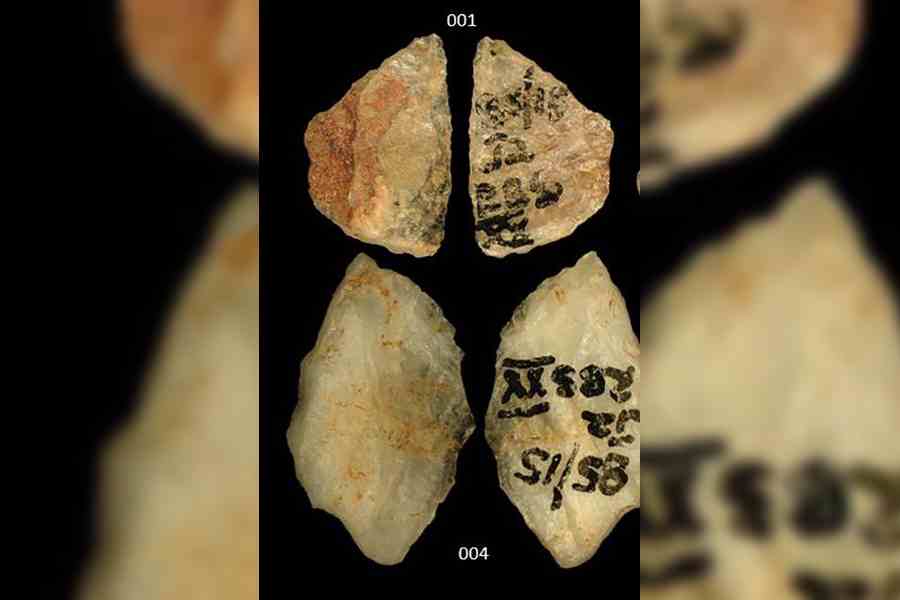
Scientists found very old arrowheads in South Africa that are 60,000 years old.
These arrowheads had poison on them, which is the oldest evidence of people using poison on weapons.
The poison came from a plant called the Bushman’s poison bulb.
This shows that early humans were smart and knew a lot about plants and hunting.
The arrowheads were small, which helped the poison work better.
Experts say this discovery is important because it shows that people long ago were as smart as we are today.
They also think there might be more discoveries like this if they look closely at other old tools.

Researchers discovered 60,000-year-old poisoned arrowheads in South Africa, the oldest evidence of poison use on weapons.
The arrowheads contained toxic compounds from the Bushman’s poison bulb, used by traditional hunters like the San and Khoe peoples.
The small size of the arrowheads suggests they were designed for efficient poison delivery.
The discovery indicates that early Homo sapiens had advanced cognitive abilities and knowledge of local plants.
Experts believe similar ancient poison residues might be found on other stone tools using advanced analytical techniques.
- Who
- Researchers led by Sven Isaksson, Stockholm University
- What
- Discovery of 60,000-year-old poisoned arrowheads
- When
- Arrowheads dated to 60,000 years ago; study published recently
- Where
- Umhlatuzana Rock Shelter, eastern South Africa
- Why
- To understand early human hunting techniques and cognitive abilities
- Discovery Location
- Umhlatuzana Rock Shelter, eastern South Africa
- Age of Arrowheads
- 60,000 years old
- Poison Compounds Found
- Buphanidrine and epibuphanisine
- Source Plant
- Boophone disticha (Bushman’s poison bulb)
- Researchers
- Led by Sven Isaksson, Stockholm University
- Journal
- Science Advances
- Next Oldest Poison Evidence
- 35,000 years ago
- Modern Users
- San and Khoe peoples