

Archive · 1 Feb 2026
James Webb Telescope Reveals Helix Nebula's Stunning Detail
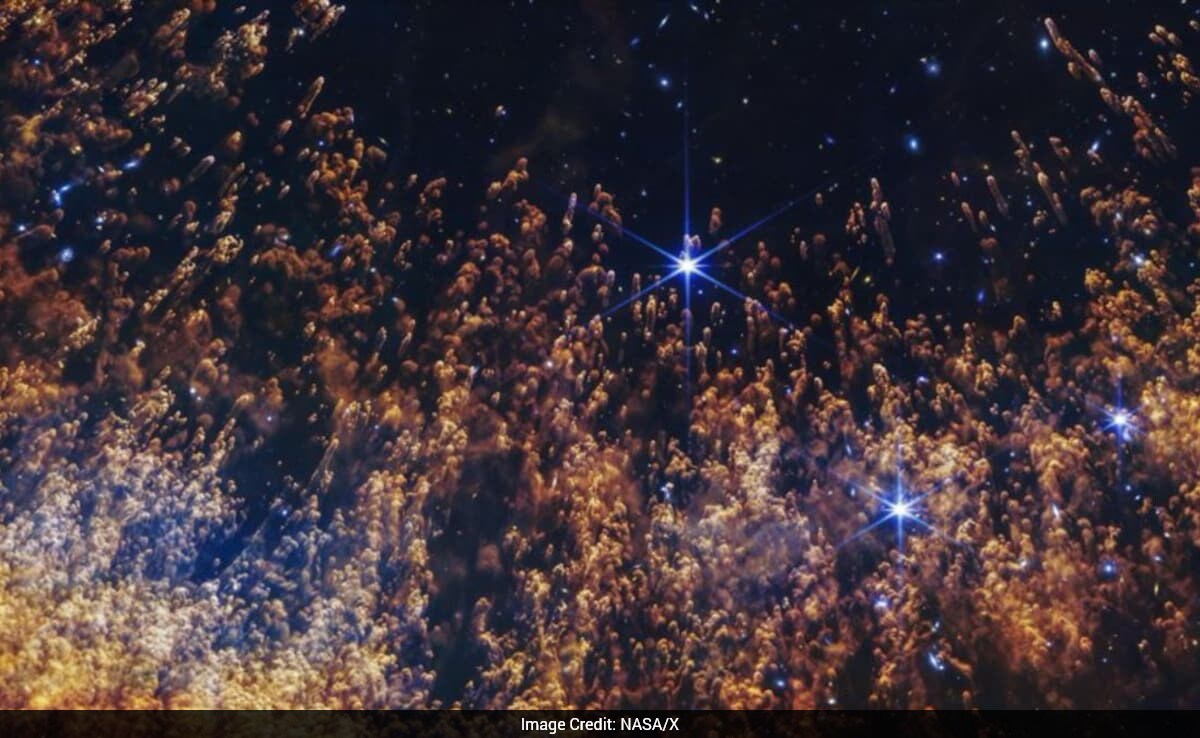
NASA's James Webb Space Telescope has taken amazing pictures of the Helix Nebula, a cloud of gas and dust around a dying star.
These pictures show how the star is shedding its outer layers, which will eventually form new stars and planets.
The telescope's special camera, called NIRCam, reveals detailed structures like long, comet-like tails of gas.
At the center of the nebula is a very hot, dense star called a white dwarf, which is not visible in the images.
The different colors in the pictures show the temperature and composition of the gas, with blue being the hottest and red the coolest.
The dark areas between the bright parts show where complex molecules are forming, which are important for making new planets.
This process is like a star's way of recycling its material to create new worlds.

James Webb Space Telescope captured detailed images of the Helix Nebula, showing the fate of dying stars.
The telescope's NIRCam revealed comet-like gas columns and the inner boundary of the expanding shell around the dying star.
The Helix Nebula's structure is shaped by fast, hot winds colliding with slower-moving gas and dust.
Webb's images provide more detailed views of the nebula than previous telescopes like Hubble and Spitzer.
The nebula's colors indicate temperature and chemical composition, with blue representing the hottest gas and red the coolest.
- Who
- NASA's James Webb Space Telescope
- What
- Captured detailed images of the Helix Nebula
- When
- Not specified
- Where
- Helix Nebula in space
- Why
- To study the fate of dying stars and the formation of future planets
- Telescope
- James Webb Space Telescope
- Nebula
- Helix Nebula
- Camera
- Near-Infrared Camera (NIRCam)
- Central Object
- White Dwarf
- Key Features
- Gas knots, comet-like tails, expanding shell
- Temperature Indicators
- Blue (hottest), Yellow (hydrogen fusion), Red (coolest)
- Scientific Significance
- Recycling of material for future stars and planets