Archive · 6 Jan 2026
India's Meat Startups Pivot Offline to Survive
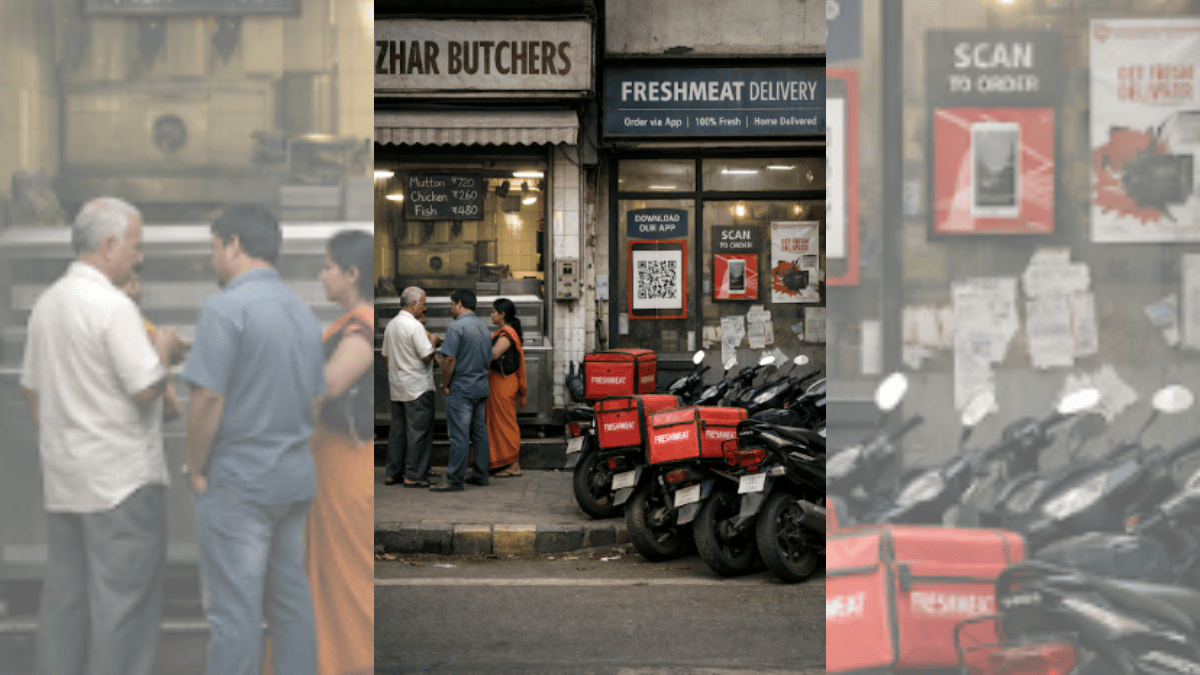
Indian meat delivery startups are having a tough time.
They spent a lot of money trying to sell meat online, but most people still prefer to buy meat from their local butcher.
Online meat delivery is only a tiny part of the market.
These startups are now trying to open physical stores so people can see and trust the meat they buy.
They are also working to make online deliveries faster.
Some, like Licious, are doing better with this new approach, but it's still hard because running stores and delivery services is expensive.
Investors are also less excited about these companies now, making it harder for them to grow.

Indian meat startups are shifting to offline retail due to consumer preference for seeing and trusting their meat before purchase.
Online meat delivery accounts for only 0.5% of India's total meat market, with neighborhood butchers dominating 99.5%.
High customer acquisition and delivery costs, along with thin margins, make online meat delivery challenging.
Licious and TenderCuts are among the startups pivoting to omnichannel strategies, with physical stores contributing significantly to their revenue.
The sector has seen a drastic drop in funding, from a peak of $417 million in 2021 to just $1.51 million in 2024.
- Who
- Indian meat startups such as Licious and TenderCuts
- What
- Pivoting to offline retail and improving online delivery speed to survive
- When
- After years of online-focused growth and significant venture capital investment
- Where
- India
- Why
- Consumers prefer to see and trust their meat before buying, and online delivery costs are high
- Online Meat Delivery Market Share
- 0.5%
- Neighborhood Butcher Market Share
- 99.5%
- Customer Acquisition Costs
- High
- Delivery Costs
- Approximately ₹100 per order
- Licious FY25 Revenue
- ₹844.6 crore
- Licious Quarterly Growth in Ready-to-Cook
- 35%
- Licious Repeat Customer Base
- 85%
- TenderCuts Offline Revenue Contribution
- 30% (targeting 50% in six months)