

Archive · 23 Jul 2025
Electric Egg: The WWII Electric Car
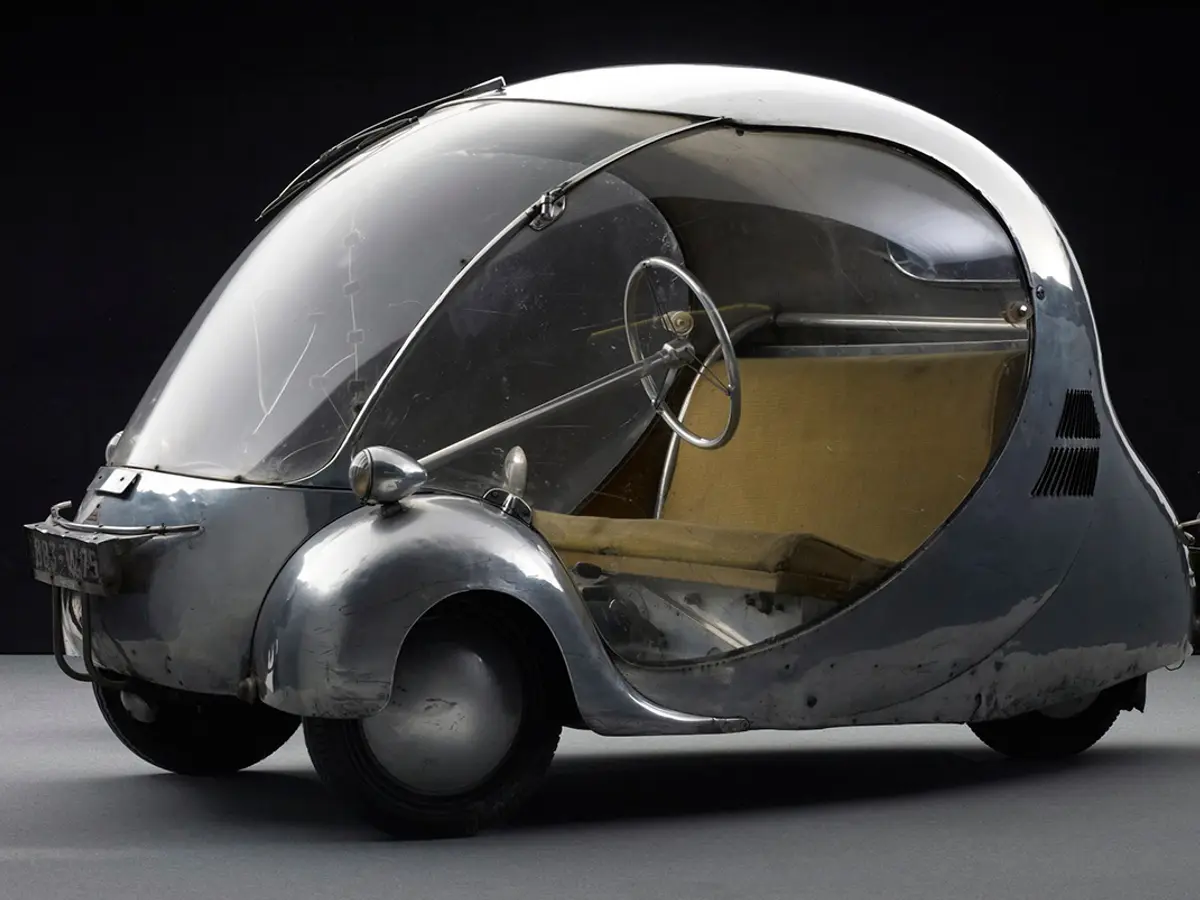
During World War II, fuel was scarce, so a French engineer named Paul Arzens created a special car called the 'Electric Egg.'
It was small, with three wheels, and ran on electricity.
He built it because gas was hard to get during the war.
The car was made of lightweight materials and looked like an egg.
It could go about 100 kilometers on one charge.
Though it wasn't mass-produced, it showed an early vision of electric cars.

During WWII, fuel shortages spurred the development of unique vehicles.
The 'Electric Egg' was a small, electric, three-wheeled car designed in France in 1942.
Engineer Paul Arzens created the car for personal use due to wartime fuel restrictions.
The Electric Egg had a distinctive egg-like shape, with a light aluminium and plexiglass construction.
The car could travel approximately 100 kilometers on a single charge, reaching up to 70 km/h.
- Who
- Designed by Paul Arzens.
- What
- The 'Electric Egg', a three-wheeled electric car.
- When
- During World War II, around 1942.
- Where
- France
- Why
- To address fuel shortages during wartime.
- Name
- Electric Egg
- Designer
- Paul Arzens
- Type
- Electric car
- Wheels
- Three
- Material
- Aluminium and Plexiglass
- Max Speed
- 70 km/h
- Range
- 100 kilometers on a single charge