

Archive · 18 Nov 2025
Bengaluru Metro Speeds Donor Heart, Enabling Life-Saving Transplant
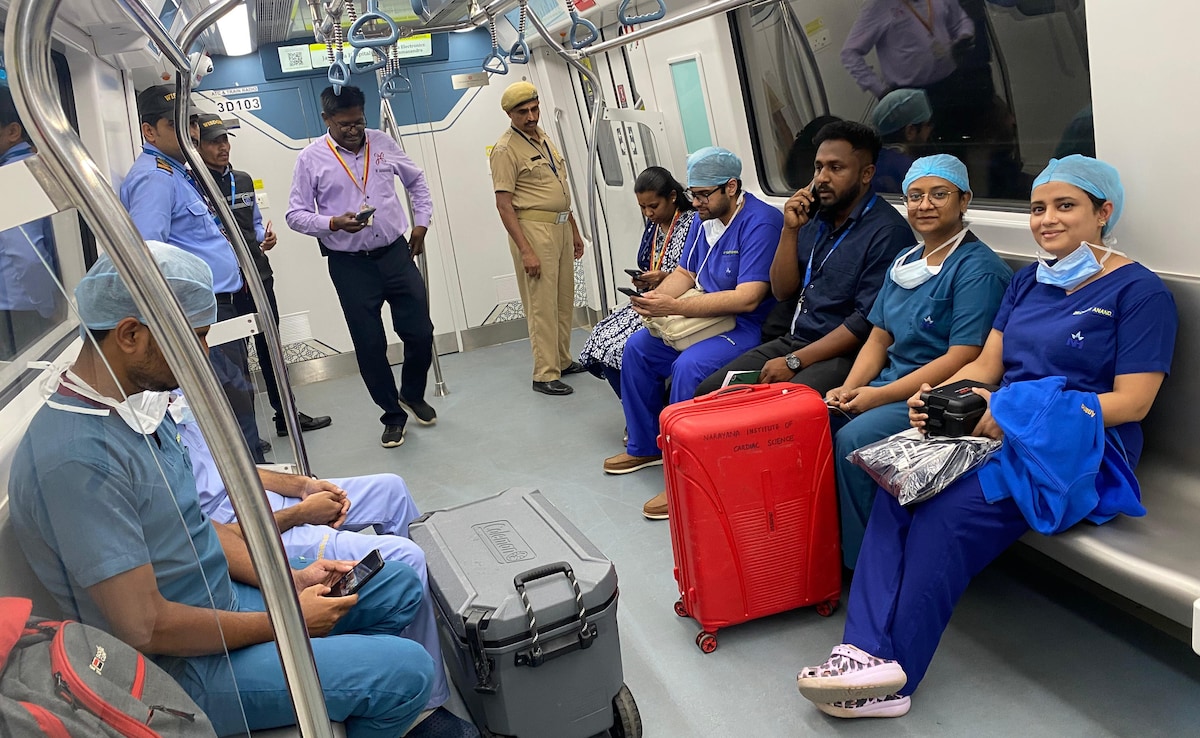
Bengaluru's metro helped deliver a donor heart quickly across the city, allowing a life-saving heart transplant to happen.
This shows how public transport and coordination can save lives in organ transplants.
The donor family's decision to donate also made this possible.

Bengaluru's Namma Metro transported a donor heart in 25 minutes, beating peak-evening traffic
The heart was transported from Ragigudda Metro Station to Bommasandra for a transplant at Narayana Health City
Timely organ transport is crucial for transplant success, with hearts ideally transplanted within 4 hours of retrieval
Metros are increasingly used as reliable, congestion-free routes for organ transport in Indian cities
The donor family's decision to donate organs gave another individual a renewed chance at life
- Who
- Narayana Health City, Bengaluru Metro Rail Corporation Limited (BMRCL), the donor family
- What
- Transported a donor heart via metro for a life-saving transplant
- When
- 7:32 PM to 7:55 PM
- Where
- From Ragigudda Metro Station to Bommasandra
- Why
- To ensure the heart reached the hospital promptly for surgery, within the critical preservation window
Pro-metro transport
Road transport advocates
Speed and reliability
Pro-metro transport
Metros provide faster, congestion-free routes for organ transport, especially during peak hours.
Road transport advocates
Road transport can be faster in certain situations and may be more flexible for last-mile connectivity.
- Distance covered
- Nearly 20 kilometres
- Travel time
- 25 minutes
- Ideal transplant time frame
- Within 4 hours of retrieval
- Organ
- Heart
- Hospital
- Narayana Health City