

Archive · 25 Aug 2026
Seattle Stunt School Trains Performers for a Changing Industry
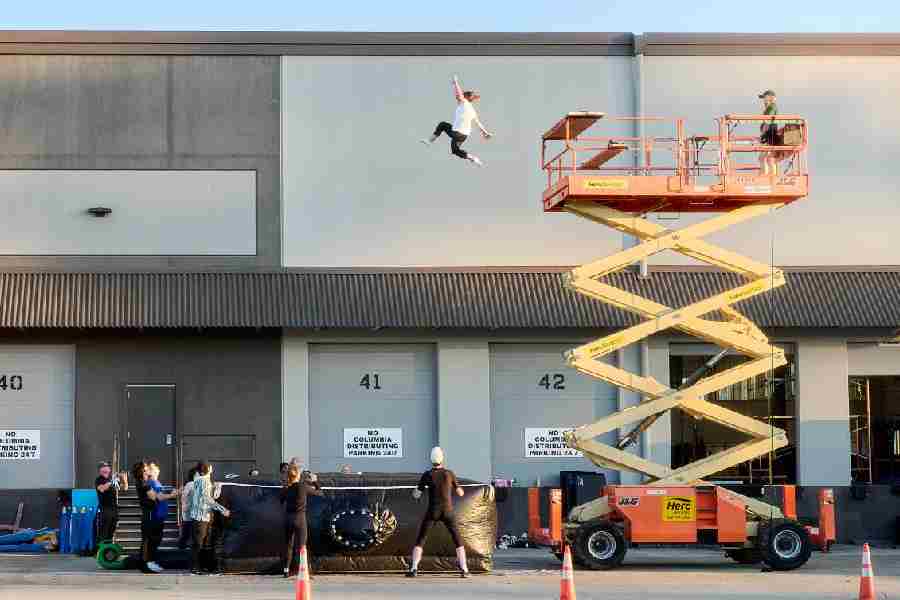
A stunt school in Seattle teaches people how to safely perform dangerous movie actions.
Students learn how to fight, fall, use practice weapons and work with fire.
They practice slowly so every movement is carefully controlled.
They also learn to face the camera so the action looks real to viewers.
Teachers say stunts cannot be completely risk-free, but safety rules can lower the danger.
The course welcomes people with different backgrounds and about one-third of students are women.
Graduates may spend about five years doing support jobs before becoming established.
Computers, robots and artificial intelligence may replace some stunt work, but instructors believe human performers still add something special.
A new Oscar for stunt design is expected to be awarded in 2028.

The International Stunt School in Seattle teaches 15 skills during a three-week course focused on fighting and falling.
Students practice precise fight choreography, camera positioning, falls, weapons, fire burns and other stunt techniques.
Instructors emphasize reducing risk while making dangerous actions appear convincing on screen.
About one-third of current enrollees are women, alongside gymnasts, martial artists, actors and former military members.
CGI, artificial intelligence and robots are changing stunt work, while a new Oscar for stunt design is planned for 2028.
- Who
- Students, instructors and stunt professionals at the International Stunt School, including Greg Poljacik and Jeff McKracken.
- What
- A three-week program is training aspiring performers in stunt fighting, falling, safety, camera work and other skills.
- When
- The school opened its doors to a new class last summer; a first Oscar for stunt design is planned for 2028.
- Where
- The International Stunt School in Seattle, including a gym at the University of Washington in the United States.
- Why
- To prepare performers for film and television stunt work while emphasizing safety, precision and the human element amid growing use of CGI, artificial intelligence and robots.
Human-Centered Stunts
Technology-Driven Production
The future of stunt work
Human-Centered Stunts
Instructors argue that performers can continue making distinctive stories by showing a human perspective and an element that machines cannot reproduce.
Technology-Driven Production
CGI, artificial intelligence and robots are changing film production and may reduce or alter opportunities for stunt performers.
Managing danger
Human-Centered Stunts
The school teaches that risk cannot be eliminated, but careful choreography, camera awareness and safety protocols can reduce it.
Technology-Driven Production
Technology can change how dangerous actions are created, potentially allowing productions to depict action without relying as heavily on live performers.
- School
- International Stunt School
- Location
- Seattle, United States
- Course length
- Three weeks
- Skills taught
- 15 skills, including fighting, falling, weapons, fire burns and stunt driving
- Current enrollment
- About one-third of enrollees are women, according to owner Jeff McKracken
- Career timeline
- Instructors say it takes about five years after graduation to become established on average
- Planned recognition
- The first Oscar for stunt design is expected in 2028