

1 hr ago
China’s Face-Licensing Market Expands as AI Content Grows
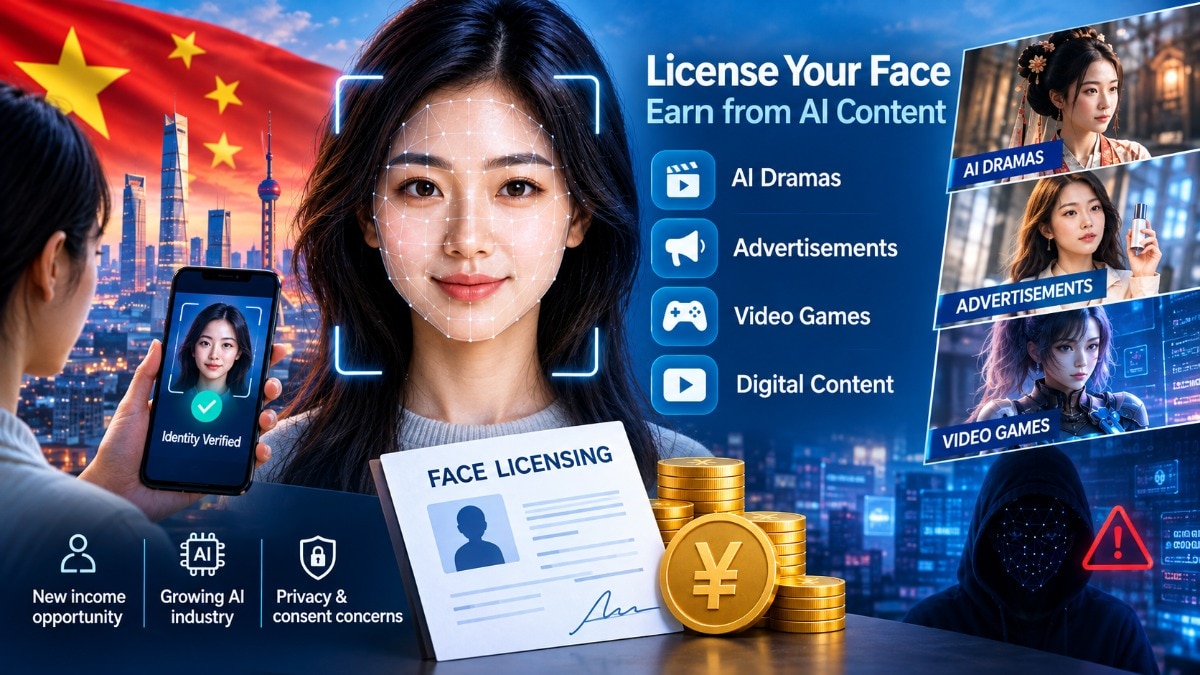
People in China can now let companies use digital copies of their faces.
They register on platforms and verify their identities.
Producers search for faces by age, gender, appearance and acting style.
Users can choose whether their faces appear in advertisements, dramas or games.
Some users can set prices and limits on how often their faces are used.
Payments described in the article range from small episode fees to thousands of yuan.
The market is growing because many Chinese microdramas now use AI.
Lawyers worry that people may not understand how their faces will be used later.
They also warn that a face is biometric information and may be difficult to control once shared.

Platforms including ActID and New Claw let people license their faces for AI-generated dramas, advertisements and games.
ActID reported about 800 registered users, with around 300 agreeing to license their images.
Fees range from 99 yuan to 6,000 yuan, depending on the platform and production.
More than 95% of China’s 128,000 microdramas released in the first three months of 2026 reportedly used AI.
Lawyers warn that contracts may not clearly explain how faces can be modified, reused or accessed after licensing.
- Who
- People in China, including extras, influencers, professional actors and people without acting experience, are licensing their faces through AI marketplaces.
- What
- Digital platforms are allowing users to license their likenesses for AI-generated dramas, advertisements, games and other content.
- Where
- China, including platforms based in Shenzhen and Chengdu.
- When
- ActID launched in March; Xinzhua launched in April; Yuanxiang Xinsheng launched in May. The article also cites activity during the first three months of 2026.
- Why
- Demand is increasing as AI-generated entertainment expands, while users seek to earn money from their appearance without joining every production.
Platform and market advocates
Privacy and consent critics
Income opportunities
Platform and market advocates
Licensing gives actors, models and ordinary people a way to earn from their appearance while continuing their offline careers.
Privacy and consent critics
Users may accept agreements without fully understanding how their likeness could be reused or modified later.
Industry disruption
Platform and market advocates
Platforms present face licensing as a response to AI’s disruption of entertainment and as a way for people to participate in the growing AI-content economy.
Privacy and consent critics
The rapid expansion of AI-generated content raises concerns about biometric data, long-term control and unauthorised face swaps.
Contract clarity
Platform and market advocates
Users can reportedly select permitted formats, set prices in some cases and limit the number of productions using their likeness.
Privacy and consent critics
Lawyers warn that authorisation terms may not clearly identify who will use a face or for what purposes.
Key facts
- ActID registrations
- About 800 users had registered since its March launch.
- ActID licensing users
- Around 300 users had agreed to license their images.
- ActID fees
- Reported fees ranged from 99 yuan to 500 yuan per episode, with ActID retaining a 10% commission.
- Xinzhua profiles
- Xinzhua had around 370 digital actor profiles.
- Xinzhua fees
- Listed fees ranged from 500 yuan to 6,000 yuan.
- AI microdramas
- More than 95% of 128,000 Chinese microdramas released during the first three months of 2026 reportedly used AI.
- Unauthorised reproductions
- ByteDance’s AI drama platform reportedly removed more than 85,000 videos involving unauthorised reproductions of faces and voices since the beginning of 2026.
Quotes
Long Lyu
Operations lead at New Claw
“Whether actors and models choose to license their faces on our platform or not, AI has already disrupted the industry。Selling the rights to their photos gives them a way to earn while continuing their careers offline.”
 businesstoday.in
Sources
Related news

Hengdian Studios Lets Tourists Star in Dramas for $30

Indian Faceless YouTube Channels Face Wide Earnings Gap

India’s Micro-Drama Market Eyes Tenfold Growth Through Advertising

Pocket Entertainment Crosses $500 Million ARR as AI Drives Growth

Shalini Pandey Denies Fake AI Video, Urges Users Report It

Flipkart Enters India’s Micro-Drama Market Through Content Partnerships

China Probes Travel Platforms After Trip.com’s $776 Million Fine

Zhang Yiming Surpasses Gautam Adani as Asia’s Richest

ByteDance Revenue Accelerates as AI Spending Pressures First-Half Profit

How Zhang Yiming Rose From $13 Billion to Asia’s Richest
