

Archive · 11 Jan 2026
Punjab Farmers Boost Ber Cultivation for Profit
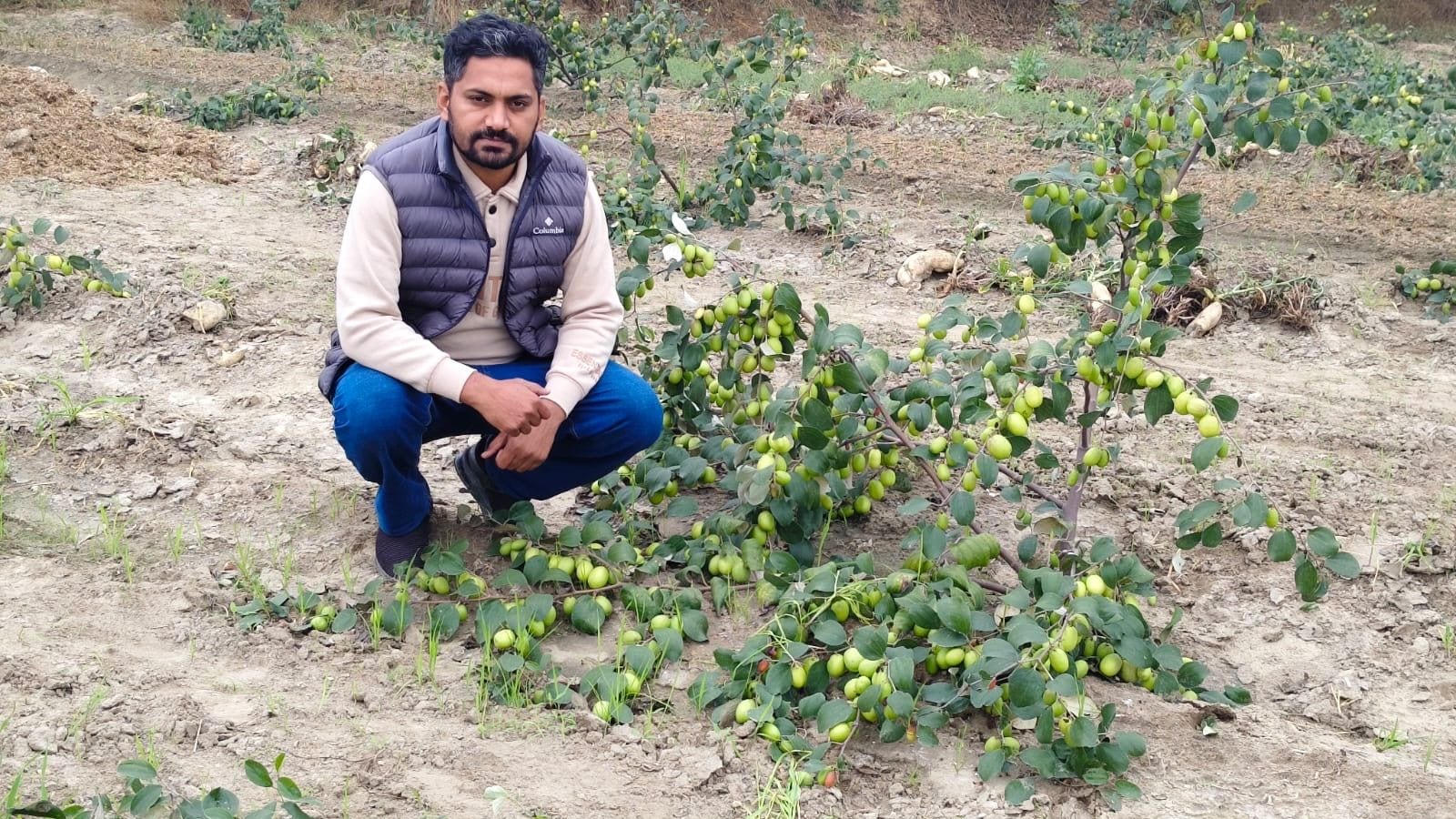
Farmers in Punjab are growing more ber, a tough fruit that needs less water.
They plant it in early spring or summer and harvest it in winter.
Ber trees start giving fruit in the first year and can live for over ten years.
Farmers like Jagtar Singh and Bhola Singh are making good money from ber, even more than from wheat and rice.
Ber is also good for health and grows well in different types of soil.
Some farmers are even winning awards for growing high-quality ber.

Ber cultivation is gaining popularity in Punjab as a profitable and sustainable alternative to wheat and paddy.
Varieties like Umran and Apple Cross ber are preferred for their high yields and market demand.
Ber plants require minimal water, have a long lifespan, and start bearing fruit in the first year.
Farmers report earnings of up to Rs 2 lakh per acre from ber, surpassing returns from traditional crops.
Government assistance and low input costs make ber cultivation an attractive option for farmers.
- Who
- Farmers in Punjab, particularly in Bathinda, Malerkotla, Mansa, and Muktsar
- What
- Shift to ber (Indian jujube) cultivation for better profitability and sustainability
- When
- Planting in February-March or July-August, harvesting from December to April
- Where
- Punjab, India, specifically in Bathinda, Malerkotla, Mansa, and Muktsar
- Why
- Ber offers higher returns, lower water usage, and is climate-resilient compared to traditional crops like wheat and paddy
- Primary Varieties
- Umran, Apple Cross
- Planting Seasons
- February-March or July-August
- Harvesting Period
- December to April
- Water Usage
- Minimal, drought-resistant
- Yield per Tree
- 150-200 kg (average)
- Price Range
- Rs 10–25 per kg
- Orchard Lifespan
- Over a decade
- Government Assistance
- Rs 20,000 per acre