Archive · 26 Dec 2025
BJP Dominates Political Funding in India
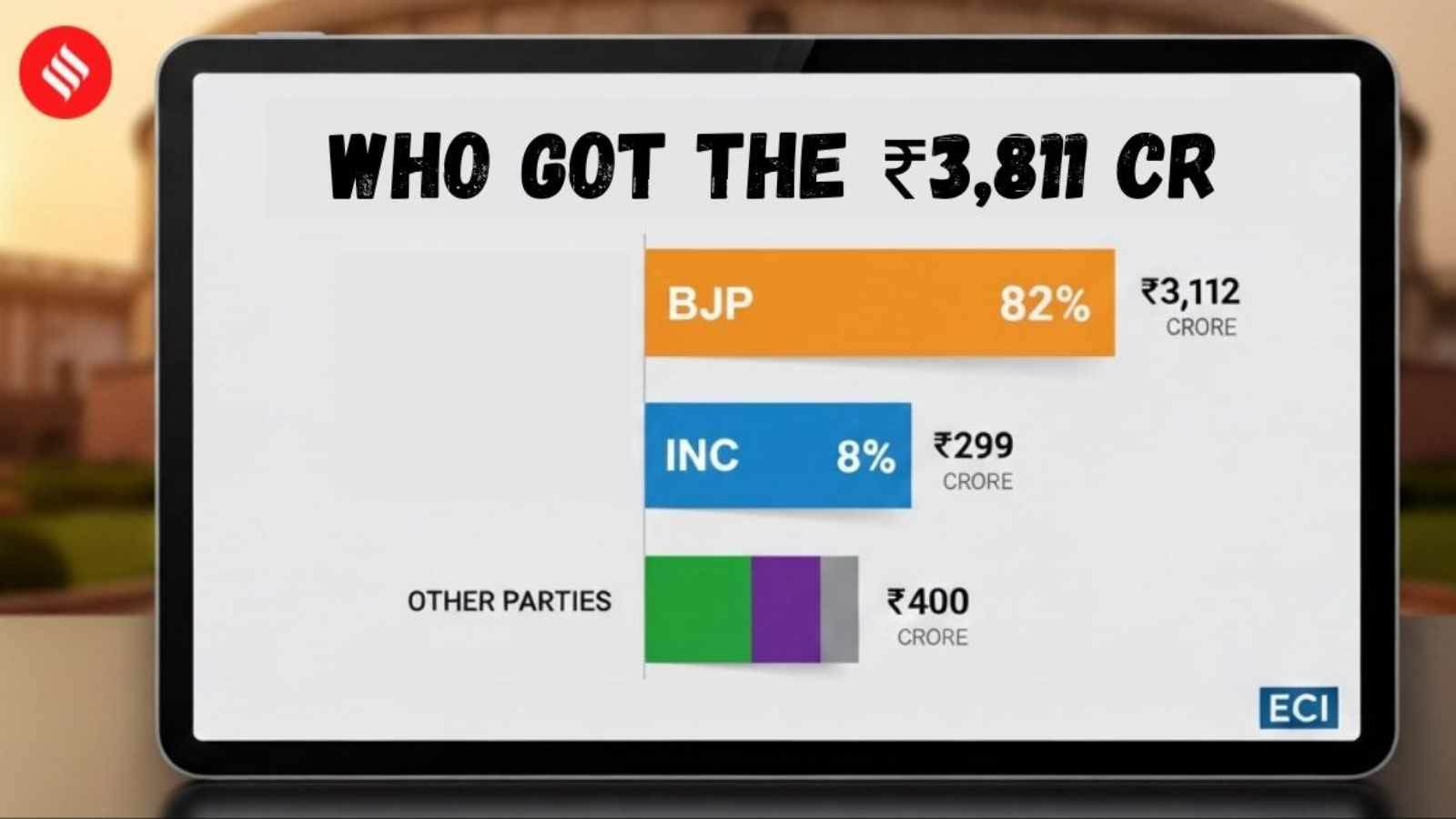
In India, the BJP gets much more money from companies than other political parties.
This makes elections unfair because the BJP can spend more on campaigns and influence voters.
The Supreme Court says this is corrupt because companies give money to get favors.
There are no rules on how much parties can spend, making elections very expensive.
Experts say the government should pay for elections to make them fair, but this hasn't happened yet.
The current system makes it hard for smaller parties to compete, and regular people end up paying for the costs of democracy.

BJP received significantly more corporate donations than other parties between 2013-24, both directly and through electoral trusts.
Electoral trusts, though more transparent than electoral bonds, lack full public disclosure of fund disbursal details.
The Supreme Court ruled that corporate donations to political parties are a form of institutionalised corruption, involving quid pro quo arrangements.
India's election expenditure is among the highest globally due to the absence of legal limits on party spending.
Experts recommend public funding of elections to ensure fairness, but this requires political and electoral reforms.
- Who
- Political parties in India, particularly the BJP, and corporate donors
- What
- Inequality and lack of transparency in political funding
- When
- From 2013-14 to 2023-24, with recent Supreme Court rulings
- Where
- India
- Why
- Due to weak legal enforcement, inadequate regulation, and lack of political will
- Direct Corporate Donations (2013-24)
- BJP received at least four times more than all other national parties combined, 84.648% of total share
- Electoral Trusts Donations (2013-24)
- BJP received six times more funds, 71.665% of total share
- Prudent Electoral Trust Donations (2013-24)
- Rs 33,30.537 crore, 86.38% of total contributions by all trusts
- Prudent Electoral Trust Donations (2024-25)
- Rs 2668.4917 crore, Rs 2180.7119 crore to BJP, Rs 216.335 crore to Congress
- Supreme Court on Quid Pro Quo
- Called it institutionalised corruption, stating political contributions by companies are open and for securing benefits
- Election Expenditure
- No legal limits, making Indian elections among the most expensive globally
- Historical Context
- Corporate donations banned from 1969 to 1985, leading to opaque political finance regime