

Archive · 9 Nov 2025
Trump's Shift: From 'Peacemaker' to 'Warmonger' Amidst Geopolitical Interests
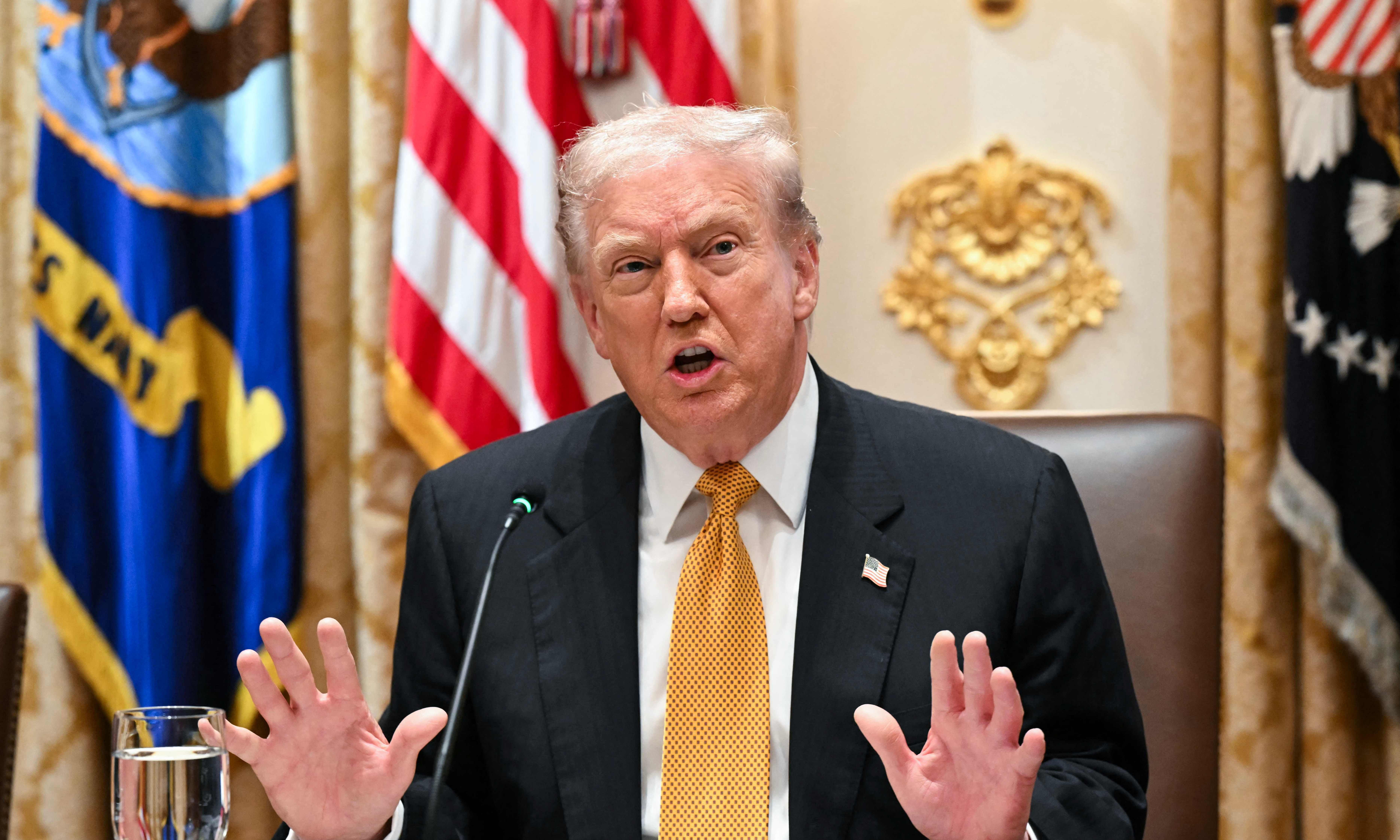
Imagine the President of a big country, Donald Trump, who sometimes talks about making peace but also talks about going to war.
Some people think he might be preparing for wars because his country makes a lot of weapons and it makes money for big companies.
He has talked about possibly invading places like Venezuela or bombing Nigeria, which have a lot of oil.
This is similar to how past presidents have sometimes sent soldiers to other countries.
These wars in the past were often about business, like getting oil or other valuable things.
Now, the country seems to be looking at Latin America and Africa more, where there are many resources.
It's like a big game where countries want to control valuable things, and sometimes it leads to big arguments or even fights.

President Trump has expressed intentions that suggest preparation for war, despite seeking the Nobel Peace Prize.
Concerns are raised that US foreign policy, particularly under Trump, is increasingly driven by business interests and the defense industry, not just ideology.
The article highlights a potential shift in US focus towards Latin America and Africa as new markets for its armaments industry.
Historical US interventions in regions like Latin America are framed as having been motivated by access to markets and resources.
The author suggests that unpopularity at home might tempt Trump to engage in foreign conflicts to appease his base.
- Who
- US President Donald Trump and the US foreign policy apparatus, with references to former US officials and corporations.
- What
- A perceived shift in US foreign policy from a 'peacemaker' image to a 'warmonger' stance, with potential military actions and increased focus on resource-rich regions like Latin America and Africa.
- When
- Present day, with historical context from the post-Second World War era and the Cold War.
- Where
- Globally, with specific mentions of Venezuela, Nigeria, Greenland, Panama Canal, Iraq, Afghanistan, West Asia, East Asia, Latin America, and Africa.
- Why
- The article posits that wars are increasingly driven by business interests, access to resources, the defense industry, and potentially by a US President seeking to boost domestic popularity.
Criticism of US Foreign Policy
Alleged Reasons for US Actions
Motivation for Intervention
Criticism of US Foreign Policy
US military actions are driven by the "military-industrial complex" and corporate profits, seeking access to resources like oil and natural gas in regions like Latin America and Africa.
Alleged Reasons for US Actions
US actions in Latin America are presented as responses to 'narco-terrorism' and threats to regional stability, though the article suggests this may be a pretext.
Trump's Role
Criticism of US Foreign Policy
President Trump, seeking the Nobel Peace Prize, shows an "intrinsic temptation" to prepare for war, threatening invasions and bombings, and mixing business with diplomacy for personal gain.
Alleged Reasons for US Actions
Trump's actions, particularly potential interventions in Venezuela, are framed within a broader pattern of US foreign policy and an alleged desire to appease his political base at home.
Historical Context of US Intervention
Criticism of US Foreign Policy
Latin America has a history of "Yankee imperialism," with US military actions often cloaked in democratic rhetoric but ultimately aimed at securing markets and resources.
Alleged Reasons for US Actions
While the article details historical US intervention, it also acknowledges that some regimes in Latin America, like Venezuela's under Maduro, are not considered popular or pro-people.
- US President's Stated Intentions
- Threatened to invade Venezuela, bomb Nigeria, eyed Greenland, and wants control of the Panama Canal.
- Historical Precedent for US Wars
- Korean War, Vietnam War, Afghanistan War, Iraq War.
- Cited Motivations for Post-Cold War Conflicts
- Business interests: access to markets and resources (oil, gas, rare earths, copper).
- Geopolitical Focus Shift
- From West Asia and East Asia to Latin America and Africa.
- Key Industries Benefiting from War
- Armaments manufacture, defense industry, Halliburton Inc (mentioned in relation to Iraq).
- China's Growing Influence
- Becoming the biggest trade partner for most Latin American countries.