Archive · 6 Nov 2025
India's Biostimulant Revolution: A Green Shift in Agriculture
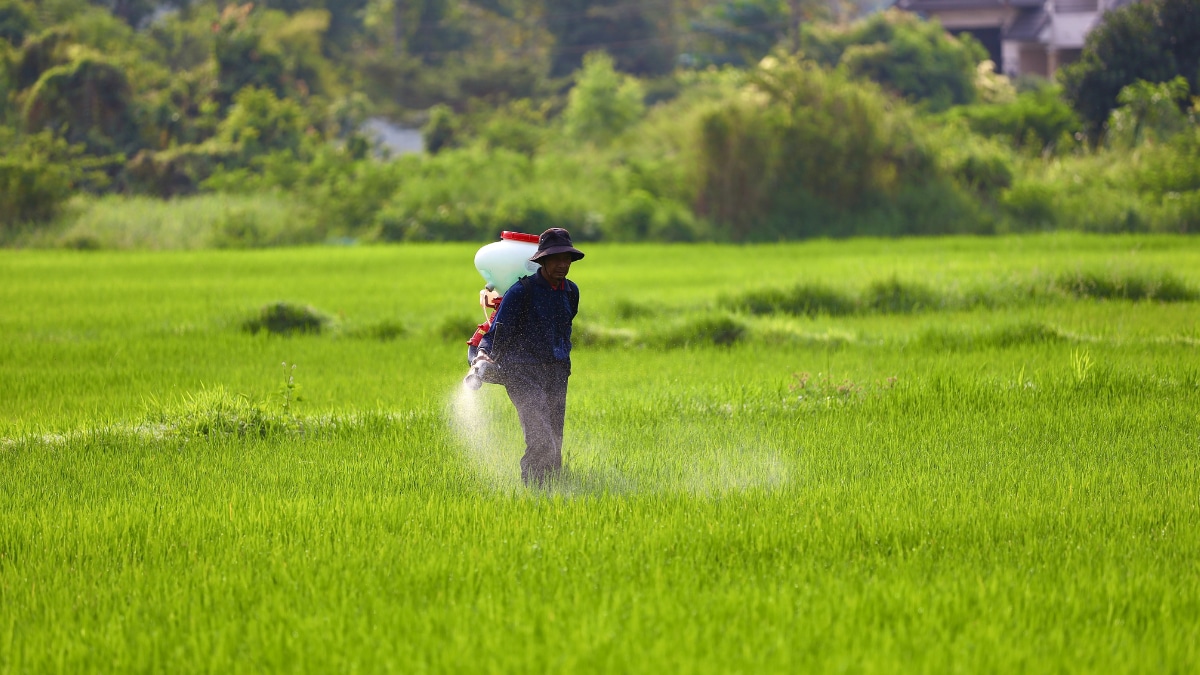
Imagine that to grow lots of food, farmers used to add special chemical powders to the soil, like giving plants a super-strong energy drink.
This helped a lot during a time called the Green Revolution.
But now, we know these chemicals can sometimes hurt the soil, the water, and even the air.
So, scientists are introducing something new called 'biostimulants.'
These are like natural boosters made from things like seaweed, special acids, or tiny helpful microbes.
Instead of just adding food, they help the plants use the food they already have better, make them stronger against heat or dry weather, and grow better roots.
It's like teaching the plant to be healthier and stronger on its own.
The government is making rules to make sure these new helpers are safe and actually work, moving away from old chemical powders to these greener, nature-inspired solutions for a healthier planet and better crops for everyone.

India is promoting biostimulants, natural products derived from seaweed, humic acids, and microbes, as a green alternative to chemical fertilizers.
While chemical fertilizers boosted food production, they now cause environmental issues like soil degradation and greenhouse gas emissions.
Biostimulants enhance nutrient absorption, drought tolerance, and yield quality by stimulating plants' natural processes and helping restore soil health.
India's biostimulant market is projected for significant growth, driven by consumer demand for residue-free food and farmer needs for climate resilience.
New government regulations since 2021 aim to ensure the efficacy and safety of biostimulants, replacing faith-based marketing with evidence-based validation.
- Who
- Indian agricultural experts and the government
- What
- Promoting the adoption of biostimulants as a sustainable alternative to chemical fertilizers
- When
- Transition underway, with government regulations tightened in 2021 and ongoing initiatives
- Where
- Across India, from Punjab to the Andaman and Nicobar Islands
- Why
- To address environmental degradation, declining soil health, water contamination, and the challenges of climate stress while meeting demand for healthier, residue-free food and boosting agricultural exports.
Traditional Fertilizers
Biostimulants
Environmental Impact
Traditional Fertilizers
Chemical fertilizers have led to soil degradation, water contamination, biodiversity loss, and contribute significantly to agricultural greenhouse gases.
Biostimulants
Biostimulants, derived from natural sources, boost plant growth by awakening physiological responses, helping restore soil health instead of exhausting it.
Regulation and Efficacy
Traditional Fertilizers
Chemical fertilizers are a well-established input, though their overuse has created issues.
Biostimulants
The biostimulant market was previously unregulated, leading to many unproven products; new government regulations are tightening standards and requiring evidence-based efficacy.
Farmer Adoption and Trust
Traditional Fertilizers
Farmers are familiar with traditional fertilizers, though issues of cost and environmental impact are present.
Biostimulants
Farmers are often skeptical of new agri-inputs due to inconsistent results and cost concerns; access and understanding of biostimulants are uneven, requiring better education and trust-building.
- Average Fertilizer Use (India)
- 139.81 kg/hectare
- Fertilizer Use in Punjab
- Up to 247.61 kg/hectare
- Global Biostimulant Market (2024)
- $4.03 billion
- Projected Global Biostimulant Market (2032)
- $10 billion
- Approved Biostimulant Products (India)
- 132
- Seaweed Production Potential (India)
- 9.7 million tonnes
- Current Seaweed Production (India)
- Less than 0.1% of world's potential (74,083 tonnes)