

Archive · 25 Dec 2025
Odisha Reinitiates Olive Turtle Tagging for Migration Study
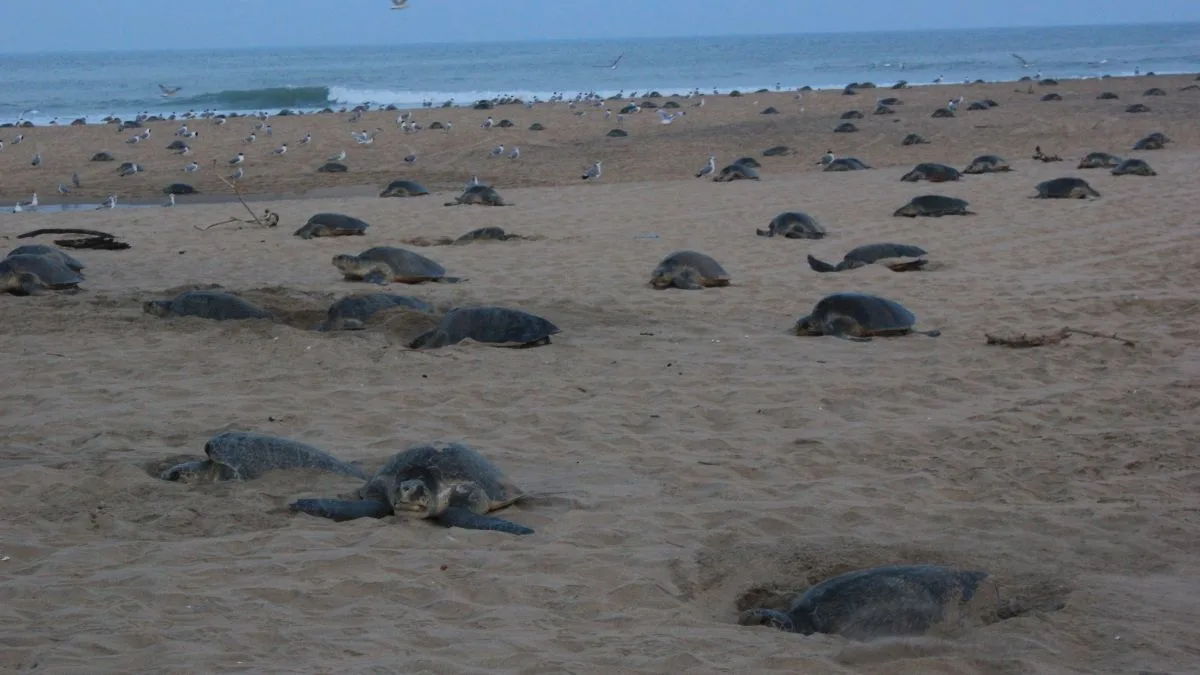
Scientists in Odisha, India, are putting special tags on Olive Ridley sea turtles to learn about their travels.
These turtles come in large numbers to Odisha's beaches to lay eggs.
The tags help track where they go and how they move.
This information is important to protect the turtles and their homes from dangers like fishing nets and pollution.
The study started again in December 2024, and nine turtles were tagged.
One turtle traveled far to the waters near Sri Lanka, while another stayed close to the beaches.
This helps scientists make better rules to keep the turtles safe.

Odisha Forest Department reinitiated satellite tagging of Olive Ridley sea turtles to study migration patterns.
Nine turtles were tagged: six at Gahirmatha Beach and three at Rushikulya river mouth.
Tagging aims to understand near-shore movements, reduce threats, and design effective conservation policies.
One tagged turtle traveled to waters east of Sri Lanka, while another stayed near Odisha's beaches.
The study is a collaboration between the Odisha Forest Department, Wildlife Institute of India, and Dhamra Port Co Ltd.
- Who
- Odisha Forest Department, Wildlife Institute of India, Dhamra Port Co Ltd
- What
- Satellite tagging of Olive Ridley sea turtles
- When
- 21 December 2024 (3 days)
- Where
- Gahirmatha Beach and Rushikulya river mouth, Odisha
- Why
- To study migration patterns and conserve turtles
- Location
- Gahirmatha Beach, Rushikulya river mouth, Devi river mouth, Odisha
- Species
- Olive Ridley sea turtles
- Tagging Period
- 21 December 2024 (3 days)
- Number of Turtles Tagged
- 9 (6 in Gahirmatha, 3 in Rushikulya)
- Organizations Involved
- Odisha Forest Department, Wildlife Institute of India, Dhamra Port Co Ltd
- Purpose
- Track migration patterns, conserve habitats, reduce threats
- Last Tagged Turtle Location
- Waters east of Sri Lanka