

Archive · 18 Jul 2026
India-UK Free Trade Agreement Takes Effect
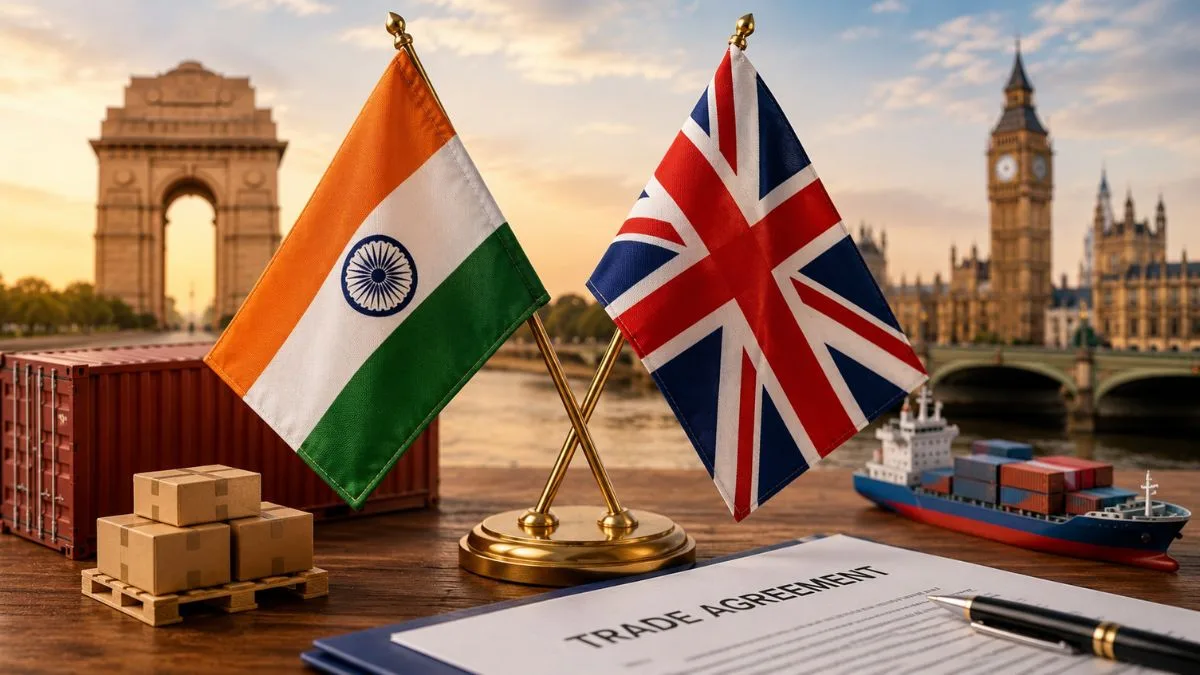
India and the UK have started a new trade agreement.
This means some Indian products like clothes and shoes can be sold in the UK without extra taxes.
This is good for Indian businesses because they can now compete better with countries like Bangladesh and Pakistan.
However, there are still some rules and taxes that might make it hard for smaller businesses to take full advantage.
The agreement also shows that India is becoming more open to trading with other countries.
Over time, this could lead to more jobs and investment in India, but only if businesses become more competitive and the government helps them follow the new rules.

The India-UK Free Trade Agreement took effect on Thursday, eliminating duties on labour-intensive sectors like textiles and garments.
Indian exporters now have preferential access to the UK market, addressing previous competitive disadvantages.
Challenges remain, including rules of origin and compliance procedures that may hinder smaller exporters.
Barriers like steel safeguards and carbon border adjustments still exist, reflecting modern trade policy priorities.
The agreement extends beyond tariffs to include investment, services, and long-term business confidence.
- Who
- India and the United Kingdom
- What
- Implementation of a Free Trade Agreement
- When
- Thursday
- Where
- India and the United Kingdom
- Why
- To secure preferential market access and reinforce trade partnerships
- Agreement Effective Date
- Thursday
- Key Beneficiaries
- Textiles, garments, footwear, leather goods, marine products
- Barriers Remaining
- Steel safeguards, Carbon Border Adjustment Mechanism
- Geopolitical Context
- UK post-Brexit, India's trade openness
- Scope of Agreement
- Merchandise trade, investment, services, business confidence