Archive · 23 Dec 2025
3I/ATLAS Comet's Earth Flyby: No Harm Expected
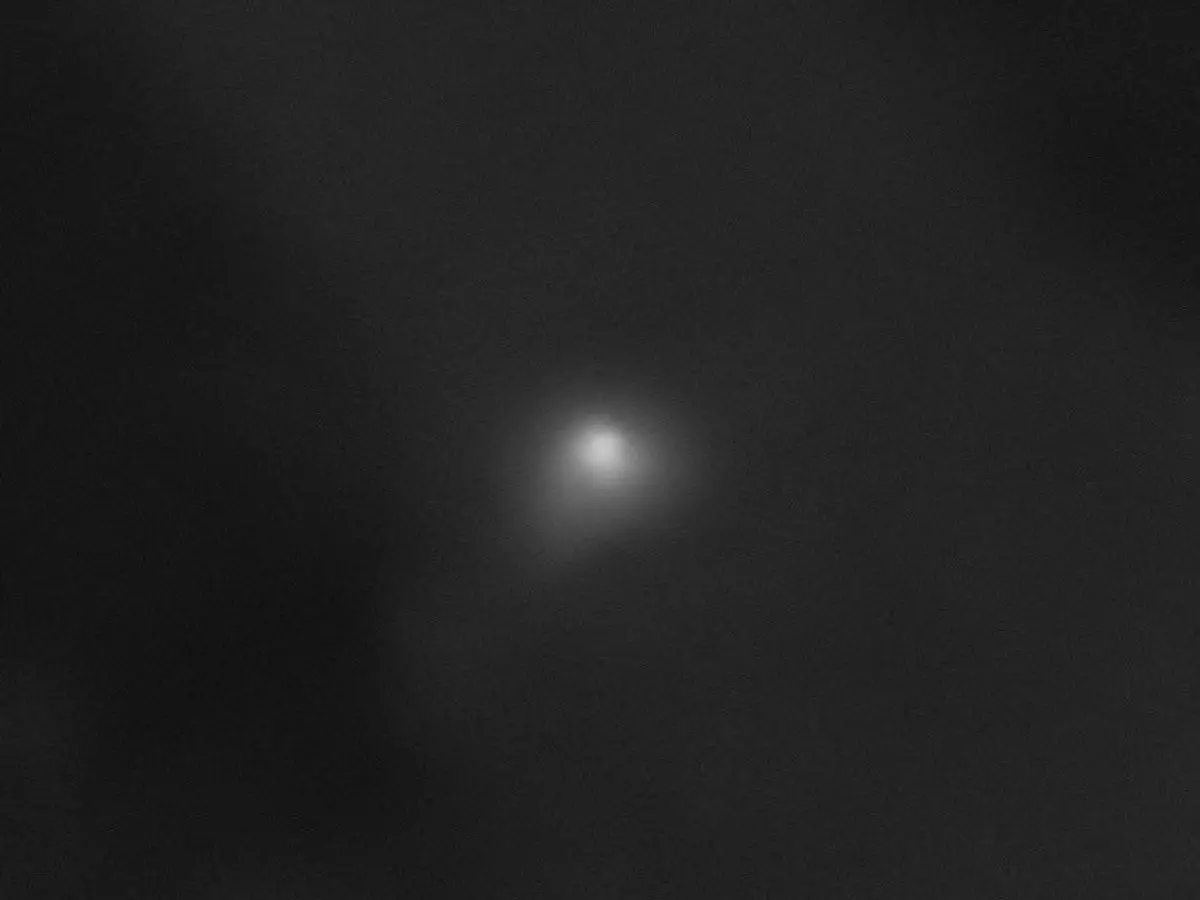
A comet named 3I/ATLAS recently flew by Earth at a distance of 269 million kilometres.
It has a gas plume that contains poisonous substances like cyanide.
Scientists wondered if any of this material could reach Earth.
While some particles might have been blown towards us by solar winds, the Earth's atmosphere would protect us by burning up any harmful particles before they reach the ground.
The comet is now heading towards Jupiter for its final rendezvous in our solar system.
So, even though the comet has some dangerous materials, we don't need to worry because our atmosphere keeps us safe.

3I/ATLAS comet flew by Earth at a distance of 269 million kilometres.
The comet has a gas plume containing cyanide and hydrogen cyanide.
Solar winds could have blown some material towards Earth, but the atmosphere would protect us.
Particles smaller than a micrometre are affected by solar radiation, while larger particles are not.
The comet is now heading towards Jupiter for its final rendezvous in the solar system.
- Who
- Astronomers and scientists, including Harvard scientist Avi Loeb
- What
- 3I/ATLAS comet's flyby of Earth and its potential effects
- When
- During its flyby, now on its way out of the solar system
- Where
- Earth and the solar system
- Why
- To understand the comet's composition and potential impact on Earth
- Comet Name
- 3I/ATLAS
- Distance from Earth
- 269 million kilometres
- Gas Plume Contents
- Cyanide and hydrogen cyanide
- Next Rendezvous
- Jupiter
- Particle Size Affected by Solar Radiation
- Smaller than a micrometre
- Particle Size Unaffected by Solar Radiation
- Bigger than a millimetre
- Protection from Harm
- Earth's atmosphere