Archive · 19 Jul 2026
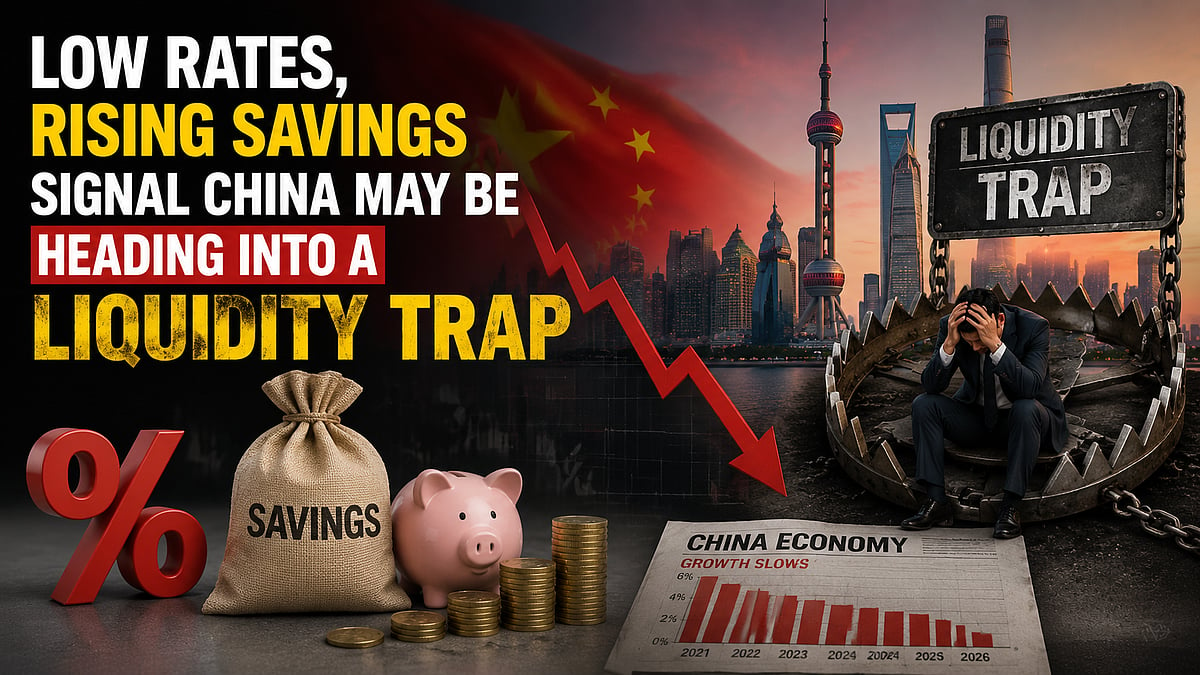
China Faces Liquidity Trap Amid Slow Growth

China's economy is growing slowly, even though the government has made borrowing very cheap.
People and businesses are not spending or investing much, even with low interest rates.
This is because they are worried about the future, especially with house prices falling.
The government has been trying to help by making lots of money available for loans, but it's not working as well as they hoped.
Experts think this might be a 'liquidity trap,' where low interest rates don't help the economy grow.
Many people would rather save money than spend it, and the housing market is not doing well, which makes people even more cautious.

China's GDP grew 4.3% in Q2 2026, missing the 5% annual target and marking the weakest expansion in nearly three-and-a-half years.
Despite low interest rates and abundant credit, consumer spending and business investment remain subdued, suggesting a potential liquidity trap.
China's M2 money supply grew 8.6% year-on-year, and banks issued 10.72 trillion yuan in new loans in the first half of 2026.
Over 80% of survey respondents prefer saving over spending, indicating weak consumer confidence.
New home prices have fallen 3.3% year-on-year, marking the 36th consecutive month of declines, and nearly 70% of household wealth is tied to real estate.
- Who
- China's economy and consumers
- What
- Potential liquidity trap due to low interest rates and weak consumer spending
- When
- Second quarter of 2026
- Where
- China
- Why
- Despite low interest rates and abundant credit, consumers and businesses are not borrowing or spending, indicating a possible liquidity trap
- GDP Growth (Q2 2026)
- 4.3%
- Annual Growth Target
- 5%
- M2 Money Supply Growth (YoY)
- 8.6%
- New Loans (H1 2026)
- 10.72 trillion yuan
- One-Year Loan Prime Rate
- 3%
- Five-Year Mortgage-Linked Rate
- 3.5%
- New Home Prices (YoY, June 2026)
- -3.3%
- Household Wealth Linked to Real Estate
- 70%